Introduction
For generations, the conventional wisdom in landscaping has been clear: ornamental plants go in the front yard where everyone can see them, and vegetable gardens get hidden in the backyard behind the fence. Flowers are for beauty. Vegetables are for utility. The two do not mix. That idea is not only outdated, it is actively holding gardeners back from landscapes that are more productive, more interesting, and often more beautiful than purely ornamental ones.
Edible landscaping is the practice of incorporating food-producing plants into decorative garden designs, replacing or complementing traditional ornamentals with plants that look stunning and produce harvestable crops. It is not about turning your front yard into a farm. It is about recognizing that blueberry bushes have gorgeous fall foliage, that kale is more colorful than most flowering annuals, that a well-pruned apple tree is every bit as elegant as a crabapple, and that herbs like lavender and rosemary are among the most fragrant, texturally interesting plants you can grow.
This approach to gardening is gaining momentum for good reason. Food prices keep rising. Interest in organic, local food continues to grow. And homeowners are increasingly questioning why they pour time, water, and money into landscapes that look nice but produce nothing of tangible value. Edible landscaping offers a third path: gardens that feed your family, support pollinators, reduce your grocery bill, and look absolutely gorgeous doing it.
In this guide, we will explore the design principles that make edible landscapes work, specific plants that pull double duty as both ornamentals and food producers, practical strategies for every area of your yard, and the seasonal considerations that keep your edible landscape looking good twelve months a year.
What Exactly Is Edible Landscaping?
Edible landscaping is not a new concept. Cottage gardens in medieval England blended vegetables, herbs, flowers, and fruit trees in a single, integrated space. The formal gardens of French chateaus included trained fruit trees and herb parterres. What is relatively new is the idea that food plants must be segregated from ornamental ones, a convention that emerged in the twentieth century as suburban lawns became a status symbol and food gardening became associated with necessity rather than choice.
Modern edible landscaping draws on permaculture principles, landscape design theory, and practical horticulture to create spaces that are simultaneously productive and aesthetically pleasing. The key difference between an edible landscape and a traditional vegetable garden is intentionality of design. A vegetable garden prioritizes production: straight rows, maximum planting density, and function over form. An edible landscape prioritizes beauty and production in equal measure, using design principles like color theory, texture contrast, structural hierarchy, and seasonal progression to create spaces that would look at home in any garden magazine.
The scale is completely flexible. Edible landscaping can be as small as replacing the annual flowers in a single front yard bed with ornamental edibles, or as comprehensive as redesigning an entire property around food-producing plants. You do not need a large yard, special skills, or a big budget. You need a willingness to think differently about the plants you choose and where you put them.
Replacing Ornamentals with Edibles
The simplest entry point into edible landscaping is substitution: taking out purely ornamental plants and replacing them with edible ones that offer similar visual appeal. This approach requires no major renovation, no new beds, and no design overhaul. You are simply making smarter plant choices within your existing landscape structure.
Ornamental to Edible Plant Substitutes
The table below shows common ornamental plants and their edible counterparts that provide similar visual impact.
| Ornamental Plant | Edible Replacement | Visual Similarity |
|---|---|---|
| Boxwood hedge | Blueberry bushes | Dense, compact form; stunning red fall foliage; white spring flowers |
| Ornamental cherry tree | Dwarf fruit tree (apple, pear, plum) | Beautiful spring blossoms; similar mature size on dwarf rootstock |
| Hosta | Rhubarb | Large, dramatic leaves; bold texture; thrives in partial shade |
| Purple fountain grass | Ornamental kale or red cabbage | Deep purple color; dramatic rosette form; cool-season interest |
| Lavender (ornamental border) | Culinary lavender or rosemary | |
| Barberry shrub | Gooseberry or currant | Arching habit; colorful berries; thorny stems for security planting |
| Daylily | Garlic chives | Grasslike foliage; white flower clusters; perennial and reliable |
| Japanese maple | Pomegranate (in warm climates) | Graceful branching; ornamental fruit; brilliant fall color |
| Annual petunias | Nasturtiums | Trailing habit; vibrant flowers in warm colors; edible leaves and blooms |
| Yarrow (ornamental) | Chamomile | Feathery foliage; small daisy-like flowers; herbal tea harvest |
These substitutions are not compromises. In many cases, the edible version is actually more interesting than the ornamental it replaces. Blueberry bushes, for example, offer four-season interest: white bell-shaped flowers in spring, lush green foliage in summer, brilliant red and orange leaves in fall, and attractive red stems in winter. Boxwood is green year-round but offers no seasonal drama, no flowers, and certainly no fruit.
Design Principles for Edible Landscapes
The difference between an edible landscape that looks intentional and one that looks like a vegetable garden spilled into the front yard comes down to design. These principles will help you create spaces that are genuinely beautiful.
Color Theory
Think of your edible plants as a color palette. Purple basil, red-veined sorrel, chartreuse lettuce, deep green kale, and the silver foliage of sage create a rich tapestry of color that rivals any annual flower bed. Plan for color progression through the seasons: spring blossoms in white and pink, summer foliage in every shade of green, fall harvests in orange, red, and gold, and winter structure in evergreen herbs and berry-laden branches.
Warm colors (reds, oranges, yellows) advance visually and create energy. Cool colors (greens, blues, purples) recede and create calm. Use warm-colored edibles like red peppers, orange calendula, and yellow pear tomatoes as focal points. Use cool-colored plants like blue sage, purple cabbage, and silver thyme as calming backdrops. This is the same approach landscape designers use with ornamental plants, just applied to edibles.
Texture Contrast
Texture is what gives a garden depth and visual interest. Pair fine-textured plants like dill, fennel, and cilantro with bold-textured plants like artichoke, rhubarb, and cardoon. The contrast between feathery and bold, coarse and fine, glossy and matte creates a dynamic composition that draws the eye and holds interest. This is especially effective in narrow beds along walkways or foundations, where every plant is viewed up close.
Form and Structure
Every well-designed garden has a hierarchy of form: tall background plants, medium middle-ground plants, and low foreground plants. In an edible landscape, this translates naturally. Tall fruit trees or trellised climbing beans form the canopy. Medium shrubs like blueberries, gooseberries, or dwarf fruit trees fill the middle layer. Low-growing herbs, strawberries, and creeping thyme carpet the ground. This layered approach, borrowed directly from permaculture's concept of food forests, creates visual depth while maximizing production in a small space. Our guide on growing fruit trees in small spaces covers how to select and site compact fruit trees that fit beautifully into landscape designs.
Scale and Proportion
Scale your edible plantings to the space. A massive zucchini plant in a narrow foundation bed looks ridiculous. A tiny thyme border along a wide driveway looks lost. Match plant size to bed size. Use bold plants like artichokes, sunflowers, or tall corn as anchors in large beds. Use compact plants like bush beans, lettuce, and dwarf peppers in small beds and containers. If you are working with raised beds, choose varieties bred for compact growth.
Year-Round Interest
The biggest criticism of edible gardens is that they look messy in winter when crops die back. Combat this by including plants that provide structure and interest in every season. Evergreen herbs like rosemary, sage, and thyme stay attractive year-round. Berry-producing shrubs like holly-leafed hawthorn or winterberry holly (not edible, but excellent ornamental companions) add color when everything else is dormant. Leave ornamental grasses and dried seed heads standing through winter for texture. Plan your edible landscape the way you would plan any landscape, with attention to the dormant season.
Edible Hedges and Living Fences
Instead of planting a purely ornamental hedge, consider edible alternatives that create privacy, define boundaries, and produce food simultaneously.
Blueberry Hedges
Blueberries make outstanding hedges. They are dense, compact, and offer four-season interest. Plant them three to four feet apart for a continuous hedge. They require acidic soil (pH 4.5 to 5.5), which is easy to achieve with peat moss or sulfur amendments. A mature blueberry hedge produces several pounds of berries per plant each summer while providing a beautiful green screen. For soil preparation tips, see our guide on improving clay soil, which covers how to create the acidic conditions blueberries need.
Elderberry Fences
Elderberries grow fast, reach eight to twelve feet tall, and produce massive clusters of flowers in spring followed by dark purple berries in late summer. The flowers are used for cordials and the berries for jams, syrups, and wine. Elderberries spread by suckers, which makes them excellent for filling in a dense hedge quickly but requires some management to keep them from expanding beyond their designated area.
Gooseberry and Currant Borders
These thorny shrubs are ideal for security plantings under windows or along property boundaries. They are compact (three to five feet), produce tart berries excellent for jams and baking, and have attractive lobed leaves that turn warm colors in fall. The thorns deter casual trespassers without the aggressive invasiveness of barberry.
Fruit Trees as Specimen Plants
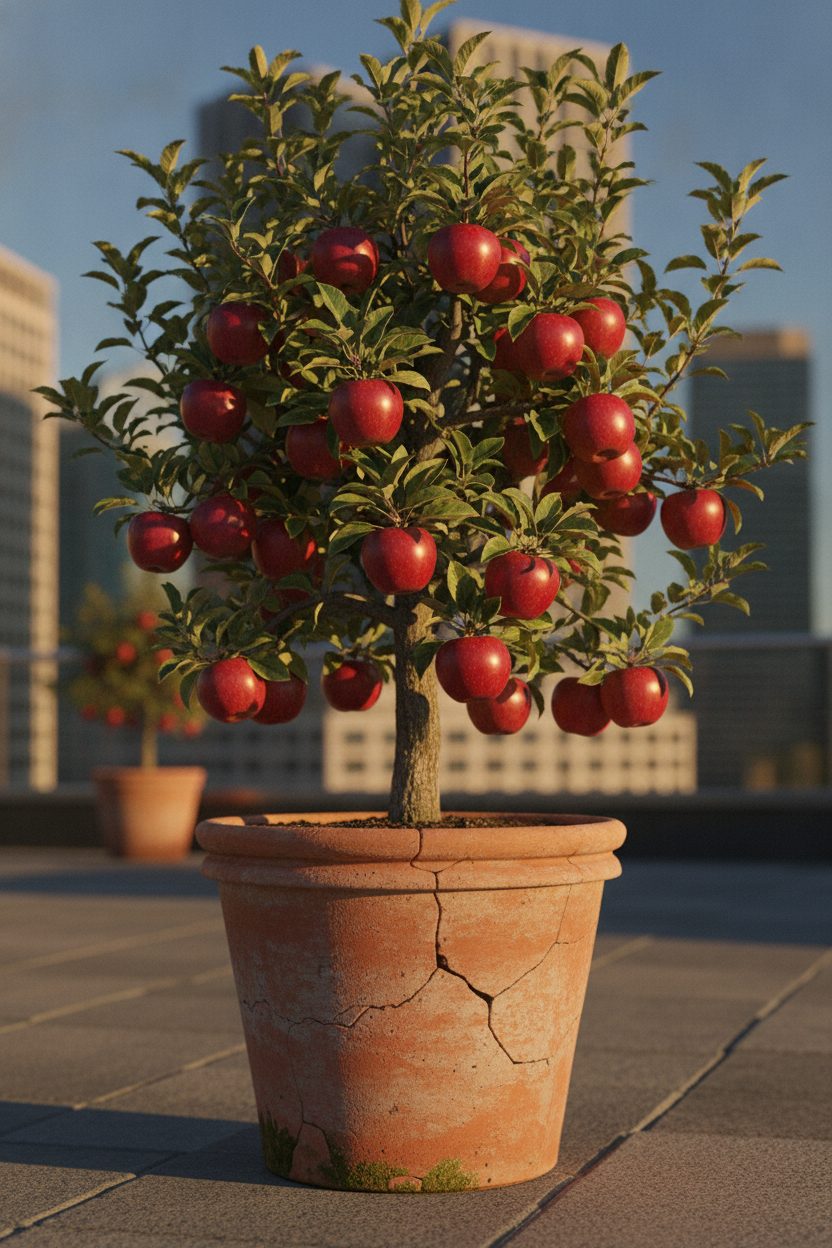
A well-chosen fruit tree can be the centerpiece of a front yard landscape. Dwarf and semi-dwarf varieties on rootstock keep trees manageable (eight to twelve feet tall) while producing generous harvests.
Apple Trees
Dwarf apple trees trained as espaliers against a sunny wall or fence are among the most elegant features in any garden. The formal, fan-shaped branching pattern is genuinely beautiful, and the spring blossoms are spectacular. Free-standing dwarf apples work as specimen trees in lawn areas, providing shade, spring flowers, and fall fruit. Choose disease-resistant varieties like Liberty, Enterprise, or Honeycrisp for low-maintenance production.
Cherry and Plum Trees
Ornamental cherry trees are among the most popular landscape trees, but they produce nothing edible. Sweet and sour cherry varieties like Stella, Lapins, and North Star produce equally gorgeous spring blossoms plus pounds of delicious fruit. Japanese plum varieties offer stunning spring flowers and unusual, colorful fruit.
Fig Trees
In warmer climates (zones 7 and above), fig trees are exceptional landscape specimens. Their large, lobed leaves are tropical and dramatic, their branching structure is sculptural, and they produce two crops of sweet fruit per year. In colder zones, figs can be grown in large containers and moved to a garage or basement for winter. Container-grown figs are perfect for patio gardens and small spaces.
Herb Borders and Edges
Herbs are the unsung heroes of edible landscaping. Many of them are more fragrant, more texturally interesting, and more visually appealing than the ornamental plants they can replace.
Lavender Borders
Lavender edging a walkway or border is one of the classic images of garden design. The silver foliage, purple flower spikes, and intoxicating fragrance create an entrance experience that is hard to match with any ornamental. Harvest the flowers for sachets, cooking, or herbal tea. English lavender (Lavandula angustifolia) is the hardiest and most fragrant culinary variety.
Raised Herb Knots
A knot garden, traditionally planted with boxwood, can be planted with low-growing herbs instead. Rosemary, thyme, sage, oregano, and marjoram create intricate patterns of color and texture that are both ornamental and harvestable. This formal approach to edible landscaping works beautifully in front yards, courtyards, and alongside patios.
Thyme Walkways
Creeping thyme (Thymus serpyllum) makes a gorgeous, fragrant ground cover between stepping stones or along path edges. It tolerates light foot traffic, releases its scent when stepped on, and produces tiny purple or pink flowers in summer. It is far more interesting than the typical pachysandra or vinca ground cover used in conventional landscapes. Combine with appropriate mulching in surrounding beds for a polished, low-maintenance look.
Edible Ground Covers
Ground covers fill the lowest layer of a landscape, suppressing weeds, retaining moisture, and creating a unified visual carpet. Edible ground covers do all of this while adding food production to the mix.
Strawberries
Alpine strawberries (Fragaria vesca) are the ideal edible ground cover. They spread gently, produce small but intensely flavored berries all summer, and have attractive trifoliate leaves that stay green through much of the year. They thrive in partial shade, making them perfect for the north side of buildings or under deciduous trees where traditional lawn struggles.
Creeping Thyme
As mentioned above, creeping thyme is versatile enough to serve as both a border plant and a ground cover. In sunny, well-drained areas, it forms a dense mat that chokes out weeds and requires virtually no maintenance once established.
Prostrate Rosemary
In zones 7 and warmer, prostrate rosemary cascades over walls, fills slopes, and covers large areas with aromatic, evergreen foliage. It is drought-tolerant, deer-resistant, and produces small blue flowers in winter that attract early pollinators. Harvest sprigs year-round for cooking.
Edible Flowers for Color
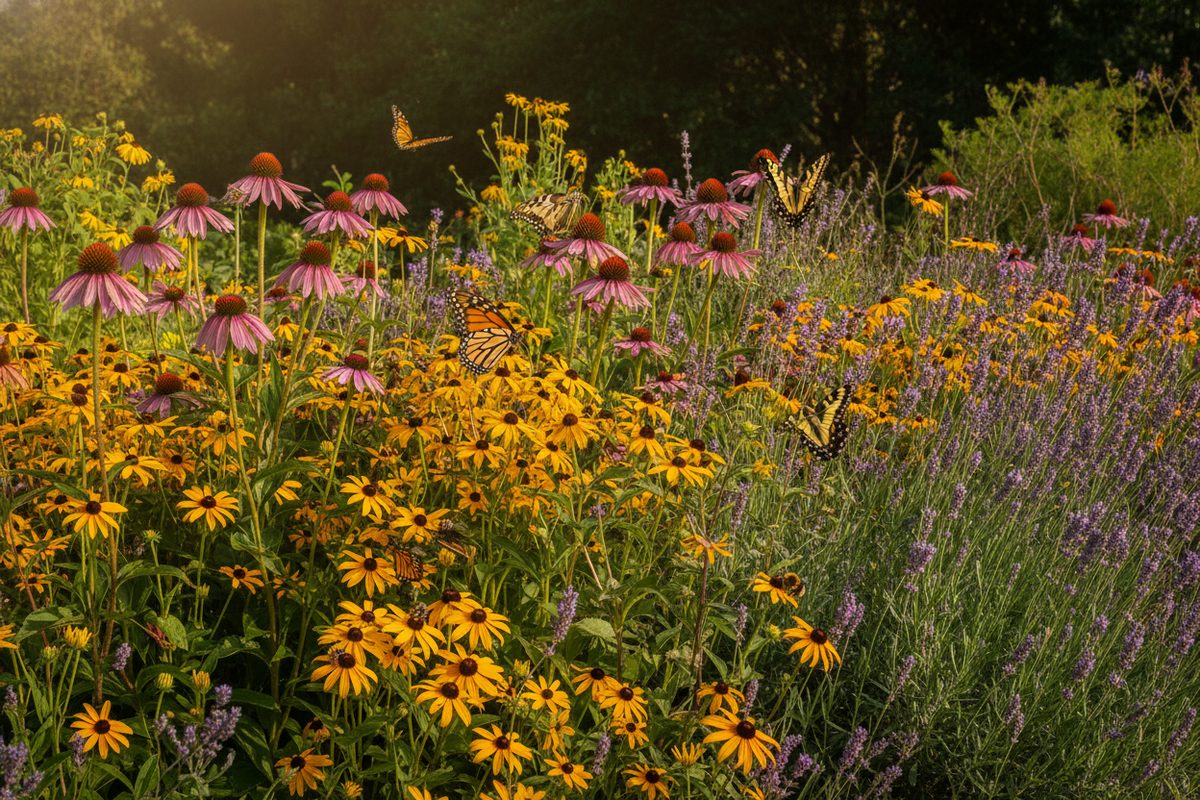
Edible flowers bridge the gap between ornamental and edible gardening more directly than any other category of plant. They are beautiful enough for any flower bed and safe enough for your plate.
- Nasturtiums: Trailing or bushy plants with round leaves and vibrant flowers in red, orange, and yellow. Both leaves and flowers are edible with a peppery flavor. Excellent in containers, hanging baskets, and as companion plants to repel aphids.
- Calendula: Bright orange and yellow daisy-like flowers that bloom prolifically from spring through frost. Petals are edible and used in salads, rice dishes, and as a saffron substitute. Deadhead regularly for continuous bloom.
- Borage: Star-shaped blue flowers with a mild cucumber flavor. The plant has an architectural, hairy form that adds texture. Self-seeds freely, so plant it once and enjoy it for years. Attracts pollinators in droves.
- Violas and Pansies: Cool-season flowers in every color imaginable. Freeze them in ice cubes for elegant cocktails, scatter them on salads, or crystallize them with sugar for cake decorating. They bloom in spring and fall, filling the gap when warm-season flowers are not yet active.
- Sunflowers: The ultimate cheerful plant. Dwarf varieties like Teddy Bear or Pacino work in borders. Tall varieties like Mammoth create dramatic backdrops and produce edible seeds. Birds love them too, adding wildlife interest to your edible landscape.
Seasonal Interest in the Edible Landscape
A well-designed edible landscape changes beautifully through the seasons, just like any thoughtfully planted garden.
Spring
Fruit tree blossoms dominate the spring landscape. Apple, cherry, pear, and plum trees explode in white and pink flowers. Underneath, bulbs like garlic (which produces attractive purple globes) and multiplier onions provide early structure. Cool-season greens like kale, lettuce, and spinach form colorful rosettes. Herb perennials like chives, oregano, and mint begin their annual growth with fresh, vibrant foliage.
Summer
Summer is peak abundance. Tomato vines heavy with red and yellow fruit, pepper plants in every color, sprawling squash with their enormous tropical leaves, and towering sunflowers create a lush, productive tapestry. Herbs are at their most fragrant and full. Basil, in particular, comes in varieties ranging from deep purple (Dark Opal) to bright green (Genovese) to variegated (Pesto Perpetuo), each adding different visual interest. For tips on growing the most productive summer crops, our beginner's guide to growing tomatoes is a great resource.
Fall
Autumn brings a harvest palette of warm colors. Ornamental kale and cabbage form stunning purple, white, and green rosettes that last well into winter. Apple and pear trees display golden and red foliage. Blueberry bushes turn crimson. Winter squash in orange, blue, and green sit beautifully on the vine. Leave some crops standing for visual interest rather than harvesting everything immediately.
Winter
Winter is the true test of an edible landscape's design. Evergreen herbs like rosemary, sage, and thyme provide structure. Red and yellow twig dogwood (not edible, but an excellent ornamental companion) adds color to bare beds. Dried seed heads from sunflowers, fennel, and dill create architectural silhouettes. In mild climates, cool-season crops like kale, Brussels sprouts, and leeks continue producing and looking handsome with frost-kissed foliage.
Front Yard Food Gardens
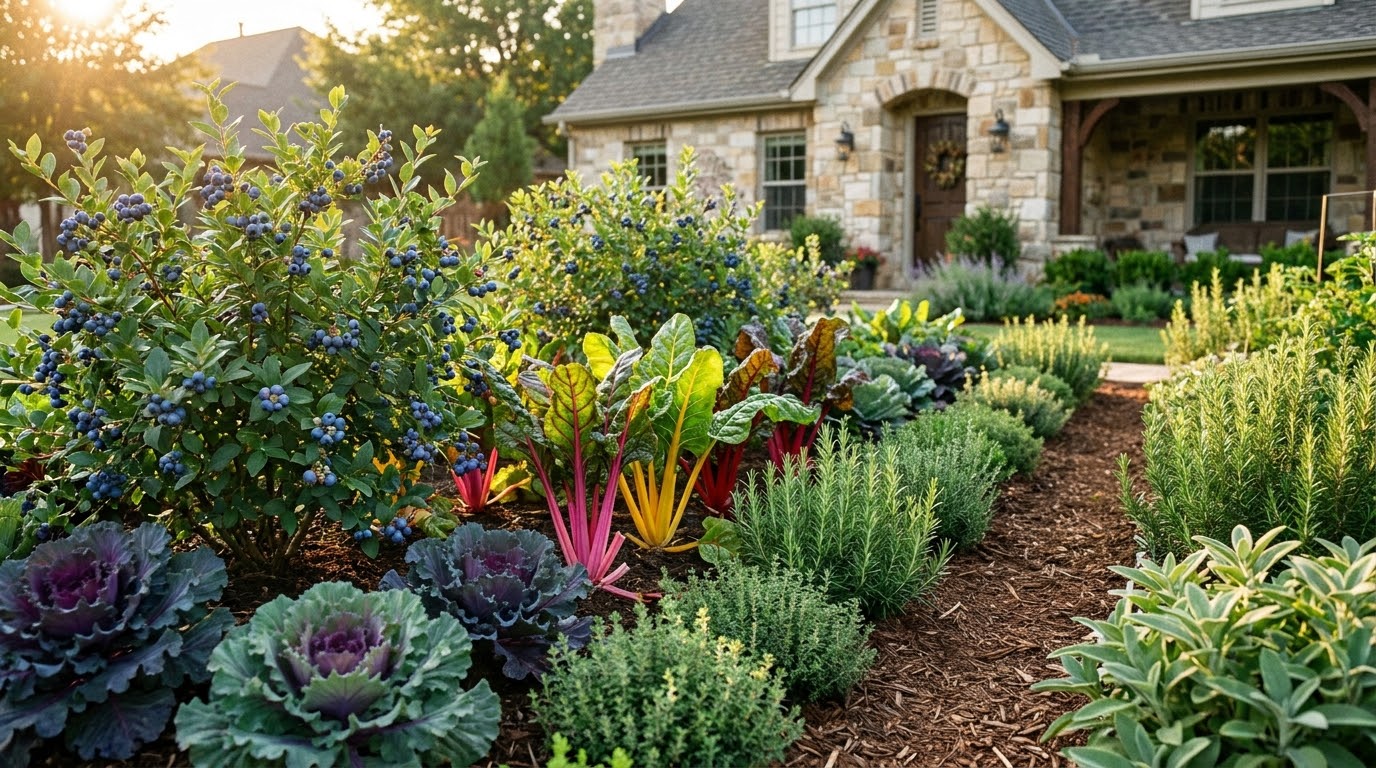
The front yard is the most visible and most underutilized growing space on most properties. Converting even a portion of it to edible landscaping can dramatically increase your food production while actually improving your home's curb appeal.
Start with the Foundation Bed
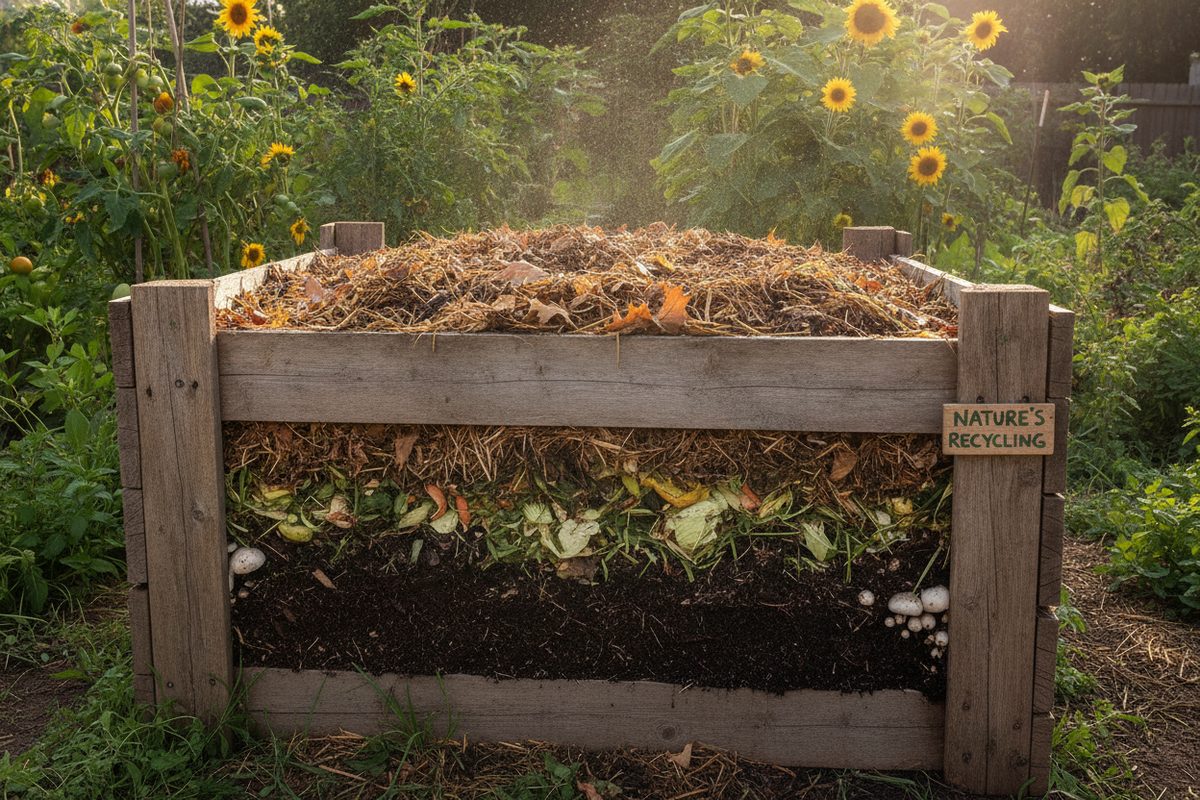
The foundation bed along your front wall is prime edible real estate. Replace ornamental shrubs with blueberry bushes, dwarf fruit trees, or a rosemary hedge. Fill in with herbs, edible flowers, and compact vegetables. The key to keeping it polished is consistent edging, clean mulch, and tidy spacing. Our guide on composting at home will help you build the rich soil foundation that makes these plantings thrive.
Replace Lawn with Edible Ground Cover
Consider replacing sections of front lawn with strawberry ground cover, herb carpets, or low-growing vegetable beds edged with stone or brick. The reduced mowing, watering, and fertilizing saves time and money, and the visual impact of a front yard filled with herbs and berries is far more interesting than another expanse of turfgrass.
Use Containers Strategically
Decorative containers flanking your front door, lining your walkway, or sitting on your porch can be planted with herbs, compact tomatoes, peppers, or strawberries instead of the usual petunias and geraniums. A large pot of trailing cherry tomatoes with basil at the base is every bit as attractive as a pot of ornamental flowers, and infinitely more useful.
Addressing HOA Concerns
If you live in a community with a homeowners association, check the rules before converting your front yard. Many HOAs have restrictions on garden height, appearance, and "non-landscaping" plantings. Edible landscaping that looks intentional, well-maintained, and aesthetically consistent rarely triggers complaints, even in strict communities. Formal herb borders, neatly mulched fruit tree plantings, and tidy raised beds with clean edges read as landscaping, not farming. The difference is design.
Getting Started with Edible Landscaping
You do not need to tear up your entire yard to begin. Start with these manageable steps.
- Audit your existing landscape. Walk your property and identify plants that provide only ornamental value. Consider what edible alternatives could replace them.
- Start with one bed. Choose the most visible bed in your yard and redesign it with edible plants. Use the design principles above to ensure it looks intentional.
- Add edible ground covers. Replace bare mulch areas or struggling lawn patches with strawberries, creeping thyme, or oregano.
- Plant one fruit tree. A single dwarf fruit tree is a commitment that pays dividends for decades. Choose a variety suited to your climate and site conditions.
- Edge with herbs. Replace the border plants along your walkway or foundation with lavender, rosemary, or thyme.
- Expand gradually. Each season, convert a little more of your landscape to edibles. Within a few years, you will have a yard that feeds your family and turns heads.
For pest management in an edible landscape where you want to avoid harsh chemicals, our guide on natural pest control methods covers organic strategies that keep your food-safe landscape healthy.
Frequently Asked Questions
Will edible landscaping actually look good, or will it look messy?
Edible landscaping looks as good as you design it. The key is applying the same design principles used in ornamental gardening: color theory, texture contrast, proper spacing, clean edges, and consistent maintenance. A well-designed edible landscape with neat mulch, defined borders, and intentional plant placement looks every bit as polished as a traditional ornamental garden. The messiness people associate with vegetable gardens comes from row-crop thinking, not from the plants themselves.
Can I do edible landscaping in a shady yard?
Yes, though your plant selection is more limited. Many edibles tolerate partial shade (four to six hours of sun): lettuce, spinach, kale, Swiss chard, herbs like mint, parsley, and cilantro, and fruits like blueberries, currants, and gooseberries. Rhubarb thrives in partial shade and provides bold, architectural foliage. Alpine strawberries are one of the best ground covers for shady spots. Focus on leafy greens and shade-tolerant berries rather than sun-hungry crops like tomatoes and peppers.
How much food can I actually produce from an edible landscape?
More than you might expect. A single dwarf apple tree can produce 50 to 100 pounds of fruit per year. A 20-foot hedge of blueberries yields 15 to 30 pounds. A foundation bed of herbs provides year-round flavoring that replaces $200 to $400 worth of grocery store herbs annually. A front yard converted to mixed edibles can produce hundreds of pounds of food per year while eliminating most of the maintenance associated with a traditional lawn.
Is edible landscaping more work than a traditional landscape?
In some ways, less. Edible landscapes typically require less mowing, less fertilizing with synthetic products, and less watering once established (since food plants are often mulched and irrigated more intentionally). The main additional tasks are harvesting, pruning fruit trees, and replacing annual edibles seasonally. Many edible landscaping plants, herbs, berries, fruit trees, and perennial vegetables, are lower maintenance than the annual flower beds they replace.
What about pests eating my food plants before I can harvest?
Pest management in edible landscapes relies on the same integrated pest management principles used in any organic garden. Encourage beneficial insects by planting flowers among your edibles. Use physical barriers like row covers for vulnerable crops. Choose disease-resistant varieties. Accept some cosmetic imperfection. A few holes in a leaf do not mean the plant is failing. For comprehensive organic strategies, see our guide on natural pest control methods.
Conclusion
Edible landscaping represents a fundamental shift in how we think about our outdoor spaces. Instead of maintaining ornamental landscapes that look nice but produce nothing, we can create gardens that feed our families, support pollinators, reduce our environmental footprint, and look stunning in the process. The plants are already available. The design principles are well established. The only thing required is a willingness to reconsider the outdated separation between beauty and utility in the garden.
Start small. Replace one ornamental shrub with a blueberry bush. Swap the petunias in your porch containers for trailing cherry tomatoes and basil. Edge your walkway with lavender instead of boxwood. Each small change proves the concept, and before long, you will find yourself seeing edible potential in every bed, border, and bare patch of your yard. That is when the real transformation begins, not just of your landscape, but of your relationship with the food you eat and the ground it grows from.
Combine your edible landscape with thoughtful soil building through composting, smart watering with drip irrigation, and sustainable practices like rainwater harvesting, and you will have a property that is as productive as it is beautiful. That is gardening at its finest.