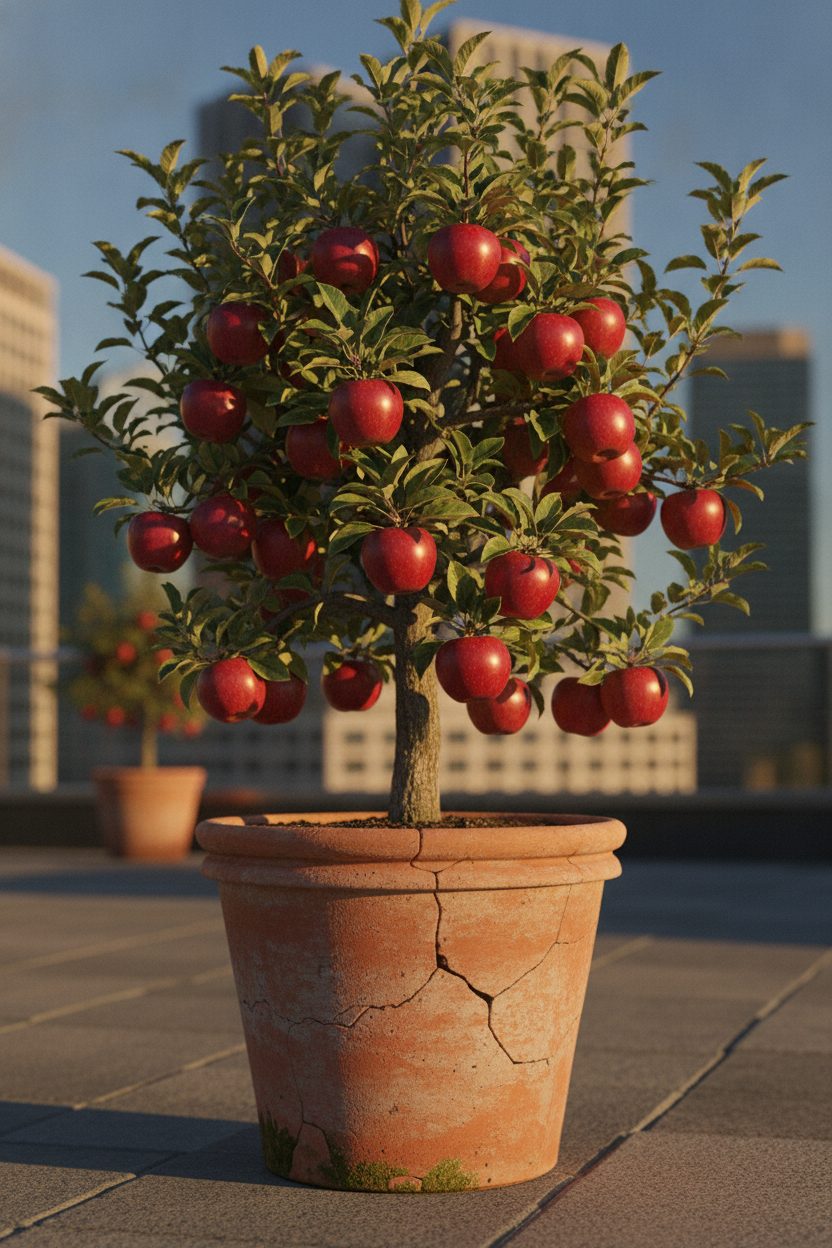
There is something deeply satisfying about stepping into your own backyard and picking a ripe, sun-warmed apple, peach, or cherry straight from the tree. For many gardeners, growing fruit trees is the ultimate expression of self-sufficiency and connection to the land. But what if your backyard is more of a postage stamp than a homestead? What if your only outdoor space is a balcony, a patio, or a narrow side yard?
The good news is that you do not need acres of land to grow fruit trees. Thanks to advances in rootstock breeding, grafting techniques, and creative growing methods, it is entirely possible to harvest fresh fruit from trees grown in containers, trained against walls, or pruned to fit the smallest corner of your yard. Dwarf and semi-dwarf varieties have made fruit growing accessible to apartment dwellers, urban gardeners, and anyone with limited outdoor space.
In this guide, we will explore the full range of options for growing fruit trees in small spaces. You will learn about dwarf and semi-dwarf varieties, container growing techniques, the ancient art of espalier, columnar tree varieties, and the best pruning strategies for keeping trees compact and productive. Whether you dream of growing apples on your balcony or cherries against your garage wall, this guide will show you exactly how to make it happen.
Why Grow Fruit Trees in Small Spaces
Growing your own fruit offers benefits that go far beyond the simple pleasure of eating a fresh apple. Store-bought fruit is often picked weeks before it is ripe, shipped thousands of miles, and treated with wax, fungicides, and preservatives to maintain its appearance during transport. Homegrown fruit, by contrast, can be picked at peak ripeness, when flavor and nutritional content are at their highest.
Fruit trees also contribute to a more sustainable lifestyle. Every piece of fruit you grow at home is one fewer item that needs to be packaged, refrigerated, and trucked across the country. Fruit trees sequester carbon, provide shade, support pollinators with spring blossoms, and add beauty to your landscape throughout the year.
For small-space gardeners specifically, compact fruit trees offer an opportunity to maximize productivity in minimal area. A single dwarf apple tree in a container can produce twenty to fifty apples per year. An espaliered pear tree against a fence can yield a surprising harvest while occupying barely more than a foot of depth. When you think vertically and creatively, even the tiniest space can become a productive fruit garden.
There is also an educational value to growing fruit trees. Children and adults alike learn patience, seasonal rhythms, and the miracle of pollination and fruit development. Watching a blossom transform into a ripe fruit over the course of several months is one of the most rewarding experiences in gardening.
Understanding Tree Sizes: Dwarf, Semi-Dwarf, and Standard
Fruit trees come in three general size categories, determined primarily by the rootstock they are grafted onto rather than the fruit variety itself. Understanding these categories is essential for choosing the right tree for your space.
Standard trees are the largest, growing to their full genetic potential. A standard apple tree can reach twenty-five to thirty-five feet tall with a similar spread. Standard trees take the longest to begin bearing fruit, typically five to eight years after planting, but they produce the largest harvests and have the longest lifespan. These trees are best suited to orchards and large rural properties.
Semi-dwarf trees are grafted onto rootstocks that reduce their size by roughly 40 to 50 percent. A semi-dwarf apple tree typically grows twelve to eighteen feet tall. These trees begin bearing fruit sooner than standards, usually within three to five years, and they produce substantial harvests. Semi-dwarf trees are an excellent choice for average-sized suburban yards and can often be kept smaller with regular pruning.
Dwarf trees are grafted onto the most size-restricting rootstocks, resulting in trees that typically grow six to ten feet tall. Dwarf trees are the earliest to bear fruit, often producing within two to three years of planting. Their compact size makes them ideal for containers, small yards, and intensive growing systems. The trade-off is that dwarf trees generally produce fewer fruits per tree and may have shorter lifespans than larger types, often fifteen to twenty years compared to fifty or more for standards.
There is also a category sometimes called ultra-dwarf or patio trees, which grow only four to six feet tall. These are particularly well suited to container growing on balconies and patios. They are often sold as patio or columnar varieties and can be grown in large pots indefinitely with proper care.
Choosing the Right Rootstock
The rootstock is the root system and lower trunk onto which the desired fruit variety is grafted. It determines the ultimate size of the tree, its cold hardiness, disease resistance, soil adaptability, and how quickly it begins bearing fruit. For small-space growing, choosing the right rootstock is just as important as choosing the right fruit variety.
For apples, the most common dwarfing rootstocks include M.9 (which produces very dwarf trees of six to eight feet) and M.26 (which produces slightly larger dwarf trees of eight to ten feet). Geneva rootstocks, developed at Cornell University, offer improved disease resistance over the older Malling series. G.41 and G.935 are excellent choices for cold climates, while G.11 is a good option for container growing.
For pears, Quince rootstocks produce the most dwarfing effect, yielding trees of eight to twelve feet. However, not all pear varieties are compatible with quince, so check compatibility before purchasing. OHxF87 and OHxF97 are semi-dwarfing rootstocks that produce trees of twelve to sixteen feet and are compatible with most pear varieties.
Stone fruits like cherries, peaches, plums, and apricots have their own dwarfing rootstocks. Gisela 5 and Gisela 6 are popular dwarfing rootstocks for cherries, producing trees of eight to twelve feet. Citation is a semi-dwarfing rootstock used for peaches, plums, and apricots. St. Julien A is a semi-dwarfing rootstock commonly used for plums in cooler climates.
When purchasing a fruit tree, always check which rootstock it is grafted onto. Reputable nurseries will list the rootstock on the label or in the product description. If you are unsure which rootstock is best for your situation, consult your local cooperative extension service or a knowledgeable nursery professional.
Container Growing: The Ultimate Small-Space Solution
Growing fruit trees in containers is the most versatile approach for small-space gardeners. Container trees can be placed on patios, balconies, rooftops, driveways, or any sunny spot with a flat surface. They can be moved to follow the sun, sheltered from harsh weather, or brought indoors during extreme cold. Best of all, containers give you complete control over the growing medium, which means you can optimize soil conditions regardless of what lies beneath your property.
Choosing the right container is critical. Fruit trees need pots that are at least eighteen to twenty-four inches in diameter and equally deep. Larger containers, twenty-four to thirty-six inches, are even better because they hold more soil, retain moisture longer, and provide more room for root growth. Half whiskey barrels, large terra cotta pots, fabric grow bags, and sturdy plastic planters all work well. Whatever container you choose, make sure it has adequate drainage holes in the bottom.
Potting mix for container fruit trees should be lightweight, well-draining, and rich in organic matter. A blend of high-quality potting soil, compost, perlite, and aged bark works well. Avoid using garden soil in containers, as it compacts easily, drains poorly, and may harbor pathogens. Some growers add slow-release fertilizer granules to the potting mix at planting time to provide a steady nutrient supply for the first few months.
Watering is the most important ongoing task for container fruit trees. Potted trees dry out much faster than those planted in the ground, especially during hot, windy weather. In summer, container trees may need water daily or even twice daily. Check the soil moisture by inserting your finger two inches into the potting mix. If it feels dry, water thoroughly until water runs freely from the drainage holes. In winter, reduce watering significantly but never allow the soil to dry out completely, as desiccated roots can kill a dormant tree.
Fertilizing container trees requires more frequent attention than in-ground trees because nutrients leach out with regular watering. Apply a balanced, slow-release fertilizer in early spring as growth resumes, and supplement with a liquid fertilizer every two to four weeks during the growing season. Organic options like fish emulsion, liquid kelp, and compost tea work well. Reduce fertilization in late summer to allow the tree to prepare for dormancy.
Winter protection is essential for container trees in cold climates. Roots in above-ground containers are much more exposed to freezing temperatures than roots in the ground. In zones 6 and below, insulate containers by wrapping them in burlap, bubble wrap, or insulating blankets. Grouping pots together against a south-facing wall provides additional protection. In very cold climates, you may need to move container trees into an unheated garage or shed for the winter. Water sparingly during winter storage to prevent root desiccation.
Espalier: Training Fruit Trees Flat
Espalier is an ancient technique of training trees to grow flat against a wall, fence, or freestanding support. The practice dates back to Roman times and was perfected in European monastery gardens where space was limited and walls provided valuable reflected heat. Today, espalier is experiencing a revival among small-space gardeners who want to grow fruit in areas where a conventional tree would never fit.
The basic principle of espalier is simple: by training branches to grow horizontally along wires or supports, you create a tree that occupies only two dimensions instead of three. A well-executed espalier can be kept as narrow as twelve to eighteen inches while still producing a meaningful harvest of fruit. The flat form also makes harvesting, pruning, and pest management easier because everything is within arm's reach.
Getting started with espalier begins with choosing the right tree. Select a one- or two-year-old whip, which is a single-stem young tree without side branches. Bare-root trees planted in late winter or early spring are ideal because they are easier to train than more mature specimens. Apples and pears are the most popular choices for espalier because their flexible branches respond well to training, and they produce fruit on spurs that develop along the branches. Cherries, plums, and figs can also be espaliered with somewhat more effort.
Install a support system before planting. For wall-mounted espalier, attach heavy-gauge galvanized wire to the wall using eye bolts and wall anchors, spacing the wires twelve to eighteen inches apart vertically. For freestanding espalier, install sturdy posts and string wire between them at the same intervals. The lowest wire should be about eighteen inches above the ground.
Plant the tree about six to eight inches from the wall or support. After planting, cut the central leader back to just above the first wire. During the growing season, select the strongest new shoots that emerge and tie them to the wires in the desired pattern. The simplest pattern is the horizontal cordon, where two branches are trained horizontally from each tier. More elaborate patterns, such as the Belgian fence, fan, or candelabra, require more skill and patience but create stunning visual displays.
As the tree grows, continue selecting and training branches to fill the framework. Remove any shoots that grow toward or away from the wall, keeping growth flat. Pinch back vigorous vertical shoots throughout the growing season to encourage the development of fruiting spurs along the horizontal branches. With consistent attention over two to four years, you will have a beautiful, productive espalier that produces fruit for decades.
Columnar and Urban Fruit Trees
Columnar fruit trees represent the cutting edge of small-space fruit growing. These naturally compact trees grow upright with very short internodes and minimal lateral branching, creating a narrow, column-like form that takes up remarkably little ground space. Most columnar trees grow only eight to ten feet tall and two to three feet wide, making them perfect for containers, narrow beds, or even large planters along a walkway.
Columnar apple trees are the most widely available. Varieties like North Pole, Scarlet Sentinel, Golden Sentinel, and Tuscan produce full-sized fruit on trees that look more like narrow poles than traditional apple trees. They are available on dwarfing rootstocks, which further limits their size, and they begin bearing fruit within two to three years of planting.
While columnar apples are the most common, breeders have also developed compact forms of other fruit trees. Genetic dwarf peaches and nectarines, such as Bonfire, Necta Zee, and Garden Belle, naturally grow only four to six feet tall with dense, bushy habits. These varieties are excellent for containers and require minimal pruning to maintain their compact form. However, they may produce smaller fruit than standard varieties, and their yields per tree are lower.
Columnar trees are particularly well suited to urban gardening. Their narrow form allows them to fit along fences, beside doorways, or in corners where a spreading tree would be impractical. Several columnar trees can be planted in a row to create a living screen or fence that produces fruit while providing privacy. In containers on a rooftop or balcony, columnar trees bring fruit growing to spaces that would otherwise be completely unsuitable.
Best Dwarf Fruit Tree Varieties by Type
Apples are the most versatile fruit for small-space growing. Excellent dwarf varieties include Honeycrisp on M.9 rootstock for outstanding flavor, Gala for reliable production, Fuji for sweetness, Liberty for disease resistance, and Cox's Orange Pippin for a complex, aromatic flavor. For columnar growing, North Pole and Scarlet Sentinel are top choices. Most apple varieties need a pollination partner, so plant at least two compatible varieties or choose a self-fertile type like Granny Smith.
Pears are well suited to espalier and produce abundantly in small spaces. Dwarf Bartlett is a classic choice for rich, buttery fruit. Dwarf Comice is considered the finest dessert pear. Dwarf Moonglow is an excellent disease-resistant variety. For espalier, Warren, Seckel, and Hosui are outstanding. Asian pears like Hosui and Shinseiki are naturally compact and produce round, crisp fruit that stores exceptionally well.
Cherries come in sweet and sour types, both of which can be grown in small spaces on dwarfing rootstocks. Stella and Lapins are self-fertile sweet cherries that do not require a pollination partner. Compact Stella is an even more dwarfing option. North Star and Morello are sour cherries that are naturally smaller, self-fertile, and exceptionally cold-hardy. Sour cherries are excellent for pies, jams, and preserves.
Peaches and nectarines are surprisingly well suited to container growing, especially genetic dwarf varieties. El Dorado, Bonanza, and Garden Gold are dwarf peaches that grow only four to six feet tall and produce full-sized, flavorful fruit. For standard dwarf peaches on rootstock, Contender is an excellent cold-hardy choice, while Redhaven is prized for its reliable production and classic flavor. Most peaches and nectarines are self-pollinating, making them ideal for single-tree gardens.
Figs are among the easiest fruit trees to grow in containers. They are self-fertile, relatively pest-free, and can be kept compact with pruning. Chicago Hardy is the most cold-tolerant fig, surviving temperatures down to zero degrees Fahrenheit. Brown Turkey is a reliable producer of sweet, dark figs. Petite Negra is a true dwarf fig that grows only three to four feet tall and produces full-sized fruit. Figs in containers can be brought into a garage or basement for winter storage in cold climates. For more indoor growing ideas, check our guide to growing herbs indoors.
Citrus trees are naturally compact and well suited to container growing, though they require protection from freezing temperatures in most of North America. Meyer lemons are the most popular container citrus, producing fragrant blossoms and fruit year-round. Calamondin oranges are exceptionally compact and prolific. Key limes, kumquats, and Satsuma mandarins also do well in large pots. In cold climates, grow citrus in containers and move them indoors during winter, placing them near a bright, south-facing window.
Dwarf Fruit Tree Varieties Reference Table
The following table summarizes the best dwarf fruit tree varieties for small-space growing, including mature height, container suitability, and pollination requirements.
| Fruit Type | Variety | Mature Height | Container Suitable | Self-Pollinating |
|---|---|---|---|---|
| Apple | Honeycrisp (M.9) | 6-8 ft | Yes | No |
| Apple | Gala (M.26) | 8-10 ft | Yes | No |
| Apple | Liberty (M.9) | 6-8 ft | Yes | No |
| Apple | North Pole (Columnar) | 8-10 ft | Yes | No |
| Pear | Bartlett (Quince) | 8-12 ft | Yes | No |
| Pear | Comice (OHxF87) | 12-15 ft | No | No |
| Pear | Hosui (Asian) | 8-10 ft | Yes | No |
| Cherry | Stella (Gisela 5) | 8-10 ft | Yes | Yes |
| Cherry | Compact Stella | 6-8 ft | Yes | Yes |
| Cherry | North Star | 8-10 ft | Yes | Yes |
| Peach | El Dorado (Genetic Dwarf) | 4-6 ft | Yes | Yes |
| Peach | Bonanza (Genetic Dwarf) | 4-6 ft | Yes | Yes |
| Peach | Redhaven (Lovell) | 8-10 ft | Yes | Yes |
| Nectarine | Necta Zee (Genetic Dwarf) | 4-6 ft | Yes | Yes |
| Plum | Beauty (Citation) | 8-10 ft | Yes | No |
| Plum | Mirabelle (St. Julien A) | 10-12 ft | No | Yes |
| Fig | Chicago Hardy | 6-8 ft | Yes | Yes |
| Fig | Petite Negra | 3-4 ft | Yes | Yes |
| Citrus | Meyer Lemon | 4-6 ft | Yes | Yes |
| Citrus | Calamondin | 3-5 ft | Yes | Yes |
Pollination Requirements
Pollination is one of the most important considerations when planning a small-space fruit garden. Some fruit trees are self-pollinating, meaning they can produce fruit with their own pollen. Others require cross-pollination from a different compatible variety, which means you need at least two trees of different varieties that bloom at the same time.
Self-pollinating fruit types include most peaches, nectarines, sour cherries, figs, and citrus. These are the easiest choices for small-space gardeners because you only need one tree. However, even self-pollinating trees often produce better yields when a compatible pollinator is nearby, so if space allows, planting two is still worthwhile.
Cross-pollinating fruit types include most apples, sweet cherries, pears, and some plums. For apples, you need two different varieties that bloom at the same time. Crabapple trees also work as pollinators for apple trees and are often more compact. For sweet cherries, Bing needs a compatible variety like Lapins, Stella, or Rainier. If space is extremely limited, look for varieties that are described as self-fertile, or consider planting a multi-graft tree that has two or more compatible varieties grafted onto a single rootstock.
Bees are the primary pollinators for fruit trees. Attract them to your garden by planting pollinator-friendly flowers nearby. Our guide on creating a pollinator-friendly garden has detailed recommendations. In urban environments where bee populations may be lower, you can hand-pollinate blossoms using a small paintbrush to transfer pollen from flower to flower.
Pruning for Small Spaces
Pruning is the single most important skill for keeping fruit trees compact and productive in small spaces. Without regular pruning, even dwarf trees can become overgrown, tangled, and unproductive. The goal of pruning is to maintain an open, balanced framework of branches that allows sunlight and air to penetrate the canopy, encourages the development of fruiting wood, and keeps the tree at a manageable size.
The best time to prune most fruit trees is in late winter or early spring, while the tree is still dormant but just before buds begin to swell. This timing allows you to see the branch structure clearly without leaves obscuring your view, and pruning wounds heal quickly once growth resumes. Avoid pruning in fall, as fresh cuts can be damaged by winter cold. Summer pruning can be used to control vigorous growth and redirect energy into fruit production.
Start by removing the three D's: dead, damaged, and diseased wood. Then remove any branches that cross over or rub against each other, as these create wounds that invite disease. Thin out crowded interior branches to improve air circulation. Remove any suckers growing from the rootstock below the graft union, as these will not produce the desired fruit and will sap energy from the tree.
For container trees, annual root pruning is also beneficial. Every two to three years, remove the tree from its pot in late winter, trim back the outer third of the root ball with a sharp knife or pruning saw, refresh the potting mix, and repot. Root pruning prevents the tree from becoming root-bound, stimulates new root growth, and keeps the tree healthy and productive in its container.
To maintain a dwarf size, use a technique called heading back, which involves cutting branches back to a desired length. This encourages the development of lateral branches and fruiting spurs rather than long, unproductive growth. Cut back to an outward-facing bud to direct new growth away from the center of the tree. Combine heading back with thinning cuts that remove entire branches at their base to maintain an open, balanced canopy.
Year-Round Care Guide
Spring: As buds begin to swell, apply a balanced fertilizer to container trees and in-ground dwarf trees. Inspect for signs of disease or overwintering pests. Apply a dormant oil spray before bud break if scale or aphids were a problem the previous year. Begin regular watering as growth resumes. Thin fruit after the June drop to improve the size and quality of remaining fruit. Our guide to growing tomatoes covers similar spring care principles for fruiting plants.
Summer: Water container trees daily or as needed to keep soil consistently moist but not waterlogged. Continue fertilizing every two to four weeks with a liquid fertilizer. Monitor for pests like aphids, codling moth, and plum curculio. Harvest fruit as it ripens. Prune excessively vigorous shoots to maintain tree shape and redirect energy into fruit development. Protect ripening fruit from birds with netting if needed.
Fall: After harvest, reduce watering and stop fertilizing to allow the tree to harden off for winter. Rake up and dispose of fallen leaves and mummified fruit to reduce overwintering disease inoculum. Apply a layer of mulch around the base of in-ground trees to insulate roots. Prepare container trees for winter by insulating pots or moving them to protected locations. Perform a light cleanup pruning to remove any dead or damaged branches.
Winter: This is the primary pruning season for most fruit trees. Prune while the tree is dormant, ideally in late winter just before spring growth begins. Inspect stored container trees monthly and water sparingly to prevent root desiccation. Order new trees for spring planting while the best selection is available. Plan your pruning strategy for the coming season. For more seasonal gardening guidance, see our complete guide to starting a vegetable garden.
Choosing Varieties for Your Climate
Your USDA hardiness zone is a critical factor in choosing fruit tree varieties. Most dwarf apple varieties are hardy in zones 4 through 8, with some varieties like Honeycrisp tolerating zone 3. Pears are generally hardy in zones 4 through 9. Sweet cherries prefer zones 5 through 7, while sour cherries are hardy to zone 4. Peaches and nectarines are best in zones 5 through 9, though some cold-hardy varieties can succeed in zone 4 with protection.
Figs are hardy in zones 7 through 10 outdoors, but container-grown figs can be grown in any zone if they are brought indoors or into a protected space during winter. Citrus trees are tropical and subtropical plants, hardy only in zones 9 through 11 outdoors, but they thrive as container plants in any zone when given winter protection.
Beyond hardiness zones, consider your local climate factors. In areas with hot, humid summers, choose disease-resistant varieties to minimize problems with fungal diseases like apple scab, fire blight, and brown rot. In areas with late spring frosts, select varieties that bloom later to reduce the risk of blossom damage. In areas with short growing seasons, choose early-ripening varieties that can mature before the first fall frost.
Your local cooperative extension service is an invaluable resource for variety recommendations. They can tell you which varieties perform best in your specific region and which problems are most common in your area. Many extension services publish variety guides specifically for home fruit growers.
Frequently Asked Questions
Can fruit trees really grow in containers?
Yes, many fruit trees thrive in containers when given the right care. Dwarf and semi-dwarf varieties on appropriate rootstocks are best suited for container growing. Choose pots at least 18 to 24 inches in diameter with good drainage, use a high-quality potting mix, and water and fertilize more frequently than in-ground trees. Apples, citrus, figs, cherries, and peaches all have varieties that do well in containers. With proper care, container fruit trees can produce abundant harvests for many years.
What is the difference between dwarf and semi-dwarf fruit trees?
Dwarf fruit trees typically grow 6 to 10 feet tall and begin bearing fruit within 2 to 3 years. They are created by grafting a fruiting variety onto a rootstock that restricts size. Semi-dwarf trees grow 12 to 18 feet tall and also bear fruit earlier than standard trees, usually within 3 to 5 years. Dwarf trees are ideal for containers and the smallest spaces, while semi-dwarf trees work well in medium-sized yards and can produce larger harvests.
What is espalier, and how does it save space?
Espalier is a pruning and training technique where fruit trees are grown flat against a wall, fence, or trellis in two dimensions rather than three. Branches are trained along horizontal wires or supports, creating a living wall of fruit. This technique saves tremendous space because trees can be kept as narrow as 12 inches while still producing a meaningful harvest. Apples and pears are the most popular choices for espalier, and the technique also creates beautiful ornamental features in the garden.
How often should I water container fruit trees?
Container fruit trees typically need watering daily during hot summer weather and every 2 to 3 days during cooler periods. The frequency depends on pot size, tree size, temperature, wind, and humidity. Check the soil by inserting your finger 2 inches deep; if it feels dry, water thoroughly until water drains from the bottom. In winter, reduce watering significantly but never let the soil dry out completely, as desiccated roots can kill a dormant tree.
Do I need more than one fruit tree for pollination?
It depends on the fruit type. Many apple varieties require a different compatible variety nearby for cross-pollination, though some are self-fertile. Most sweet cherries need a pollination partner, while sour cherries are typically self-fertile. Peaches, nectarines, and most fig varieties are self-pollinating and can produce fruit with just one tree. Citrus trees are also generally self-fertile. When space is limited, choose self-pollinating varieties or plant a compatible pollinator in a nearby container.
Growing fruit trees in small spaces is one of the most rewarding challenges a gardener can take on. The sight of blossoms in spring, the satisfaction of watching fruit develop through summer, and the joy of harvesting your own homegrown apples, pears, or peaches make every bit of effort worthwhile. With dwarf varieties, container growing, espalier, and smart pruning, even the smallest space can become a productive fruit garden. Start with one tree, learn as you go, and expand your collection over time. Before long, you will wonder how you ever gardened without fresh fruit growing right outside your door.