Introduction
There is nothing quite like snipping fresh basil into a simmering pasta sauce or tossing a handful of just-picked cilantro into a bowl of tacos. Fresh herbs elevate everyday cooking from ordinary to extraordinary, and growing them indoors means you never have to settle for those sad, overpriced plastic clamshells at the grocery store.
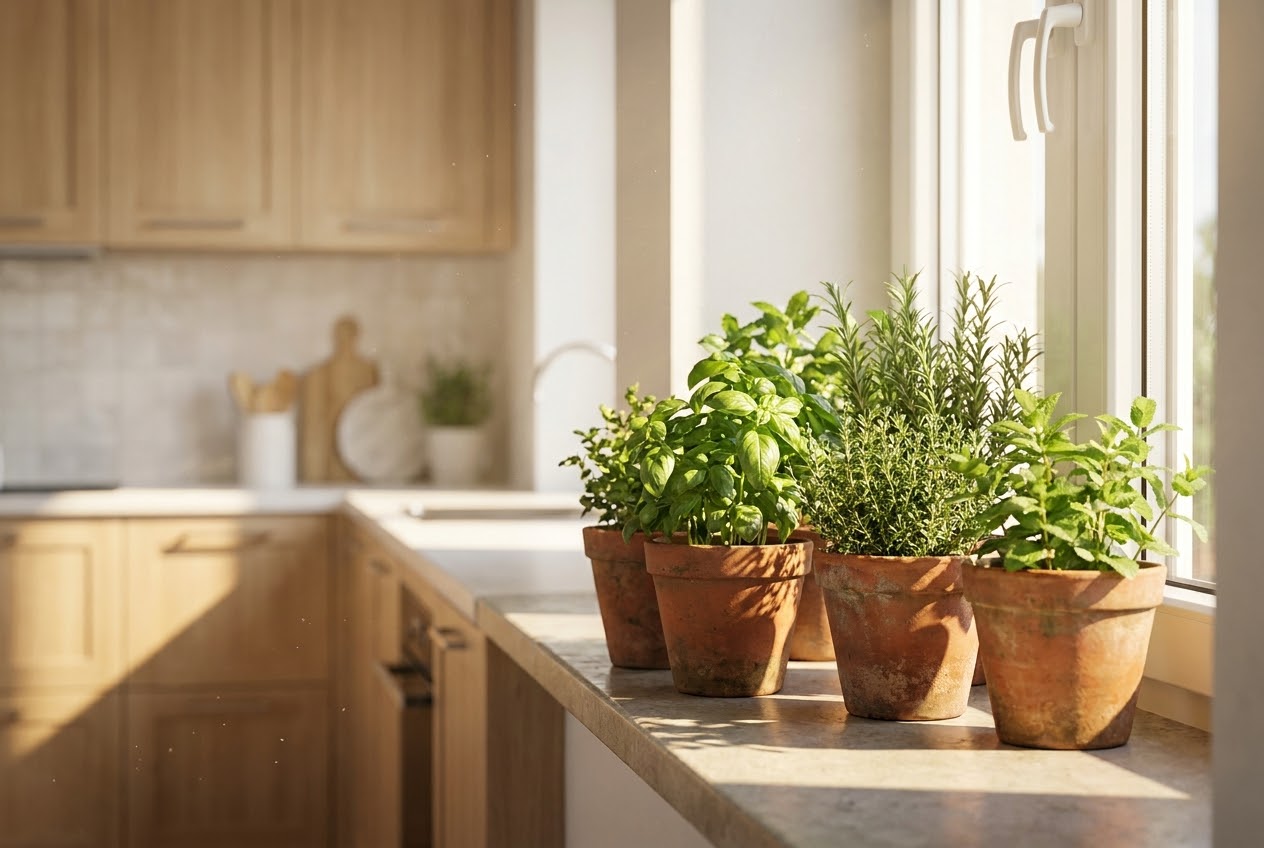
An indoor herb garden is one of the simplest and most rewarding projects for any home, whether you live in a sprawling house or a tiny apartment. You do not need a yard, a balcony, or even a particularly green thumb. What you do need is a sunny window, a few pots, and a basic understanding of what each herb prefers. This guide covers twelve herbs that thrive indoors year-round, along with everything you need to know to keep them healthy, productive, and within reach whenever inspiration strikes in the kitchen.
The beauty of indoor herb gardening is that it requires minimal investment and yields maximum reward. A few dollars for seeds or starter plants, some potting soil, and a collection of containers are all it takes to set up a kitchen garden that produces fresh flavor every single day of the year.
Setting Up Your Indoor Herb Garden
Before we dive into individual herb profiles, let us cover the fundamentals that apply to every herb you will grow indoors.
Light Requirements
Light is the biggest challenge for indoor herbs. Most culinary herbs are Mediterranean natives that evolved under blazing sun. Indoors, even the sunniest window delivers significantly less light than an outdoor garden. A south-facing window is ideal and provides the most consistent light throughout the day. East-facing windows work well for herbs that prefer slightly less intense light, like parsley and cilantro. West-facing windows get strong afternoon sun, which can be too intense for some tender herbs. North-facing windows rarely provide enough light for most herbs.
If your windows are not cooperating, supplemental lighting makes a huge difference. A simple full-spectrum LED grow light positioned six to twelve inches above your herbs, running for twelve to sixteen hours a day, will keep them lush and productive even in a dark apartment. Timer plugs make this effortless.
Containers and Drainage
Drainage is non-negotiable. Every pot must have at least one drainage hole at the bottom. Herbs that sit in waterlogged soil develop root rot quickly, and there is no coming back from that. Terra cotta pots are a great choice for herbs because they are porous and allow excess moisture to evaporate through the walls, reducing the risk of overwatering. Ceramic and plastic pots work too, but you will need to be more careful with watering.
Size matters as well. Most herbs do well in pots that are six to eight inches in diameter. Larger herbs like rosemary and bay laurel eventually need ten- to twelve-inch pots. Starting herbs in pots that are too large can lead to waterlogged soil because the roots cannot absorb moisture fast enough. It is better to pot up gradually as the plant grows.
Soil and Potting Mix
Never use garden soil for indoor herbs. It compacts easily, drains poorly, and may contain pests or diseases. Instead, use a high-quality potting mix designed for containers. A good indoor herb mix should be light, well-draining, and rich in organic matter. You can improve drainage further by mixing in a handful of perlite or coarse vermiculite per pot.
Watering Indoor Herbs
Overwatering is the number one killer of indoor herbs. The top inch of soil should be dry before you water again. Stick your finger into the soil and check. When you do water, water thoroughly until it flows out the drainage hole, then empty the saucer so the pot is not sitting in water. Most indoor herbs prefer slightly dry conditions over constantly moist soil.
Temperature and Humidity
Most herbs are comfortable in the same temperatures that people find comfortable, between 60 and 75°F (15 to 24°C). Keep herbs away from cold drafts near windows in winter and from heating vents that blow hot, dry air. Kitchens and bathrooms tend to have slightly higher humidity, which herbs appreciate, but none of the herbs on this list require special humidity arrangements.
The 12 Best Herbs for Indoor Growing
1. Basil (Ocimum basilicum)
Basil is the undisputed king of indoor herbs and the first one most people think of when they imagine a kitchen windowsill garden. It loves warmth and light, making it a perfect candidate for a south-facing window or under grow lights. Basil is an annual, meaning it completes its life cycle in one growing season, but you can keep it productive for months by harvesting regularly and preventing it from flowering.
Pinch off the top sets of leaves whenever the plant has more than three sets of leaves. This encourages bushier growth and delays flowering. If flower buds do appear, pinch them off immediately. Once basil flowers, the leaves turn bitter and the plant puts its energy into seed production. Start new plants from seed every few months to maintain a continuous supply.
Basil pairs beautifully with tomatoes, making it a natural companion if you are also growing cherry tomatoes indoors or in your outdoor garden. For a complete guide to growing tomatoes alongside your herbs, see our beginner's guide to growing tomatoes.
2. Rosemary (Salvia rosmarinus)
Rosemary is a woody perennial that can live for years indoors if given enough light. It needs at least six hours of direct sunlight and prefers the conditions of a sunny south-facing window. Rosemary likes its soil on the drier side and is highly susceptible to root rot from overwatering. Let the soil dry out significantly between waterings, and make sure the pot has excellent drainage.
One common challenge with indoor rosemary is powdery mildew, a white fungal coating that appears when air circulation is poor. Place a small fan nearby or open a window periodically to keep air moving around the plant. Rosemary grows slowly indoors, so do not expect the rapid growth you would see outdoors. Harvest sprigs from the tips to encourage branching, and avoid cutting into old, woody stems.
3. Thyme (Thymus vulgaris)
Thyme is another Mediterranean herb that adapts well to indoor life. It is a low-growing, spreading plant that works beautifully in shallow pots or as part of an herb arrangement. Thyme tolerates drier conditions better than most herbs and actually prefers lean, well-drained soil. Water it sparingly and let the soil dry between waterings.
The biggest mistake indoor gardeners make with thyme is overwatering. Thyme originates in rocky, arid hillsides where water drains away quickly. Recreate those conditions with a gritty potting mix and infrequent watering, and your thyme will thrive for years. Harvest sprigs as needed, cutting just above a leaf node to promote new growth.
4. Mint (Mentha spp.)
Mint is one of the easiest herbs to grow indoors, and it is also one of the most vigorous. In fact, mint grows so aggressively that it is best kept in its own pot to prevent it from overwhelming neighboring plants. Spearmint and peppermint are the most popular varieties, but chocolate mint, apple mint, and orange mint all do well indoors.
Mint prefers consistently moist soil and tolerates lower light levels better than most herbs, making it a good choice for east-facing windows. It does, however, produce the most flavorful leaves in bright light. Harvest frequently by pinching stems just above a leaf pair. Mint is incredibly generous: the more you harvest, the more it grows. Fresh mint tea, anyone? If you are interested in growing more plants from cuttings, our guide on growing microgreens at home covers similar propagation techniques.
5. Parsley (Petroselinum crispum)
Parsley is a biennial that produces a rosette of flavorful leaves in its first year and flowers in its second. Both flat-leaf (Italian) and curly varieties grow well indoors. Parsley tolerates lower light levels than basil or rosemary, making it suitable for east-facing or even bright north-facing windows. It prefers consistently moist soil and appreciates regular harvesting.
Parsley grows from a long taproot, so it needs a deeper pot than most herbs, at least eight inches. Starting from seed is slow (germination takes two to three weeks), so many gardeners prefer to buy established plants from a nursery. To extend the life of your parsley, harvest the outer leaves first and let the center continue producing new growth.
6. Cilantro (Coriandrum sativum)
Cilantro is a fast-growing annual that bolts quickly in warm conditions. Indoors, where temperatures are more stable, you can slow bolting and extend the harvest window. Cilantro prefers cooler conditions (60 to 70°F) and does best in an east-facing window with morning sun. Plant seeds directly in the pot because cilantro does not transplant well due to its taproot.
Sow seeds every three to four weeks for a continuous supply. Once the plant sends up a flower stalk, the leaves will become bitter. At that point, let it flower and collect the seeds, which are the spice known as coriander. Cilantro is one of the few herbs that gives you two harvests from the same plant: leaves first, then seeds.
7. Chives (Allium schoenoprasum)
Chives are among the most forgiving herbs for indoor growing. They tolerate a range of light conditions, bounce back from neglect, and produce a steady supply of mild onion-flavored leaves. They are perennial and will come back year after year with minimal care. Chives also produce attractive purple flowers that are edible and make a beautiful garnish.
Grow chives in a pot at least six inches wide. They form dense clumps over time and benefit from being divided every two to three years. Harvest by cutting leaves to about two inches above the soil level. The plant will regrow quickly, and regular cutting prevents the leaves from becoming tough and fibrous. Chive flowers can be snipped and used in salads, compound butters, or as a finishing touch on soups.
8. Oregano (Origanum vulgare)
Oregano is a hardy perennial that handles indoor conditions with ease. It needs plenty of light, at least six hours, and prefers its soil on the dry side. Like its relatives thyme and rosemary, oregano is a Mediterranean native that does not like wet feet. Allow the top inch of soil to dry between waterings.
Oregano can become leggy indoors if it does not get enough light. If you notice the stems stretching and the leaves becoming sparse, move it to a brighter location or add supplemental lighting. Harvest sprigs regularly and pinch the growing tips to encourage a bushier habit. Fresh oregano has a more complex, less pungent flavor than dried, and it is wonderful in pasta sauces, pizza, and grilled vegetables.
9. Sage (Salvia officinalis)
Sage is a beautiful silvery-green herb with a warm, earthy flavor that pairs well with poultry, stuffing, and winter squash. It is a woody perennial that grows slowly indoors but can live for many years with proper care. Sage needs at least six hours of direct sunlight and well-drained soil. Like rosemary and thyme, it prefers to dry out between waterings.
The soft, velvety leaves of sage are covered in fine hairs that can trap moisture and lead to fungal problems if the air is too humid or stagnant. Good airflow is important. Harvest leaves as needed, and trim the plant back by one-third in early spring to encourage fresh growth. Sage also makes a lovely ornamental plant with its textured leaves and subtle purple flowers.
10. Dill (Anethum graveolens)
Dill brings a distinctive, bright flavor to fish, salads, pickles, and egg dishes. It is an annual that grows quickly from seed and can reach two feet tall indoors if given enough light and a deep pot. Dill needs at least six hours of direct sunlight and a pot at least twelve inches deep to accommodate its taproot.
Like cilantro, dill bolts in high heat. Keep it in the coolest bright spot you have, and harvest leaves (called fronds) frequently to delay flowering. If the plant does bolt, you can collect the seeds for cooking or for planting the next generation. Sow seeds every three to four weeks for a steady supply of fresh fronds.
11. Lavender (Lavandula spp.)
Growing lavender indoors is a bit more challenging than the herbs listed above, but the reward, fragrant purple blooms and a calming scent that fills your kitchen, makes it worth the effort. English lavender varieties like 'Munstead' and 'Hidcote' are best suited for indoor growing because they stay compact.
Lavender demands maximum light. A south-facing window is essential, and supplemental grow lights are recommended during winter months. It requires excellent drainage and prefers lean, sandy soil. Water sparingly. The most common cause of indoor lavender failure is overwatering, which leads to root rot. Good air circulation also helps prevent fungal problems.
12. Lemon Balm (Melissa officinalis)
Lemon balm is a member of the mint family with a bright, citrusy scent that makes wonderful tea and adds a refreshing note to salads, drinks, and desserts. It is incredibly easy to grow indoors and tolerates a wider range of conditions than many herbs. Lemon balm handles partial shade, moderate watering, and average room temperatures with no complaints.
Like mint, lemon balm can spread aggressively if not contained. Keep it in its own pot and harvest regularly to prevent it from becoming leggy. The leaves are most fragrant just before the plant flowers, so harvest liberally during that window. Dry extra leaves for a supply of lemon balm tea throughout the winter months.
Quick Reference: Indoor Herb Guide
| Herb | Light Needs | Water Needs | Difficulty | Best Uses |
|---|---|---|---|---|
| Basil | 6-8 hrs direct sun | Moderate, consistent | Easy | Pasta, pizza, salads, pesto |
| Rosemary | 6+ hrs direct sun | Low, let dry between | Moderate | Roasts, bread, potatoes |
| Thyme | 6+ hrs direct sun | Low, let dry between | Easy | Soups, stews, meats |
| Mint | 4-6 hrs bright light | Moderate, consistent | Very Easy | Tea, cocktails, desserts |
| Parsley | 4-6 hrs bright light | Moderate, consistent | Easy | Garnish, tabbouleh, sauces |
| Cilantro | 4-6 hrs bright light | Moderate, consistent | Moderate | Tacos, curries, salsas |
| Chives | 4-6 hrs bright light | Moderate | Very Easy | Eggs, potatoes, cream cheese |
| Oregano | 6+ hrs direct sun | Low, let dry between | Easy | Pizza, pasta, Greek dishes |
| Sage | 6+ hrs direct sun | Low, let dry between | Moderate | Stuffing, poultry, squash |
| Dill | 6+ hrs direct sun | Moderate | Moderate | Fish, pickles, salads |
| Lavender | 6-8 hrs direct sun | Low, let dry between | Hard | Baking, tea, sachets |
| Lemon Balm | 4-6 hrs bright light | Moderate | Very Easy | Tea, drinks, salads |
Harvesting Techniques for Maximum Yield
How you harvest has a huge impact on how productive your indoor herbs remain. The general rule is to harvest often and harvest gently.
The Pinch-and-Cut Method
For leafy herbs like basil, mint, oregano, and lemon balm, always harvest from the top of the stem. Pinch or cut just above a leaf node, the point where two leaves emerge from the stem. This tells the plant to branch out at that point, producing two new stems where there was one. Over time, this creates a bushier, more productive plant.
Never harvest more than one-third of the plant at once. Give it time to recover before taking another cutting. A healthy basil plant can be harvested every week or two during the growing season.
Cutting Woody Herbs
For woody herbs like rosemary, thyme, and sage, snip sprigs from the tips of new growth. Avoid cutting into old, brown, woody stems because they are unlikely to produce new growth from the cut point. The soft green tips are where the most flavorful leaves are found anyway.
Harvesting for Preservation
If you have more herbs than you can use fresh, drying and freezing are excellent preservation methods. Most herbs dry well by hanging small bundles upside down in a warm, dry spot for one to two weeks. Once dry, strip the leaves from the stems and store them in airtight containers. Herbs can also be frozen in ice cube trays with a bit of water or olive oil for convenient use in cooking.
For more ways to reduce food waste from your kitchen and garden, check out our zero waste kitchen guide.
Common Problems and Solutions
Leggy, Stretched Growth
This is almost always caused by insufficient light. The plant is literally stretching toward the nearest light source. Move it to a brighter window or add a grow light. Prune leggy stems back to encourage bushier regrowth.
Yellowing Leaves
Yellow leaves can indicate overwatering, underwatering, or nutrient deficiency. Check the soil moisture first. If the soil is soggy, reduce watering and check that the drainage hole is not blocked. If the soil is dry and the plant is wilting, water more frequently. If neither seems to be the issue, feed the plant with a dilute liquid fertilizer once a month during the growing season.
White Powdery Coating (Powdery Mildew)
This fungal disease is common on rosemary and sage grown in humid, stagnant conditions. Improve air circulation by spacing plants apart and using a small fan. Avoid getting the leaves wet when watering. If mildew appears, remove affected leaves and treat with a mixture of one tablespoon baking soda in a quart of water sprayed on the foliage.
Aphids and Spider Mites
These tiny pests can hitch a ride on new plants or come in through open windows. Inspect your herbs regularly, especially the undersides of leaves. A strong spray of water knocks aphids off. For persistent infestations, use insecticidal soap or neem oil, both of which are safe for edible plants. For a broader look at pest management, see our guide on natural pest control methods.
Slow Growth in Winter
Shorter days and lower light intensity slow herb growth in winter, which is perfectly normal. Reduce watering to match the slower growth rate, and do not fertilize during the dormant period. Supplemental grow lights are the single best investment for keeping herbs productive through the dark months.
Tips for Year-Round Success
- Rotate your pots a quarter turn every few days so all sides of the plant receive equal light.
- Group herbs with similar needs together. Mediterranean herbs (rosemary, thyme, oregano, sage) like dry conditions. Leafy herbs (basil, mint, parsley, cilantro) like more moisture.
- Fertilize sparingly. Herbs grown for flavor should not be overfed. Too much nitrogen produces lush growth with less concentrated flavor. A dilute liquid fertilizer once a month during the growing season is sufficient.
- Start new plants from seed regularly. Annual herbs like basil, cilantro, and dill have a limited lifespan. Starting new plants every few months ensures you always have a fresh supply.
- Use the right pot size. Herbs prefer to be slightly root-bound. Upsize pots only when roots are clearly circling the bottom or growing out of the drainage hole.
Frequently Asked Questions
Can I grow herbs indoors without a sunny window?
Yes, but you will need supplemental lighting. Full-spectrum LED grow lights are affordable and energy-efficient. Position the light six to twelve inches above the plants and run it for twelve to sixteen hours per day. Many indoor gardeners find that grow lights produce even better results than a windowsill because the light is consistent and controllable.
How often should I water indoor herbs?
There is no universal schedule because it depends on the herb, pot size, soil type, and environmental conditions. The finger test is the most reliable method: push your finger one inch into the soil. If it feels dry, water. If it feels moist, wait. Mediterranean herbs (rosemary, thyme, oregano, sage) prefer to dry out more between waterings, while leafy herbs (basil, mint, parsley) prefer more consistent moisture.
What is the best potting soil for indoor herbs?
Use a high-quality, well-draining potting mix. Avoid garden soil, which compacts and drains poorly indoors. You can improve any commercial potting mix by adding a handful of perlite per pot for extra drainage. For Mediterranean herbs, consider adding a bit of coarse sand to mimic their native rocky soil.
Can I grow herbs from grocery store cuttings?
Some herbs root readily from cuttings. Basil, mint, and lemon balm can be propagated by placing a four-inch stem cutting in a glass of water until roots develop, then transplanting to soil. Rosemary and thyme are harder to root from cuttings but not impossible with rooting hormone and patience. Grocery store herbs from the produce section are often already stressed, so starting with nursery plants or seeds tends to be more reliable.
Why do my indoor herbs keep dying?
The most common culprits are overwatering (by far the most frequent issue), insufficient light, poor drainage, and cold drafts. Start by checking that every pot has a drainage hole and that you are not watering on a schedule but based on soil moisture. Then evaluate the light situation. If your herbs are in a dim room, invest in a grow light. Small changes in these fundamentals usually resolve most indoor herb problems quickly.
Conclusion
Growing herbs indoors is one of the simplest ways to bring fresh flavor, green beauty, and a touch of nature into your home every day of the year. From the bold aroma of basil to the delicate fronds of dill, each of these twelve herbs offers something unique to your kitchen and your cooking.
Start with two or three herbs that you use most often in your cooking. Get comfortable with their care needs, and then expand your collection as your confidence grows. Before long, you will have a thriving indoor garden that saves you money, reduces food waste, and delivers the unbeatable taste of freshly picked herbs to every meal.
If you are ready to expand your indoor growing even further, consider starting microgreens at home for an incredibly fast and nutritious addition to salads and sandwiches. And for those who want to take their entire garden to the next level, our guide on composting at home will teach you how to create the richest possible soil for all your plants.