Every year, roughly one-third of all food produced globally is lost or wasted. That amounts to approximately 1.3 billion tons of food, enough to feed every hungry person on the planet four times over. In the United States alone, food waste is the single largest component of municipal landfills, where it decomposes anaerobically and produces methane, a greenhouse gas roughly eighty times more potent than carbon dioxide over a twenty-year period.
At the household level, the numbers are equally staggering. The average American family of four wastes between 1,500 and 2,000 pounds of food per year, costing them an estimated $1,500 to $2,000 annually. That is like throwing away roughly 25 percent of your grocery budget straight into the trash. The environmental and economic costs of food waste are enormous, but the encouraging news is that household-level changes can make a dramatic difference.
A zero waste kitchen is not about perfection. It is about making deliberate, practical choices that reduce the amount of food that ends up in the garbage. It means planning meals thoughtfully, shopping with intention, storing food so it lasts longer, using scraps creatively, and composting what truly cannot be eaten. In this guide, you will find thirty actionable tips organized into clear categories that you can start implementing today, regardless of your cooking skill level or kitchen size.
The Food Waste Crisis: Why It Matters
Food waste is not just an economic problem. It is an environmental catastrophe hiding in plain sight. When food ends up in a landfill, it does not decompose the way it would in a compost pile. Instead of breaking down aerobically with oxygen, it decomposes anaerobically without oxygen, producing methane as a byproduct. Landfills are the third largest source of methane emissions in the United States, and food waste is the primary driver of those emissions.
Beyond methane, food waste represents a colossal waste of the resources that went into producing that food. Every wasted head of lettuce required water, fertilizer, land, labor, fuel for transportation, and energy for refrigeration. When we throw away food, we waste all of those inputs too. According to the Natural Resources Defense Council, if global food waste were a country, it would be the third largest emitter of greenhouse gases in the world, behind only China and the United States.
The social dimensions of food waste are equally troubling. In a world where approximately 800 million people go hungry every night, wasting one-third of all food produced is a moral failure of staggering proportions. While household food waste alone will not solve global hunger, reducing waste frees up food in the supply chain and can help lower prices, making food more accessible to those who need it most.
Understanding the scope of the problem is the first step toward being part of the solution. Every meal you plan, every leftover you repurpose, and every scrap you compost is a small act of resistance against a system that treats food as disposable. The thirty tips in this guide will help you build habits that save money, reduce your environmental footprint, and make you a more thoughtful, creative cook in the process.
Tips 1-3: Conduct a Food Waste Audit
Tip 1: Track your waste for one week. Before you can reduce food waste, you need to understand where it is coming from. For one week, keep a simple log of every food item you throw away. Write down what the item was, approximately how much you discarded, and the reason it was wasted. Was it spoiled? Did you cook too much? Did you buy it and forget about it? This audit reveals your personal waste patterns and gives you a clear starting point for improvement.
Tip 2: Identify your top wasted items. After your audit week, review the log and identify which items you waste most frequently. For most households, the top culprits are fresh produce, bread, dairy products, and leftovers. Knowing your specific weak spots allows you to target your efforts. If you consistently waste bananas, for example, you might start buying fewer at a time or freezing overripe ones for smoothies and banana bread.
Tip 3: Calculate the financial cost. Take your waste log and estimate the dollar value of everything you discarded. Multiply that weekly figure by fifty-two to see your annual food waste cost. Most families are shocked to discover they are throwing away $30 to $40 worth of food every week, which adds up to $1,500 or more per year. This number is a powerful motivator for change. When you see food waste as money in the trash, the incentive to reduce it becomes much more concrete.
Tips 4-8: Master Meal Planning
Tip 4: Plan your meals weekly. Meal planning is the single most effective strategy for reducing food waste. Before each week begins, sit down and plan out your meals for the coming days. Consider what you already have in the refrigerator, freezer, and pantry, and build meals around ingredients that need to be used up first. Write out your plan on a whiteboard, in a notebook, or in a meal planning app. Our guide to starting a vegetable garden can help you plan meals around what you are growing at home.
Tip 5: Plan for leftovers intentionally. Instead of letting leftovers accumulate randomly, plan to cook extra portions that can be repurposed into new meals. Roast a whole chicken on Sunday and use the leftover meat for sandwiches, tacos, and soup throughout the week. Cook a double batch of rice and use it for stir-fry one night and fried rice the next. Intentional leftovers become ingredients, not waste.
Tip 6: Use a FIFO system in your kitchen. FIFO stands for First In, First Out. When you buy new groceries, move older items to the front of the refrigerator and pantry and place new items in the back. This simple habit ensures that older food gets used before it spoils. Restaurants and professional kitchens use this system rigorously, and it works just as well at home.
Tip 7: Create a use-it-up list. Keep a running list on your refrigerator of items that need to be used soon. As produce starts to wilt, as leftovers approach their expiration, or as that half-used can of tomato paste lingers in the fridge, add it to the list. Before planning your next meal, check the use-it-up list first. This practice alone can cut food waste by 20 to 30 percent.
Tip 8: Embrace flexible cooking. Rigid recipes can contribute to waste when they call for specific ingredients that leave you with unused portions. Instead, learn to cook flexibly by understanding flavor profiles and substitution principles. If a recipe calls for cilantro and you have parsley, use parsley. If you have extra vegetables that need to be used, throw them into a stir-fry, soup, frittata, or grain bowl. The more flexible your cooking, the less food goes to waste. For ideas on growing your own ingredients, see our guide to growing tomatoes.
Tips 9-13: Shop Smarter
Tip 9: Always shop with a list. Impulse purchases are one of the biggest contributors to food waste. Before going to the store, check your refrigerator and pantry, consult your meal plan, and write a detailed shopping list. Stick to the list as closely as possible. Research consistently shows that shoppers who use lists spend less money and waste less food than those who shop without a plan.
Tip 10: Buy only what you need. Bulk bins and buy-one-get-one deals are tempting, but they often lead to over-purchasing. If you cannot use a large quantity of something before it spoils, it is not a bargain regardless of the price. Buy perishable items in quantities that match your actual consumption patterns. It is better to make an extra trip to the store for a fresh item than to throw away a bulk purchase that went bad.
Tip 11: Embrace ugly produce. Perfectly edible fruits and vegetables are discarded at every stage of the supply chain because they do not meet cosmetic standards. Misshapen carrots, oddly shaped tomatoes, and bruised apples taste exactly the same as their cosmetically perfect counterparts. Buy ugly produce when you see it, or subscribe to a service that delivers imperfect produce to your door. You will save money and help reduce farm-level food waste at the same time.
Tip 12: Check expiration dates carefully. Understanding date labels can prevent unnecessary waste. Best by and sell by dates are manufacturer suggestions for peak quality, not safety deadlines. Most foods are perfectly safe to eat well past their best by date. Use by dates on perishable items like meat and dairy are more meaningful but should still be evaluated in conjunction with your own senses. If it looks, smells, and tastes fine, it usually is.
Tip 13: Shop your kitchen first. Before making a shopping trip, take a thorough inventory of what you already have. Check the back of the refrigerator, the depths of the freezer, and the far corners of the pantry. You may be surprised at how many usable ingredients you already have on hand. Building meals around existing inventory reduces both waste and grocery spending.
Tips 14-19: Store Food Properly
Tip 14: Learn proper produce storage. Different fruits and vegetables have different storage requirements, and storing them correctly can dramatically extend their shelf life. Tomatoes should be stored at room temperature until ripe, then moved to the refrigerator. Bananas should be kept at room temperature and away from other fruits, as they produce ethylene gas that accelerates ripening. Leafy greens should be washed, dried, and stored in a container lined with paper towels to absorb excess moisture. Refer to our food storage guide table below for detailed recommendations.
Tip 15: Use the crisper drawers correctly. Most refrigerators have two crisper drawers with adjustable humidity settings. One is designed for high humidity (for leafy greens and vegetables that wilt easily) and the other for low humidity (for fruits and vegetables that rot easily). Set one drawer to high humidity and fill it with lettuce, spinach, herbs, broccoli, and carrots. Set the other to low humidity and store apples, pears, grapes, and peppers there. Keeping ethylene-producing fruits separate from ethylene-sensitive vegetables prevents premature spoilage.
Tip 16: Store herbs like flowers. Fresh herbs are one of the most commonly wasted foods because they wilt quickly. Treat tender herbs like cilantro, parsley, and basil like cut flowers: trim the stems and place them upright in a jar of water in the refrigerator (or on the counter for basil, which dislikes cold). Cover loosely with a plastic bag. This method can extend herb freshness from a few days to two weeks or more. Woody herbs like rosemary, thyme, and sage last longest when wrapped in a damp paper towel and stored in a sealed bag in the refrigerator.
Tip 17: Freeze bread immediately. If your household cannot finish a loaf of bread before it goes stale or moldy, freeze it the day you buy it. Slice the bread before freezing so you can pull out individual slices as needed. Frozen bread can go straight into the toaster or thaw at room temperature in minutes. This simple habit eliminates bread waste entirely for most families.
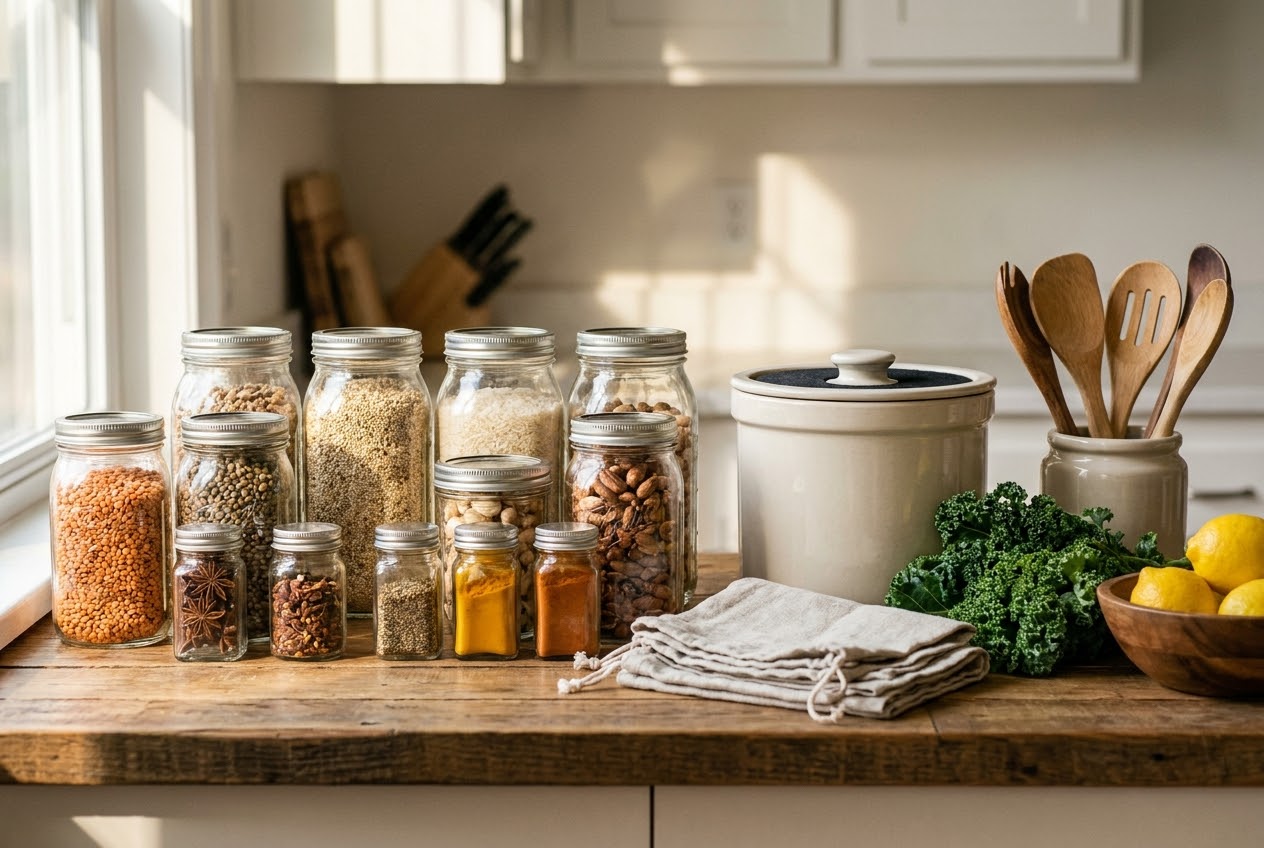
Tip 18: Use clear containers. Out of sight is out of mind, and food stored in opaque containers is more likely to be forgotten and wasted. Transfer pantry staples, leftovers, and bulk purchases into clear glass or plastic containers so you can see at a glance what you have and how much is left. Label everything with the date it was stored so you can track freshness.
Tip 19: Understand ethylene gas. Ethylene is a natural plant hormone that triggers ripening and, eventually, spoilage. Some fruits produce large amounts of ethylene, including apples, bananas, avocados, peaches, pears, and tomatoes. Other produce is sensitive to ethylene and will spoil faster when exposed to it, including lettuce, cucumbers, carrots, broccoli, and herbs. Store ethylene producers away from ethylene-sensitive items to slow spoilage across your entire refrigerator.
Tips 20-24: Use Every Part
Tip 20: Make vegetable scrap stock. Keep a large freezer bag in your freezer and add clean vegetable scraps as you cook: onion ends and skins, carrot tops and peels, celery leaves and bottoms, mushroom stems, herb stems, garlic skins, and pepper cores. When the bag is full, dump it into a large pot, cover with water, add a bay leaf and some peppercorns, and simmer for one to two hours. Strain and you have rich, flavorful vegetable stock that costs nothing extra to make. Freeze the stock in portions for future soups, sauces, and grains.
Tip 21: Use stale bread creatively. Stale bread is incredibly versatile. Cube it and toast into croutons for salads and soups. Process it into breadcrumbs for coating, binding, and topping. Tear it into pieces for bread pudding or panzanella salad. Soak it in milk and add it to meatballs or meatloaf for moisture. French toast was originally invented as a way to use up stale bread. There is no reason to ever throw away bread.
Tip 22: Transform overripe fruit. Overripe bananas make the best banana bread, smoothies, and nice cream. Overripe berries can be cooked into compote or jam. Overripe stone fruits are perfect for baking, sauces, and smoothies. Even overripe avocados can be used in chocolate mousse, salad dressing, or face masks. When fruit passes its prime for eating fresh, it often reaches its peak for cooking.
Tip 23: Eat the whole vegetable. Many parts of vegetables that are commonly discarded are perfectly edible and nutritious. Broccoli stems can be peeled and sliced into stir-fries or slaw. Beet greens are delicious sauteed with garlic. Carrot tops make excellent pesto. Potato peels can be roasted into crispy snacks. Cauliflower leaves can be roasted alongside the florets. Watermelon rind can be pickled or used in stir-fries. Once you start looking at vegetable scraps as ingredients rather than waste, a world of culinary possibilities opens up.
Tip 24: Create a scrap-based meal once a week. Designate one meal each week as a clean-out-the-fridge meal. Pull out all the odds and ends that need to be used: that half bell pepper, the remaining cup of rice, the few stray mushrooms, the last two eggs. Turn them into a frittata, fried rice, soup, grain bowl, or pasta dish. These meals are often the most creative and satisfying because they force you to think outside the recipe box. For more ideas on growing ingredients to reduce waste, check our guide to growing herbs indoors.
Tips 25-27: Preserve Food for Later
Tip 25: Freeze surplus produce. Freezing is the easiest and most accessible preservation method for most households. Almost any fruit or vegetable can be frozen with minimal preparation. Berries can be spread on a sheet pan, frozen solid, then transferred to bags for long-term storage. Blanch vegetables like green beans, broccoli, and corn for two to three minutes before freezing to preserve color, texture, and nutrients. Herbs can be frozen in ice cube trays with olive oil or water for easy use in cooking. Frozen produce maintains good quality for six to twelve months.
Tip 26: Quick-pickle surplus vegetables. Quick pickling, also called refrigerator pickling, is a fast and easy way to preserve surplus vegetables without the complexity of traditional canning. Slice cucumbers, onions, carrots, radishes, peppers, or cauliflower and pack them into clean jars. Bring a mixture of equal parts vinegar and water to a boil with salt, sugar, and spices, then pour it over the vegetables. Seal the jars and refrigerate. Quick pickles are ready to eat in as little as one hour and last for several weeks in the refrigerator.
Tip 27: Make jams, sauces, and salsas. When produce is abundant and inexpensive, either from your own garden or from seasonal sales, consider making jams, sauces, and salsas. A large batch of tomato sauce from peak-season tomatoes can be frozen in portions and used throughout the year. Fruit jams require only fruit, sugar, and pectin and can be made in an afternoon. Salsa, pesto, and chimichurri can all be frozen in ice cube trays for instant flavor additions to future meals. Our composting guide covers what to do with scraps that truly cannot be eaten.
Tips 28-30: Compost What Remains
Tip 28: Start a compost bin. No matter how diligent you are about reducing food waste, some scraps are unavoidable: egg shells, coffee grounds, tea bags, fruit pits, and bones. Composting these materials diverts them from the landfill and transforms them into rich, valuable soil amendment for your garden. There are composting methods for every living situation: outdoor bins and tumblers for houses with yards, vermicomposting with worms for apartments, and bokashi fermentation for any indoor space. Our ultimate composting guide covers all these methods in detail.
Tip 29: Know what is compostable. Not everything belongs in the compost bin. Fruit and vegetable scraps, coffee grounds, tea bags, eggshells, nut shells, bread, rice, pasta, paper towels, cardboard, and yard waste are all compostable. Meat, dairy, and oily foods should be avoided in traditional compost systems but can be processed in bokashi systems. Avoid composting diseased plants, pet waste, and treated wood, as these can introduce pathogens or chemicals into your finished compost.
Tip 30: Close the loop. The ultimate goal of a zero waste kitchen is to create a closed loop where food scraps become compost, compost feeds the garden, and the garden produces food. If you have even a small outdoor space, start a garden and use your homemade compost to enrich the soil. Even a few containers of herbs and salad greens on a balcony create a meaningful connection between waste reduction and food production. For guidance on creating a pollinator-friendly garden that supports the ecosystem while producing food, see our companion article.
Food Storage Guide Table
The following table provides quick reference for storing common foods to maximize freshness and minimize waste.
| Food | Best Storage Method | Approximate Shelf Life |
|---|---|---|
| Bananas | Room temperature; separate from other fruit | 5-7 days |
| Tomatoes | Room temperature until ripe; then refrigerator | 5-10 days |
| Leafy greens | Washed, dried, in container with paper towels | 5-10 days |
| Herbs (tender) | Stems in water jar, covered with bag, in fridge | 10-14 days |
| Herbs (woody) | Wrapped in damp paper towel in sealed bag | 14-21 days |
| Bread | Airtight at room temp or frozen for long-term | 3-5 days room temp; 3 months frozen |
| Berries | Single layer in fridge, unwashed until use | 3-7 days |
| Carrots | Sealed bag in crisper drawer (high humidity) | 2-4 weeks |
| Cheese (hard) | Wrapped in wax paper, then loose plastic in fridge | 3-6 weeks |
| Cheese (soft) | Original container or airtight container in fridge | 1-2 weeks |
| Eggs | Original carton in refrigerator (not the door) | 3-5 weeks |
| Milk | Back of refrigerator (coldest spot) | 5-7 days past sell-by |
| Avocados | Room temperature until ripe; then refrigerator | 2-3 days ripe; 5-7 days in fridge |
| Onions | Cool, dark, dry place with ventilation | 1-2 months |
| Potatoes | Cool, dark place; away from onions | 2-4 weeks |
| Garlic | Cool, dark place with ventilation | 2-4 months |
| Cooked leftovers | Airtight containers in refrigerator | 3-4 days |
| Raw meat (ground) | Coldest part of refrigerator; use or freeze quickly | 1-2 days |
| Raw meat (whole cuts) | Coldest part of refrigerator; use or freeze quickly | 3-5 days |
Zero Waste Cooking Techniques
Zero waste cooking is a mindset as much as a technique. It starts with viewing every ingredient as having multiple lives and every scrap as having potential. Professional chefs have long practiced nose-to-tail and root-to-stem cooking out of necessity and tradition, and home cooks can apply the same principles to reduce waste and expand their culinary repertoire.
One of the most powerful zero waste cooking techniques is stock making. Whether it is vegetable stock from scraps, bone broth from chicken carcasses, or shrimp stock from shells, homemade stock transforms what would be waste into a flavorful foundation for soups, sauces, grains, and braises. Keep a stock bag in your freezer and add to it throughout the week. When it is full, simmer it into stock and freeze the results in usable portions.
Pickle and ferment surplus produce before it spoils. Quick pickles take minutes to prepare and extend the life of vegetables by weeks. Fermented foods like sauerkraut, kimchi, and fermented hot sauce are not only delicious but also probiotic-rich and shelf-stable for months. Learning basic fermentation techniques gives you a powerful tool for preserving abundance and reducing waste.
Sauce making is another zero waste powerhouse. Wilting herbs can become pesto, chimichurri, or salsa verde. Overripe tomatoes can become marinara sauce. Excess apples can become applesauce. Soft fruit can become compote or jam. Sauces concentrate flavor, extend shelf life, and turn mediocre produce into something delicious. Keep a repertoire of basic sauces in your cooking toolkit and you will find it much easier to use up ingredients before they go to waste.
Practice whole-ingredient cooking by using every edible part of each ingredient. Chop broccoli stems into matchsticks for slaw or stir-fry. Use carrot tops in salads or pesto. Roast beet greens alongside the roots. Save Parmesan rinds and simmer them into soups for added richness. When you start seeing the entire ingredient rather than just the conventional part, your waste shrinks and your creativity grows.
Batch Cooking for Waste Reduction
Batch cooking, preparing large quantities of food at once and storing portions for later use, is a powerful strategy for reducing waste and saving time. When you batch cook, you can use up entire packages of ingredients, buy in bulk more confidently, and ensure that prepared meals are always available, reducing the temptation to order takeout or let groceries spoil.
Start by choosing one day each week, often Sunday, as your batch cooking day. Select two or three recipes that use overlapping ingredients and prepare large batches of each. For example, you might roast a tray of vegetables that can be used in grain bowls, pasta, and omelets throughout the week. Cook a large pot of beans that can become burritos, salads, and soup. Prepare a big batch of rice or quinoa that serves as the base for multiple meals.
Invest in a set of quality, freezer-safe containers in various sizes. Glass containers with tight-fitting lids are ideal because they are microwave-safe, do not stain or absorb odors, and last for years. Portion your batch-cooked meals into individual servings so you can defrost exactly what you need without waste. Label each container with the contents and date using masking tape and a marker.
Soups, stews, curries, chili, and casseroles are excellent candidates for batch cooking because they freeze and reheat beautifully. Marinara sauce, pesto, and curry paste can be frozen in ice cube trays and popped out as needed. Cooked grains, roasted vegetables, and shredded meat can all be frozen in portions for quick assembly of future meals. With a well-stocked freezer, you always have a meal ready, and your fresh ingredients are used up before they spoil.
Frequently Asked Questions
How much food does the average household waste?
The average American household wastes approximately 30 to 40 percent of the food it purchases, which translates to roughly 1,500 pounds of food per year per family. This costs the average family of four an estimated $1,500 to $2,000 annually. Globally, about one-third of all food produced is lost or wasted, totaling roughly 1.3 billion tons per year. Reducing household food waste is one of the most impactful environmental actions an individual family can take.
What is the best way to start reducing food waste at home?
The best way to start is by conducting a food waste audit. For one week, keep a log of every food item you throw away and why. This reveals your personal waste patterns and helps you target the biggest sources of waste. Most families find that planning meals, shopping with a list, and improving food storage are the three changes that make the biggest immediate impact. Start with one or two changes and build from there.
Can I compost food scraps if I do not have a yard?
Yes, you can compost food scraps even without a yard. Vermicomposting, or worm composting, uses a small bin that fits under a kitchen sink or in a closet and can process several pounds of food scraps per week. Bokashi composting is an anaerobic method that uses a sealed bucket and fermentation, making it ideal for apartments. Many cities also offer municipal composting programs or community drop-off sites where you can bring food scraps for processing.
What foods can be frozen to extend their shelf life?
Almost any food can be frozen to extend its shelf life. Bread, fruits, vegetables, cooked meals, soups, sauces, herbs, dairy products, and even eggs cracked into ice cube trays all freeze well. The key is proper packaging: use airtight containers or freezer bags, remove as much air as possible, and label everything with the date and contents. Most frozen foods maintain quality for three to six months, though many remain safe to eat indefinitely.
How can I use vegetable scraps and food peels?
Vegetable scraps and peels have many uses. Save onion skins, carrot tops, celery ends, herb stems, and mushroom stems in a freezer bag to make homemade vegetable stock. Potato peels can be roasted into crispy chips with olive oil and salt. Citrus peels can be used to make cleaning vinegar, candied peel, or zest for baking. Banana peels can be blended into smoothies or used as fertilizer for garden plants. Almost every food scrap has a second life if you get creative.
Creating a zero waste kitchen is a journey, not a destination. You will not eliminate food waste overnight, and that is perfectly fine. The goal is progress, not perfection. Start with the tips that feel most natural to you, build new habits one at a time, and gradually expand your waste-reducing toolkit. Over time, you will develop an intuitive sense for how to buy, store, cook, and preserve food with minimal waste. Your wallet, your garden, and the planet will all be better for it.