Introduction
Every time it rains, thousands of gallons of water cascade off your roof, flow through your gutters, and disappear down the storm drain. That water, clean, soft, and completely free, could be watering your garden, washing your car, or filling your compost pile. Instead, it goes to waste. Rainwater harvesting is the practice of capturing that water and putting it to good use, and it is one of the simplest, most impactful things you can do for both your wallet and the environment.
The concept is ancient. Civilizations from the Roman Empire to the Maya have collected rainwater for thousands of years. What was once a necessity in arid regions is now a smart choice for gardeners everywhere, especially as water costs rise and droughts become more frequent in many parts of the world. A basic rain barrel system costs less than a nice dinner out and pays for itself within the first season.
This guide will walk you through everything you need to know to start harvesting rainwater at home. We will cover the legal landscape, system types, equipment, installation, maintenance, and how to calculate exactly how much free water your roof can provide. By the end, you will be ready to set up your first rain barrel and start saving.
Why Harvest Rainwater?
The benefits of rainwater harvesting extend well beyond simply having an extra source of water for your garden.
Save Money on Your Water Bill
The average American household uses about 300 gallons of water per day, and outdoor watering can account for 30 to 50 percent of that total during the summer months. If you are on municipal water, every gallon you use from the tap costs money. Rainwater is completely free. A single 55-gallon rain barrel fills up with just a quarter inch of rain on a typical roof. Over a growing season, a modest rainwater harvesting system can save you $100 to $300 or more on your water bill, depending on local rates.
Better for Your Plants
Rainwater is naturally soft and slightly acidic, with a pH around 5.6 to 6.0. Municipal water, by contrast, is often treated with chlorine and fluoride and may be alkaline. Plants generally prefer slightly acidic water, and the absence of chemicals means rainwater is gentler on soil microorganisms. Many gardeners report that plants watered with rainwater grow more vigorously and produce better yields than those watered exclusively with tap water.
Reduce Stormwater Runoff
When rain falls on impervious surfaces like roofs, driveways, and roads, it picks up pollutants such as oil, heavy metals, pesticides, and fertilizer residues before flowing into storm drains and eventually into rivers and streams. By capturing roof runoff in rain barrels, you reduce the volume of polluted stormwater entering local waterways. This is a small but meaningful contribution to protecting water quality in your community.
Build Drought Resilience
In regions that experience periodic drought, having stored rainwater provides a buffer against watering restrictions. Many municipalities impose outdoor watering bans during dry spells, but stored rainwater is typically exempt from these restrictions because it never entered the public water supply. Your garden stays green while your neighbors' lawns go brown. For more water-smart gardening ideas, explore our guide on drought-tolerant gardening.
Is Rainwater Harvesting Legal?
In most of the United States and many other countries, rainwater harvesting is completely legal and often encouraged. However, laws vary by location, so it is worth checking your local regulations before you invest in a system.
In the U.S., the vast majority of states allow unrestricted rainwater harvesting for personal use. A few states, notably Colorado (which historically had strict water rights laws), have recently passed legislation explicitly permitting residential rainwater collection. Some states offer tax credits, rebates, or incentives for installing rainwater harvesting systems. Check with your state environmental agency or local cooperative extension for specific rules in your area.
Outside the U.S., most countries either permit or actively promote rainwater harvesting. Australia, India, Brazil, and many European nations have implemented programs encouraging homeowners to collect rainwater. Some jurisdictions require it for new construction.
Types of Rainwater Harvesting Systems
Rainwater harvesting systems range from incredibly simple to impressively sophisticated. Here are the most common approaches for home gardeners.
Rain Barrel Systems
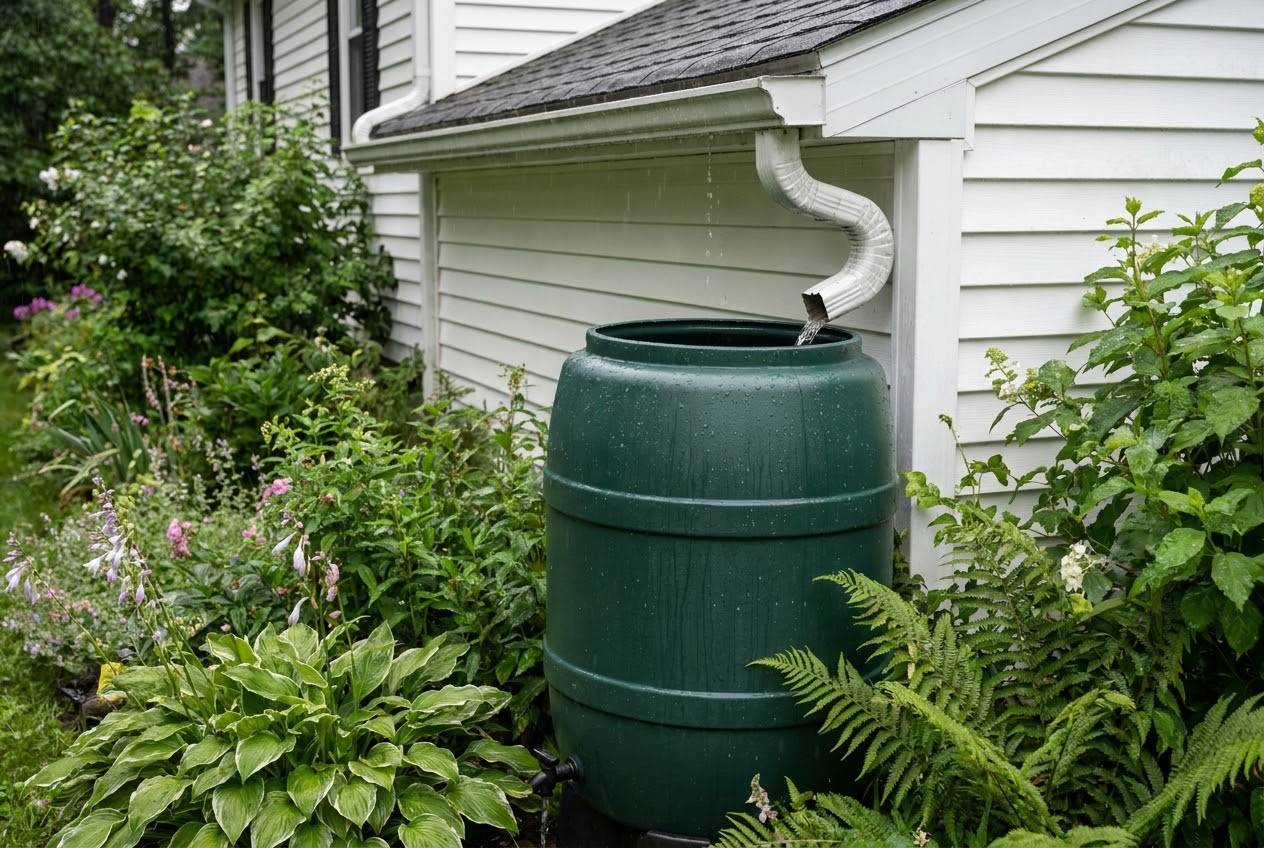
A rain barrel is the simplest and most popular entry point into rainwater harvesting. It is exactly what it sounds like: a barrel placed under a downspout to collect water from your gutters. Standard rain barrels hold 50 to 80 gallons and typically include a spigot near the bottom for attaching a hose or filling watering cans. They cost between $50 and $150 depending on style and features, and you can also build your own from food-grade barrels for significantly less.
Rain barrel systems work well for small to medium gardens. The main limitation is capacity. A single barrel empties quickly during dry spells, and overflow is common during heavy rains. Many gardeners solve this by connecting two or more barrels together with overflow hoses, effectively doubling or tripling their storage capacity.
Large Tank (Cistern) Systems
For serious water harvesting, a cistern or large tank holding 500 to 5,000 gallons provides much greater storage. These systems are more expensive and complex to install, but they can supply a significant portion of a garden's water needs throughout the growing season. Tanks can be placed above ground or buried below ground, and some are designed to look like attractive garden features rather than utilitarian containers.
Rain Gardens
A rain garden is a shallow, planted depression designed to capture and absorb runoff from roofs, driveways, and other impervious surfaces. Rather than storing water in a container, rain gardens allow it to soak into the ground, recharging groundwater and filtering pollutants through the soil. Rain gardens are beautiful, environmentally beneficial, and require very little maintenance once established. They work especially well planted with native plants that tolerate both wet and dry conditions.
Dry Streambeds and Swales
These landscape features direct water flow across your property, slowing it down and allowing it to percolate into the soil rather than running off. A swale is a shallow ditch dug along the contour of a slope, and a dry streambed is a decorative channel of rocks and gravel that carries water during rain events. Both are passive harvesting techniques that require no tanks or barrels.
Choosing and Setting Up a Rain Barrel
For most home gardeners, a rain barrel system is the ideal starting point. Here is how to choose the right one and set it up correctly.
Selecting a Rain Barrel
Look for these features when choosing a rain barrel:
- Food-grade material ensures no harmful chemicals leach into the water
- A secure lid keeps out debris, mosquitoes, and small animals
- A spigot near the bottom for easy hose attachment or watering can filling
- An overflow port to direct excess water away from your foundation
- A screen or filter over the inlet to catch leaves and debris
- UV-resistant material if the barrel will be in direct sunlight
Barrel colors matter too. Dark colors inhibit algae growth by blocking light. Green, brown, or black barrels are better choices than white or translucent ones. Some barrels are designed to look like decorative urns or whiskey barrels, which is a nice touch if appearance matters in your yard.
Installation Steps
- Choose your downspout. Select the downspout closest to the area of your garden that needs the most water. Measure the height from the ground to the point where you will connect the diverter.
- Create a level, stable base. A full 55-gallon rain barrel weighs over 450 pounds. Place it on a sturdy platform made of cinder blocks, a purpose-built stand, or a poured concrete pad. Elevating the barrel six to twelve inches makes it easier to fill watering cans and provides gravity-fed pressure for a hose.
- Install a downspout diverter. A diverter is a fitting that redirects water from your downspout into the barrel while allowing excess water to continue down the normal downspout when the barrel is full. This prevents overflow and eliminates the need to manually manage the connection. Most diverters install in minutes with basic tools.
- Connect the diverter to the barrel. Use the hose or fitting provided with the diverter kit. Ensure all connections are tight to prevent leaks.
- Attach an overflow hose. Connect a hose to the overflow port and direct it away from your foundation toward a garden bed, rain garden, or second barrel.
- Test the system. Wait for a rainstorm or simulate one with a garden hose to verify that water flows correctly through the diverter, into the barrel, and out the overflow when full.
First-Flush Diverters and Filtration
The first rain after a dry spell washes accumulated debris, bird droppings, dust, and pollutants off your roof. This "first flush" of water carries the highest concentration of contaminants. A first-flush diverter captures this initial runoff and diverts it away from your rain barrel, allowing only cleaner water to fill the tank.
A basic first-flush diverter consists of a vertical pipe with a floating ball that seals the inlet once the pipe fills up. Water that enters after the pipe is full bypasses it and flows into the barrel. Building a DIY first-flush diverter is straightforward with PVC pipe and a tennis ball, and there are many tutorials available online.
For additional filtration, install a fine mesh screen over the barrel inlet to catch leaves, twigs, and insects. Some gardeners add a layer of landscape fabric beneath the screen for even finer filtration. For pot-adjacent uses like washing vegetables, additional filtration through activated carbon or ceramic filters is recommended, though rainwater harvested for garden irrigation does not need this level of treatment.
Calculating Your Collection Potential
One of the most motivating things about rainwater harvesting is seeing the numbers. Your roof is a surprisingly large collection surface, and even modest rainfall yields impressive volumes of water.
The basic formula is straightforward:
Rainwater collected (gallons) = Roof area (sq ft) x Rainfall (inches) x 0.623
The 0.623 factor converts the measurement to gallons. The 0.623 figure accounts for one inch of rain falling on one square foot of surface, which equals approximately 0.623 gallons. You should also account for losses due to evaporation, splash, and gutter inefficiency by multiplying by 0.80 (a typical efficiency factor).
Collection Potential Table
| Roof Area (sq ft) | 1/4 inch Rain | 1/2 inch Rain | 1 inch Rain | 2 inches Rain |
|---|---|---|---|---|
| 500 | 62 gallons | 125 gallons | 249 gallons | 498 gallons |
| 1,000 | 125 gallons | 249 gallons | 498 gallons | 997 gallons |
| 1,500 | 187 gallons | 374 gallons | 748 gallons | 1,495 gallons |
| 2,000 | 249 gallons | 498 gallons | 997 gallons | 1,994 gallons |
| 2,500 | 312 gallons | 623 gallons | 1,246 gallons | 2,492 gallons |
To find your roof area, measure the footprint of your house (length times width) and add roughly 10 to 15 percent for roof overhang. A typical suburban home with a 1,500-square-foot footprint could collect nearly 750 gallons from a single one-inch rain event. Over a year with 36 inches of rainfall, that same roof could yield over 26,000 gallons of free water. Even capturing a fraction of that makes a noticeable difference in your water bill and your garden's health.
Using Harvested Rainwater
Rainwater collected in barrels and cisterns is ideal for many outdoor uses.
Garden Irrigation
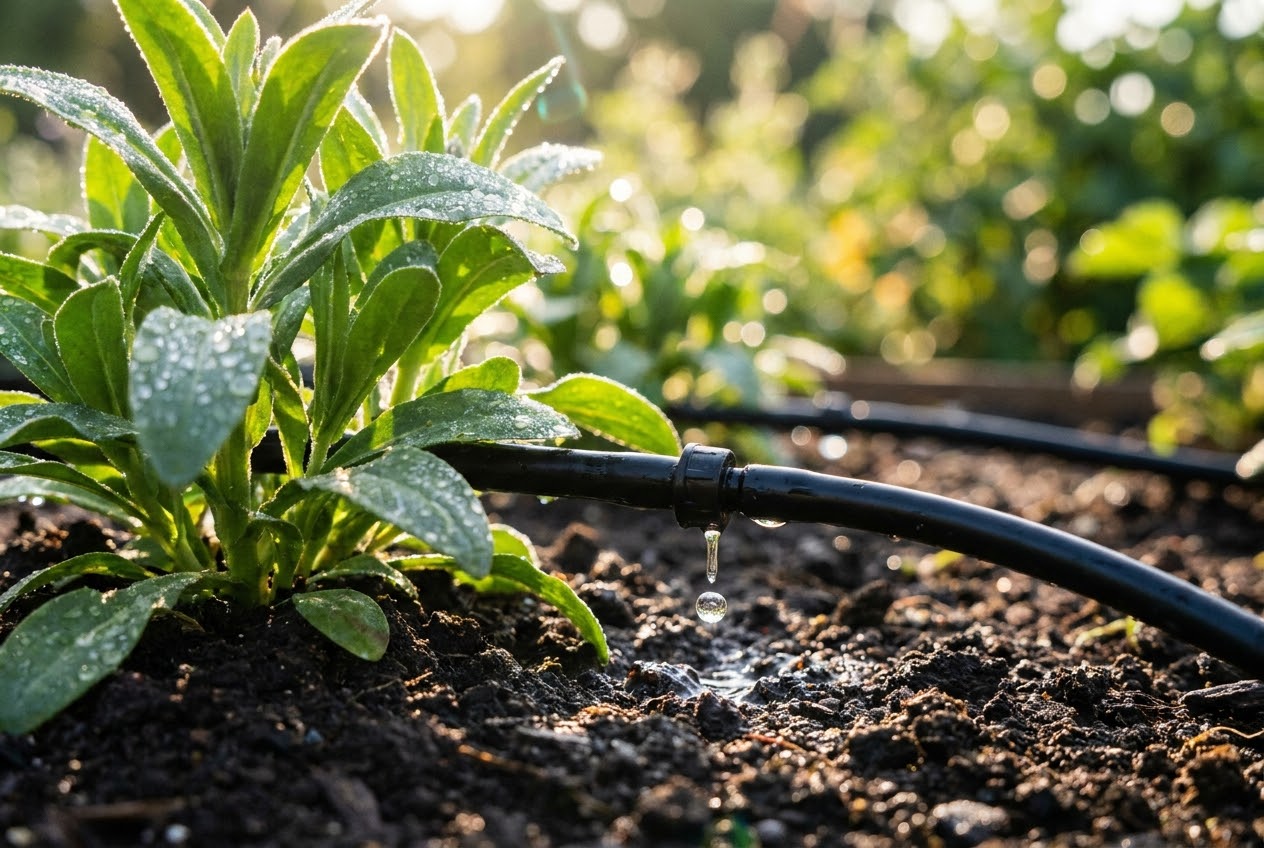
This is the primary use for most home rainwater harvesters. Connect a soaker hose or drip irrigation system to your rain barrel and let gravity deliver water directly to your plants. The soft, chemical-free water is excellent for vegetable gardens, flower beds, and container plants. Many gardeners report better plant growth with rainwater compared to municipal water.
Compost Pile Moisture
Keeping your compost pile at the right moisture level is critical for decomposition. Stored rainwater is perfect for this purpose. If you are maintaining an active compost pile, our composting at home guide explains how moisture management affects the process.
Washing Garden Produce
Rinse freshly harvested vegetables and herbs with rainwater before bringing them inside. This is a gentle, chemical-free way to clean your produce and a nice complement to zero waste kitchen practices.
Car and Equipment Washing
Rainwater's softness makes it excellent for washing cars, garden tools, and outdoor furniture. Without the minerals found in hard water, it leaves fewer spots and streaks.
Indoor Non-Potable Use
In some areas, harvested rainwater can be plumbed into toilets and washing machines through a separate supply line. This requires a more complex system with pumps and filters but can reduce indoor water use by 30 to 40 percent. Check local building codes before pursuing this option.
Maintenance and Seasonal Care
Rain barrels are low-maintenance but not no-maintenance. A little attention keeps your system running smoothly.
Monthly Tasks
- Clean the inlet screen to remove accumulated leaves and debris
- Check for mosquito larvae. If the water surface is exposed, add a small piece of mosquito dunk (a biological mosquito control product safe for gardens)
- Inspect the barrel for cracks, leaks, or algae growth
- Flush the overflow hose to ensure it is not clogged
Seasonal Tasks
- Spring: Reconnect the system after winter disconnection. Clean the barrel thoroughly with a mixture of water and white vinegar. Inspect all connections and the diverter.
- Summer: Monitor water levels during dry spells and use stored water wisely. Consider adding a second barrel if your supply runs out frequently.
- Fall: Clean gutters and downspouts before the rainy season. Install gutter guards if leaf buildup is a problem. This is prime time to build up your water reserves.
- Winter: In freezing climates, drain and disconnect rain barrels before the first hard freeze. Water expands when it freezes and can crack a barrel or split fittings. Store the barrel upside down or in a garage.
Troubleshooting Common Issues
Mosquitoes: The most common complaint about rain barrels. A tight-fitting lid with fine mesh over all openings prevents mosquitoes from accessing the water. If larvae are already present, use mosquito dunks containing Bacillus thuringiensis israelensis (Bti), which kills mosquito larvae but is safe for plants and animals.
Algae growth: Algae thrive in sunlight. Use opaque, dark-colored barrels and keep the lid sealed. If algae develop, drain the barrel, scrub the interior with a stiff brush and a solution of one part bleach to ten parts water, rinse thoroughly, and refill.
Overflow during heavy rain: This means your system is working well, you just need more storage. Connect a second barrel or redirect the overflow hose to a rain garden or planted bed where the water can soak into the ground.
Low water pressure: Rain barrels rely on gravity. The higher the barrel sits above the ground, the more pressure you get. A barrel elevated two feet provides enough pressure for drip irrigation but not enough for a sprinkler. For more on efficient watering under low pressure, see our drip irrigation guide.
Scaling Up: From One Barrel to a System
Once you have experienced the satisfaction of watering your garden with free rainwater, you may want to expand. Connecting multiple barrels in a "daisy chain" is simple: link the overflow of the first barrel to the inlet of the second, and so on. This increases your storage capacity without needing additional downspouts.
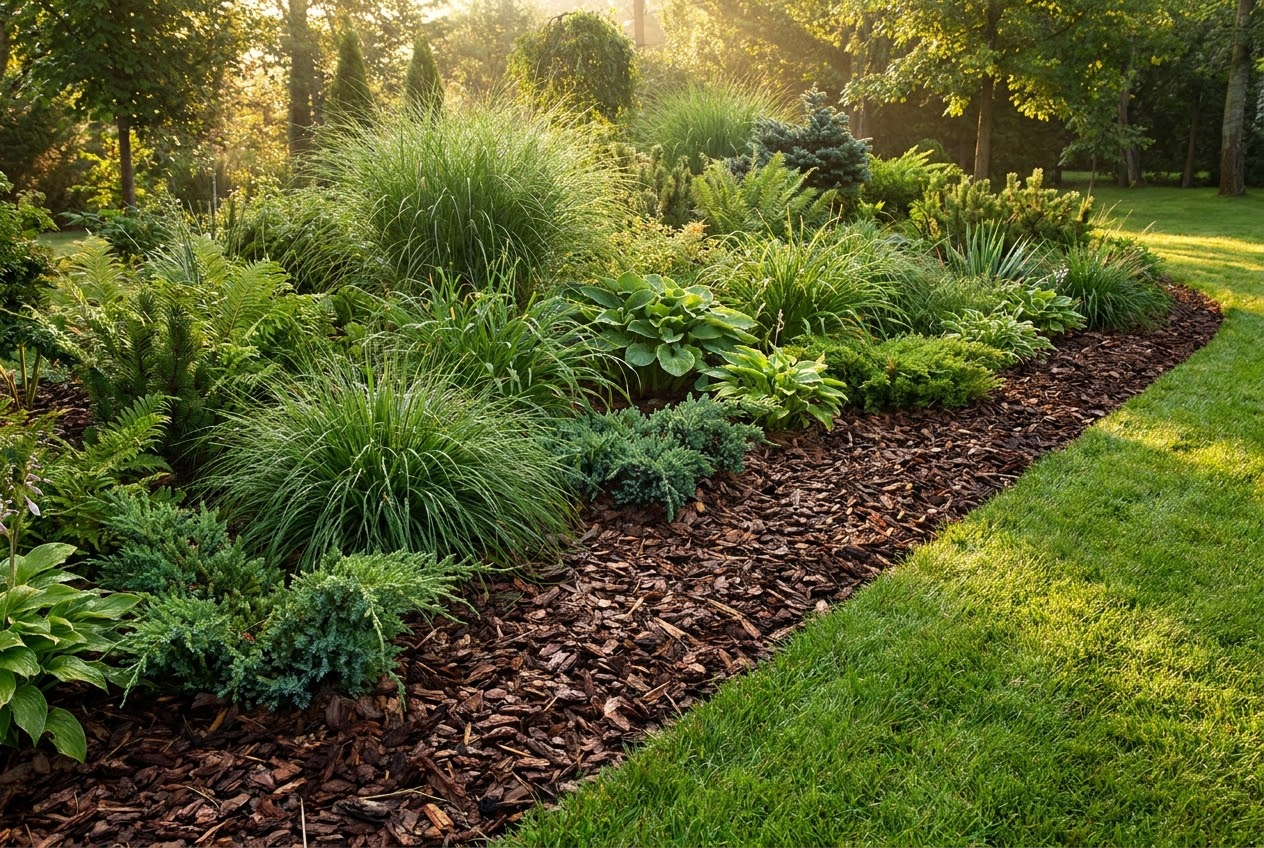
For a truly integrated approach, consider combining rainwater harvesting with other sustainable gardening practices. Raised beds with drip irrigation connected to rain barrels create a highly efficient growing system. Add mulch to retain moisture and you will rarely need supplemental water from the tap.
The Environmental Case for Rainwater Harvesting
Beyond the personal benefits, rainwater harvesting contributes to a healthier environment in several important ways. It reduces demand on municipal water systems, which require enormous amounts of energy to treat and pump. It decreases stormwater runoff, which is one of the leading sources of water pollution in urban areas. It recharges local groundwater when excess water is directed into permeable surfaces. And it reduces the energy footprint associated with water treatment and distribution.
A single rain barrel might seem like a small gesture, but when multiplied across thousands of households, the impact is substantial. Cities with widespread rainwater harvesting programs have documented measurable reductions in stormwater volume and water treatment costs. Your rain barrel is part of a larger movement toward water stewardship, and it pairs naturally with other sustainable living practices that reduce your household's environmental footprint.
Frequently Asked Questions
Is rainwater safe for watering a vegetable garden?
Yes. Rainwater collected from a typical asphalt shingle or metal roof is perfectly safe for watering edible plants. The small amount of debris that might wash off roofing materials is negligible and breaks down in the soil. If you have concerns about a particular roofing material, installing a first-flush diverter adds an extra layer of protection by diverting the initial dirty runoff.
How much does a rain barrel cost?
Ready-made rain barrels typically cost between $50 and $150, depending on size, style, and features. DIY versions made from food-grade barrels can be assembled for $20 to $50. The investment typically pays for itself within one to two growing seasons through reduced water bills. Some municipalities offer rain barrels at subsidized prices or provide rebates for installation.
Can I drink the rainwater I collect?
Rainwater collected from rooftops is not recommended for drinking without proper filtration and purification. While the rain itself is clean, it picks up contaminants from roofing materials, gutters, and bird droppings. For potable use, you would need a comprehensive filtration system including sediment filters, activated carbon, and UV sterilization. For garden use, no treatment is necessary.
How do I keep mosquitoes out of my rain barrel?
The best prevention is a tight-fitting lid with fine mesh screening over every opening, including the inlet, overflow, and any gaps. If larvae still appear, use mosquito dunks containing Bti, a naturally occurring bacterium that kills mosquito larvae without harming plants, pets, or beneficial insects. One dunk treats up to 100 gallons for 30 days.
Do I need a pump for my rain barrel?
For most garden uses, gravity provides enough pressure when the barrel is elevated. A barrel sitting on a stand two to three feet off the ground delivers water through a hose at low pressure, which is ideal for drip irrigation and filling watering cans. If you need higher pressure for sprinklers or long hose runs, a small electric pump can be added for $30 to $80.
Conclusion
Rainwater harvesting is one of those rare projects that is simultaneously good for your budget, your garden, and the planet. It requires minimal investment, little maintenance, and delivers benefits from the very first rainstorm. Whether you start with a single barrel under a downspout or build a multi-barrel system connected to drip irrigation, you are making a smart, sustainable choice that pays dividends season after season.
Start simple. Buy or build one rain barrel, connect it to your most-used downspout, and see how much water you collect over the next few weeks. Once you experience the satisfaction of watering your garden with free, soft, chemical-free rainwater, you will wonder why you did not start sooner.
Combine your rainwater harvesting with other water-wise strategies like efficient watering techniques and proper mulching, and you will have a garden that thrives while using a fraction of the water your neighbors do. That is smart gardening.