Introduction
Many vegetables that come home from the grocery store can produce a second round of food from their scraps. Regrowing from kitchen waste is fun, educational, and a great way to reduce food waste. While the second harvest is usually smaller than the first, it is nearly free and requires almost no equipment.
Vegetables That Regrow Easily
Green onions, lettuce, celery, cabbage, leeks, and fennel are among the easiest scraps to regrow. Root vegetables like carrots, beets, and turnips can regrow leafy tops, though they will not form another root. Herbs like basil and mint root readily from cuttings.
How to Regrow Green Onions
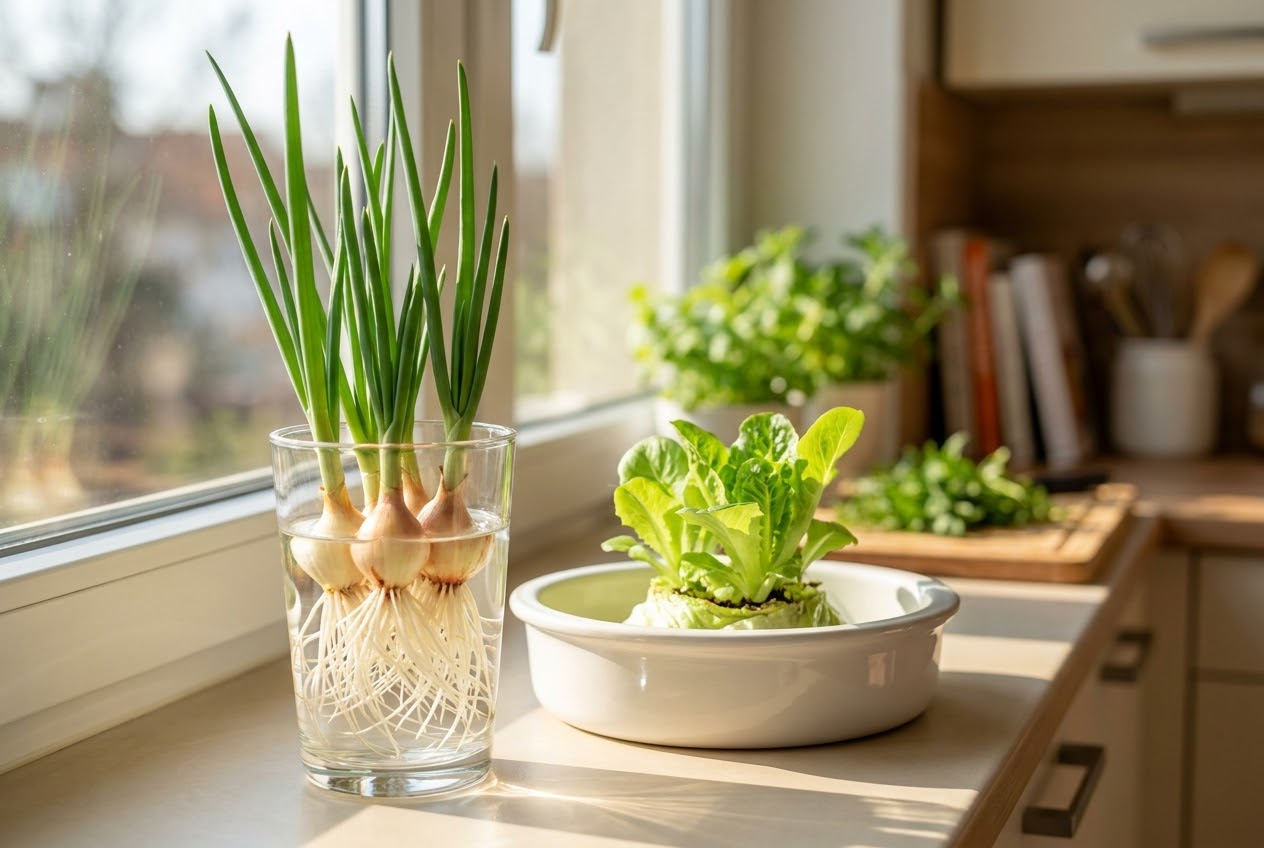
Save the white root ends with about one inch of stalk attached. Place them root-down in a small jar with enough water to cover the roots. Set in a sunny windowsill and change the water every day or two. New green shoots will appear within a few days and can be harvested repeatedly.
How to Regrow Lettuce and Celery
Cut the base from a head of lettuce or a celery bunch, leaving about two inches intact. Place the base in a shallow dish with a little water. Keep in bright light and change the water regularly. After a week, small leaves emerge from the center. For continued growth, transplant into soil.
Regrowing Root Vegetables and Herbs
Place the top inch of a carrot or beet in a dish of water. The leafy greens will regrow and can be harvested for salads. For herbs, take a four-inch cutting just below a node, remove lower leaves, and place in water until roots appear, then pot in soil.
Tips for Success
Use fresh, healthy scraps with the base intact. Change water frequently to prevent rot. Once roots appear, move plants to soil for better nutrition and longer harvests. Keep plants in bright, indirect light and harvest young growth regularly to encourage more production.
Emma Richardson
Emma Richardson is a passionate home gardener and sustainability advocate with over a decade of hands-in-the-soil experience. She writes practical guides to help people grow their own food and live more sustainably, no matter their experience level or available space.
View all articles →Related Articles