Introduction
Pruning tomatoes is one of the simplest ways to improve plant health and fruit quality. By removing extra growth, you direct the plant's energy into producing larger tomatoes rather than excessive foliage. Pruning also improves airflow, which reduces fungal diseases and makes harvesting easier.
Determinate vs Indeterminate Tomatoes
Determinate, or bush, tomatoes grow to a set size, produce most of their fruit at once, and need little pruning. Indeterminate, or vining, tomatoes keep growing and fruiting until frost and benefit the most from pruning. Know your tomato type before you start cutting.
What Are Tomato Suckers?
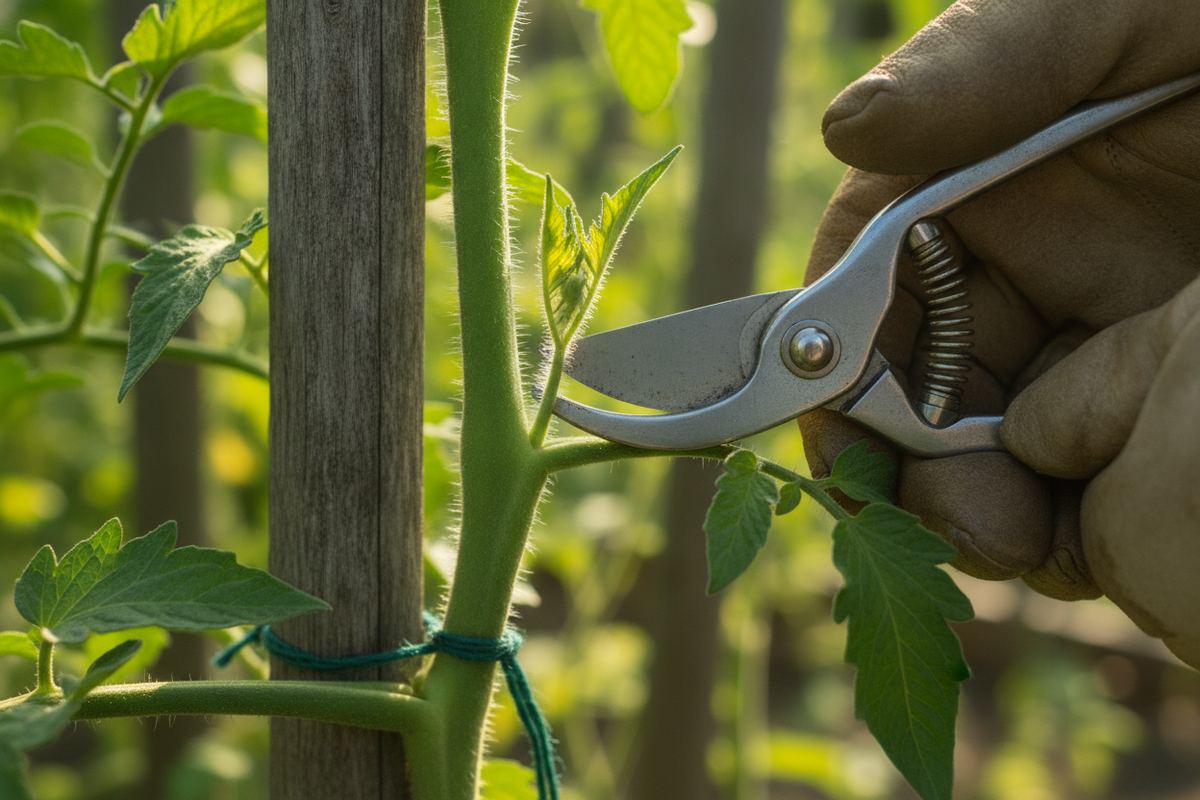
Suckers are small shoots that grow in the joint between the main stem and a branch. If left alone, they become full vines and make the plant bushy and crowded. Removing them keeps the plant focused on a few main stems.
How to Prune Tomato Plants
Use clean pruning shears or pinch suckers with your fingers when they are small. Remove suckers below the first flower cluster for a single-stem plant, or keep one or two suckers above the first cluster for a two or three-stem plant. Remove yellowing lower leaves as the plant grows to improve airflow.
Pruning Mistakes to Avoid
Do not prune determinate varieties heavily, because you will reduce the total harvest. Avoid pruning in wet weather, because open wounds can invite disease. Never remove too many leaves at once, because foliage protects fruit from sunscald.
Supporting Pruned Vines
Pruned vines are tall and need strong support. Use stakes, cages, or trellises tied with soft material. Check ties regularly and adjust as stems thicken. A well-supported, pruned tomato plant is easier to maintain and produces cleaner fruit.
Emma Richardson
Emma Richardson is a passionate home gardener and sustainability advocate with over a decade of hands-in-the-soil experience. She writes practical guides to help people grow their own food and live more sustainably, no matter their experience level or available space.
View all articles →Related Articles