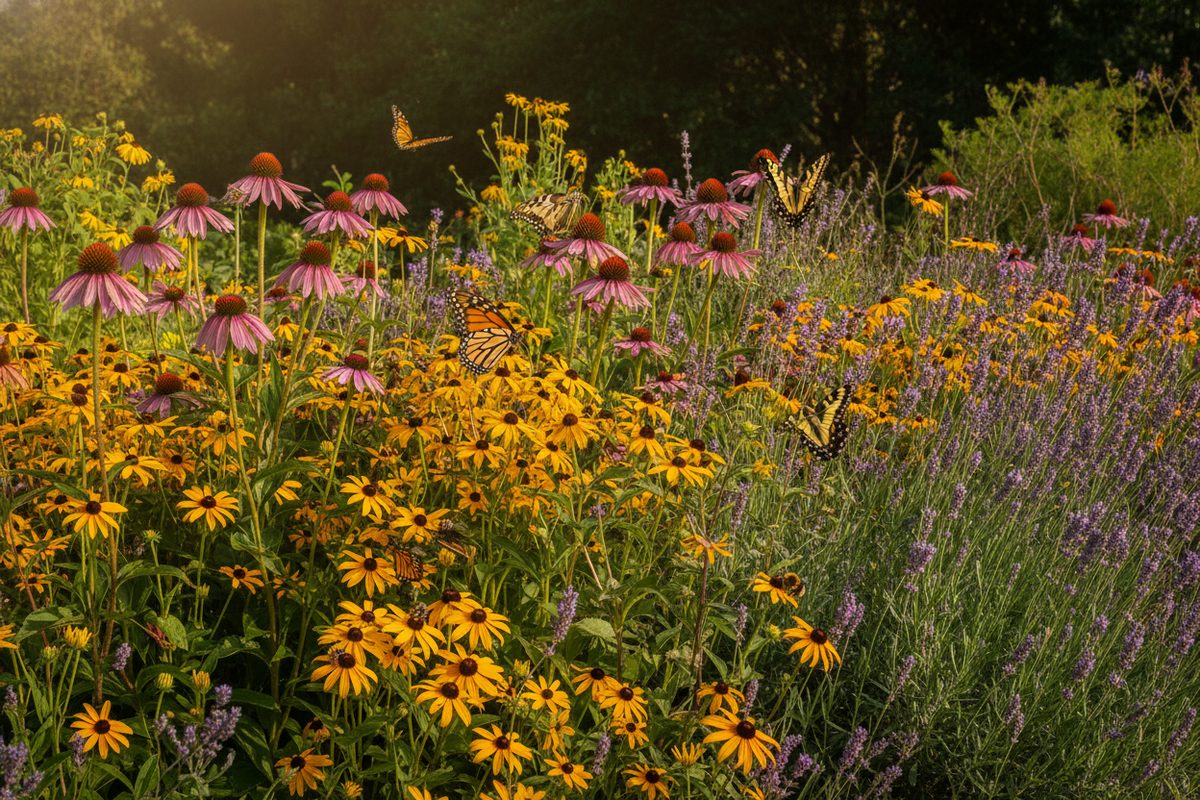
Every time you bite into a crisp apple, enjoy a handful of blueberries, or slice a fresh tomato from your garden, you have a pollinator to thank. Bees, butterflies, hummingbirds, and countless other insects play a quietly essential role in producing roughly one-third of the food we eat and sustaining the health of ecosystems worldwide. Yet pollinator populations have been declining at alarming rates over the past two decades, with habitat loss, pesticide exposure, disease, and climate change all contributing to the crisis.
The good news is that gardeners are uniquely positioned to help. A single pollinator-friendly garden may seem like a small act, but when millions of gardeners each plant even a few pollinator-friendly flowers, the collective impact is enormous. Creating a pollinator-friendly garden is not complicated, and it does not require a complete overhaul of your existing landscape. It simply means making thoughtful choices about what you plant, how you manage pests, and what kinds of habitats you provide.
In this guide, you will learn exactly why pollinators matter so much, which plants attract the widest range of beneficial insects and birds, how to design your garden for maximum pollinator appeal, and how to create the nesting sites and water sources that keep these creatures coming back year after year. Whether you have a sprawling backyard or a small urban balcony, you can make a meaningful difference for pollinators starting today.
Why Pollinators Matter More Than You Think
Pollination is the process by which pollen is transferred from the male part of a flower to the female part, enabling fertilization and the production of seeds and fruit. While some plants rely on wind or water for pollination, approximately 87 percent of flowering plant species depend on animal pollinators to some degree. This includes more than 400 types of agricultural plants that we rely on for food, fiber, and medicine.
The economic value of pollination services is staggering. In the United States alone, pollinators contribute an estimated $15 billion to crop production each year. Globally, that number climbs to roughly $235 billion to $577 billion. Without pollinators, we would lose access to many of the fruits, vegetables, and nuts that form the foundation of a healthy diet: apples, almonds, blueberries, cherries, cucumbers, melons, squash, and dozens more.
Beyond agriculture, pollinators are essential for maintaining biodiversity in natural ecosystems. When pollinator populations decline, the plants that depend on them also decline, which in turn affects the animals that eat those plants or use them for shelter. This cascading effect can destabilize entire ecosystems, leading to reduced wildlife populations, degraded soil health, and diminished water quality.
The decline of pollinator populations has been well documented. Honeybee colonies in the United States have dropped from approximately six million in the 1940s to about 2.5 million today. Monarch butterfly populations have declined by roughly 80 percent over the past two decades. Many native bee species, including several bumblebee species, are now listed as endangered or threatened. The causes are complex and interconnected, but habitat loss and pesticide use are among the most significant drivers.
By creating a pollinator-friendly garden, you provide an oasis of food and shelter in a landscape that increasingly lacks these resources. Even a small garden with the right plants can support dozens of pollinator species and help reverse the troubling trends we have observed in recent years.
Understanding Your Garden's Pollinators
When most people think of pollinators, honeybees come to mind first. While honeybees are important, they represent only a tiny fraction of the pollinators at work in your garden. North America is home to more than 4,000 species of native bees, including bumblebees, mason bees, leafcutter bees, sweat bees, and mining bees. Many of these are solitary species that do not live in hives and are rarely aggressive.
Butterflies and moths are also significant pollinators. Butterflies are active during the day and are attracted to brightly colored flowers with flat landing platforms. Moths, their nocturnal counterparts, prefer white or pale flowers that release fragrance in the evening. Hummingbirds are another important group, pollinating many tubular flowers as they feed on nectar with their long bills.
Less well-known pollinators include beetles, flies, wasps, and even some bats. Hoverflies, which resemble small bees but fly like helicopters, are particularly effective pollinators and also consume aphids and other garden pests. Understanding the diversity of pollinators in your area will help you choose plants that serve the widest range of species.
Each type of pollinator has different preferences when it comes to flower shape, color, scent, and nectar composition. Bees tend to favor blue, purple, and yellow flowers and are drawn to sweetly scented blooms. Butterflies prefer red, orange, yellow, and pink flowers with flat tops where they can land. Hummingbirds are attracted to tubular red and orange flowers. By planting a variety of flower types, you can support the broadest possible range of pollinators.
Best Plants for Attracting Bees
Bees are the workhorses of pollination, and they are surprisingly easy to attract with the right plant choices. The key is to provide a continuous supply of nectar and pollen from early spring through late fall. Bees need both nectar for energy and pollen for protein, so plants that offer both are especially valuable.
Lavender is one of the best bee plants you can grow. Its fragrant purple flowers bloom for weeks in summer and attract a wide range of bee species. Lavender thrives in full sun and well-drained soil, making it an excellent choice for borders, rock gardens, and containers. English lavender is the hardiest variety, while French and Spanish lavender are better suited to warmer climates.
Sunflowers are another top choice for bees. Their large, open flower heads provide abundant pollen and nectar, and their bright yellow petals are highly visible to foraging bees. Sunflowers are easy to grow from seed and come in many sizes, from dwarf varieties suitable for containers to towering types that reach ten feet or more.
Coneflowers (Echinacea) are native to North America and bloom for an extended period in summer and early fall. They are drought-tolerant once established and come in a range of colors including purple, pink, white, and orange. After the flowers fade, the seed heads provide food for goldfinches and other seed-eating birds.
Borage is an herb with brilliant blue star-shaped flowers that bees find irresistible. It self-seeds readily, so once you plant it, you will likely have it in your garden for years. Borage also has culinary uses: the flowers are edible and can be used to garnish salads or frozen in ice cubes.
Bee balm (Monarda) is aptly named for its ability to attract bees in large numbers. It produces showy, tubular flowers in red, pink, purple, and white, and it blooms in mid-summer when many other plants have finished. Bee balm is a member of the mint family and can spread vigorously, so give it room or plant it in a container.
Other excellent bee plants include black-eyed Susans, cosmos, zinnias, clover, thyme, oregano, and catmint. The common thread among all these plants is that they produce abundant, accessible flowers with plenty of nectar and pollen. When possible, choose single-flowered varieties over double-flowered ones, as double flowers often have extra petals that make it difficult for bees to reach the nectar.
Best Plants for Butterflies
Creating a butterfly garden requires two types of plants: nectar plants that feed adult butterflies and host plants that provide food for their caterpillars. Many gardeners focus only on nectar plants and overlook the importance of host plants, but both are essential for supporting a healthy butterfly population.
Milkweed is the most important plant for monarch butterflies, as it is the only plant on which monarchs lay their eggs and the sole food source for monarch caterpillars. There are many species of milkweed available, including common milkweed, butterfly weed, and swamp milkweed. Planting milkweed is one of the most impactful things you can do for monarch conservation.
Butterfly bush (Buddleia) is a prolific nectar producer that attracts a dazzling array of butterfly species. It produces long, cone-shaped flower clusters in purple, pink, white, and other colors. However, butterfly bush is considered invasive in some regions, so check with your local extension service before planting it, and consider native alternatives like buttonbush or Virginia sweetspire.
Zinnias are among the easiest annual flowers to grow, and butterflies love them. Their flat, open flower heads provide perfect landing pads for feeding. Zinnias bloom from mid-summer until frost and come in nearly every color imaginable. Plant them in masses for the best visual impact and the greatest butterfly attraction.
Asters are essential late-season nectar sources. As many other flowers fade in fall, asters burst into bloom with masses of small, daisy-like flowers in purple, blue, pink, and white. They provide critical fuel for migrating butterflies, especially monarchs, who need to build up energy reserves for their long journey to Mexico.
Parsley, dill, and fennel are herbs that serve double duty in the butterfly garden. While the adult plants are attractive, their real value lies as host plants for swallowtail butterflies, whose caterpillars feed on the leaves. Plant extra so there is enough for both you and the caterpillars.
Plants That Attract Hummingbirds
Hummingbirds are fascinating pollinators that are attracted to tubular flowers, particularly those in red and orange. Unlike bees and butterflies, hummingbirds can see red very well, which is why red feeders and red flowers are so effective at drawing them in.
Trumpet vine (Campsis radicans) is a vigorous climbing plant that produces large, trumpet-shaped orange or red flowers. It is a favorite of hummingbirds and can cover a fence, arbor, or pergola quickly. Be aware that trumpet vine spreads aggressively through root suckers and may require management to keep it in bounds.
Salvia species, particularly red salvia and pineapple sage, are outstanding hummingbird plants. They produce spikes of tubular flowers that bloom for extended periods and are easy to grow in full sun. Many salvias are perennial in warmer climates and can be grown as annuals in cooler regions.
Columbine (Aquilegia) is a spring-blooming native wildflower with delicate, spurred flowers that hummingbirds love. It thrives in partial shade and self-seeds freely, creating natural-looking drifts over time. Different species are available for various regions of the country.
Fuchsia is a shade-loving plant with drooping, lantern-like flowers in pink, purple, and red. It is especially popular for hanging baskets and attracts hummingbirds in shaded gardens. In frost-free areas, some fuchsia species can grow into large shrubs.
Other hummingbird favorites include bee balm, cardinal flower, honeysuckle, penstemon, and coral bells. Plant these in clusters near windows or patios where you can enjoy watching the hummingbirds feed.
Top 20 Pollinator Plants Reference Table
The following table lists twenty of the best plants for creating a pollinator-friendly garden. It includes the type of plant, bloom season, and the pollinators each plant attracts most strongly.
| Plant | Type | Bloom Season | Primary Pollinators Attracted |
|---|---|---|---|
| Lavender | Perennial Herb | Late Spring–Summer | Bees, Butterflies |
| Sunflower | Annual | Summer–Early Fall | Bees, Hoverflies |
| Coneflower (Echinacea) | Perennial | Summer–Early Fall | Bees, Butterflies |
| Milkweed | Perennial | Summer | Monarchs, Bees, Hummingbirds |
| Bee Balm (Monarda) | Perennial | Mid-Summer | Bees, Hummingbirds, Butterflies |
| Black-Eyed Susan | Perennial/Annual | Summer–Fall | Bees, Butterflies |
| Borage | Annual Herb | Summer | Bees, Hoverflies |
| Zinnia | Annual | Summer–Fall | Butterflies, Bees |
| Aster | Perennial | Fall | Butterflies, Bees |
| Salvia | Perennial/Annual | Spring–Fall | Hummingbirds, Bees |
| Trumpet Vine | Perennial Vine | Summer | Hummingbirds |
| Cosmos | Annual | Summer–Fall | Butterflies, Bees |
| Purple Coneflower | Perennial | Summer | Bees, Butterflies |
| Columbine | Perennial | Spring | Hummingbirds, Bees |
| Butterfly Bush | Shrub | Summer–Fall | Butterflies, Bees |
| Goldenrod | Perennial | Late Summer–Fall | Bees, Butterflies, Hoverflies |
| Penstemon | Perennial | Spring–Summer | Hummingbirds, Bees |
| Catmint (Nepeta) | Perennial | Spring–Summer | Bees, Butterflies |
| Fennel | Perennial Herb | Summer | Swallowtails, Hoverflies, Bees |
| Cardinal Flower | Perennial | Summer | Hummingbirds |
Garden Design for Pollinators
A pollinator-friendly garden does not need to look wild or unkempt. With thoughtful design, you can create a space that is both beautiful and functional for wildlife. The key principles are diversity, continuity, and clustering.
Diversity means planting a wide range of species that bloom at different times and attract different pollinators. Aim for at least ten to fifteen different plant species in your garden. Include a mix of annuals and perennials, herbs and flowers, and plants with different flower shapes and sizes.
Continuity means ensuring that something is always in bloom from early spring through late fall. Pollinators need food throughout the growing season, and gaps in the bloom calendar can force them to look elsewhere. Plan your plantings so that as one species finishes blooming, another begins.
Clustering means planting groups of the same species together rather than scattering individual plants throughout the garden. Clusters of three to five or more plants of the same species create a larger visual target that is easier for pollinators to find and more efficient for them to forage from. A patch of coneflowers, for example, is far more attractive to a passing bee than a single plant tucked into a mixed border.
Consider the layout of your garden carefully. Place taller plants at the back of borders and shorter ones in front. This creates a layered effect that is visually appealing and allows pollinators to navigate easily. Include plants of varying heights, from low-growing groundcovers like creeping thyme to mid-height perennials like black-eyed Susans to tall background plants like sunflowers or hollyhocks.
Leave some areas of bare soil or sparse groundcover for ground-nesting bees, which make up the majority of native bee species. These bees need access to undisturbed soil to create their nests. A patch of bare earth in a sunny spot is far more valuable to them than a thick layer of mulch.
Include some evergreen shrubs or structures that provide shelter from wind and rain. Pollinators need places to rest and take refuge during bad weather. A hedge, a cluster of ornamental grasses, or even a small brush pile can serve this purpose.
Native vs. Non-Native Plants
The debate over native versus non-native plants in pollinator gardens is nuanced. Native plants have co-evolved with local pollinator species over thousands of years, and they are often the best choice for supporting native bees, butterflies, and other insects. They are typically well-adapted to local soil and climate conditions and require less maintenance than non-native species.
That said, many non-native plants are also excellent for pollinators. Lavender, for example, is native to the Mediterranean but is one of the most popular bee plants worldwide. Zinnias, originally from Mexico, are beloved by butterflies across North America. The key is to choose non-native plants that are not invasive in your region and that provide meaningful nectar and pollen resources.
A good rule of thumb is to make native plants the foundation of your pollinator garden, comprising at least 60 to 70 percent of your plantings, and supplement with well-behaved non-native species that fill gaps in the bloom calendar or provide specific benefits that native plants in your area may not offer.
Avoid invasive non-native species that can escape into natural areas and displace native plants. Butterfly bush, for instance, is invasive in some regions of the United States and should be managed carefully or replaced with native alternatives. Check with your local native plant society or extension service for guidance on which plants are considered invasive in your area.
If you are unsure where to start with native plants, visit a local nature preserve or botanical garden and observe which plants are attracting the most pollinators. Native plant sales, often held by conservation organizations in spring, are another excellent source of locally appropriate plants at reasonable prices.
Avoiding Pesticides and Protecting Pollinators
One of the most important steps in creating a pollinator-friendly garden is eliminating or drastically reducing pesticide use. Many common garden pesticides are toxic to bees, butterflies, and other beneficial insects, even when applied according to label directions.
Neonicotinoids are a class of systemic insecticides that are particularly harmful to pollinators. These chemicals are taken up by the plant and expressed in all tissues, including pollen and nectar. Even sub-lethal exposure to neonicotinoids can impair bee navigation, foraging ability, and reproduction. Avoid products containing imidacloprid, clothianidin, thiamethoxam, dinotefuran, or acetamiprid. Unfortunately, many plants sold at garden centers have been pre-treated with neonicotinoids, so ask before you buy or purchase from organic nurseries.
Broad-spectrum insecticides like carbaryl, malathion, and pyrethroids kill indiscriminately, taking out beneficial insects along with pests. Even organic pesticides like pyrethrin, derived from chrysanthemum flowers, can be harmful to bees if applied when they are active.
Instead of relying on chemicals, embrace integrated pest management (IPM). This approach starts with prevention: choosing disease-resistant varieties, maintaining healthy soil, and encouraging beneficial insects that prey on pests. When problems do arise, start with the least toxic solutions, such as hand-picking pests, using row covers, or applying insecticidal soap or neem oil directly to affected plants at dusk when pollinators are not active.
Encourage natural pest control by attracting beneficial insects to your garden. Ladybugs, lacewings, hoverflies, and parasitic wasps all prey on common garden pests like aphids, mites, and caterpillars. Plants like dill, fennel, yarrow, and sweet alyssum attract these beneficial predators. By creating a balanced ecosystem in your garden, you can often keep pest populations under control without any chemical intervention.
If you must use a pesticide, choose the most targeted product available, apply it at the lowest effective rate, and time applications to minimize exposure to pollinators. Early morning or late evening applications are safer than midday ones, as most pollinators are less active at those times. Never spray open flowers, and always read and follow label directions carefully.
Providing Water Sources for Pollinators
Pollinators need water for drinking and, in some cases, for cooling their hives or nests. A simple birdbath or shallow dish of water can serve this purpose, but pollinators have specific needs that are worth addressing.
Bees cannot swim, so they need shallow water with landing platforms. Fill a shallow dish or saucer with water and add pebbles, marbles, or pieces of cork that rise above the water level. Bees can land on these platforms and drink without drowning. A birdbath with a gently sloping edge filled with pebbles works well too.
Butterflies get most of their moisture from nectar, but they also engage in a behavior called puddling, where they gather on damp soil or sand to absorb minerals and salts. You can create a butterfly puddling station by filling a shallow dish with sand, adding a small amount of salt or compost, and keeping it consistently moist. Place it in a sunny, sheltered spot near your flowering plants.
Hummingbirds get most of their water from nectar, but they appreciate a gentle mist from a spray bottle or a dripper near their feeding areas. A small fountain or mister can attract hummingbirds and provide them with a refreshing shower.
Change the water in your pollinator water features every few days to prevent mosquito breeding. If you are concerned about mosquitoes, add a small solar-powered fountain or bubbler to keep the water moving, which discourages mosquitoes from laying eggs.
Creating Nesting Habitats
Providing food through flowers is only part of the equation. Pollinators also need places to nest, lay eggs, and raise their young. Different pollinators have very different nesting requirements, so a variety of habitat features will support the greatest diversity of species.
Ground-nesting bees, which make up about 70 percent of native bee species, need patches of bare, undisturbed soil in sunny locations. Resist the urge to mulch every square inch of your garden. Leave some areas of exposed earth, preferably on south-facing slopes that warm up quickly in spring. Avoid tilling these areas, as it destroys existing nests.
Wood-nesting bees, like mason bees and carpenter bees, nest in hollow stems, beetle borings, and dead wood. You can provide nesting habitat by leaving dead tree stumps and branches in your garden, or by purchasing or building a bee house. A simple bee house can be made from untreated wood blocks drilled with holes of varying diameters (between 3/32 and 3/8 inch) and placed in a sheltered south-facing location.
Bumblebees nest in abandoned rodent burrows, grass clumps, and other sheltered cavities. Leaving areas of tall grass or creating brush piles can provide nesting sites. An overturned clay pot with a small entrance hole, filled with straw or insulation, can also serve as an artificial bumblebee nest.
Butterflies overwinter in various life stages depending on the species. Some overwinter as caterpillars in leaf litter, others as chrysalises attached to stems or fences, and still others as adults in tree bark crevices or woodpiles. Leaving seed heads, stems, and leaf litter standing through winter provides critical overwintering habitat. Resist the urge to clean up your garden completely in fall. Wait until late spring to cut back dead stems and clear leaf litter, giving overwintering pollinators time to emerge.
A small brush pile in a corner of your garden can provide shelter for butterflies, beetles, and other insects year-round. Simply stack some branches and twigs loosely in a dry, sheltered spot. Over time, this pile will become a mini-ecosystem, supporting decomposers as well as pollinators.
Seasonal Bloom Calendar
One of the most common mistakes in pollinator gardening is failing to provide blooms throughout the entire growing season. Bees and other pollinators emerge in early spring when the first warm days arrive, and they need food continuously until late fall when they enter dormancy. Gaps in the bloom calendar can force pollinators to travel farther for food or, in some cases, lead to starvation during critical periods.
Early Spring (March–April): This is a critical period for pollinators, as overwintering bees and butterflies emerge hungry and need immediate food sources. Crocus, snowdrops, and hellebores are among the earliest flowers to bloom. Willow shrubs produce abundant pollen and nectar very early in the season and are considered one of the most important early-season plants for bees. Flowering fruit trees like apple, cherry, and plum also provide early nectar.
Late Spring (May–June): As temperatures warm, more plants come into bloom. Columbine, lupine, catmint, and peonies are all excellent choices for this period. Herbs like chives, thyme, and oregano begin flowering and are highly attractive to bees. Native wildflowers like golden alexanders and wild geranium provide food for specialist bees.
Summer (July–August): This is peak bloom season and should include a wide variety of nectar-rich plants. Lavender, coneflowers, bee balm, sunflowers, zinnias, cosmos, black-eyed Susans, and milkweed are all summer stars. Salvias, both perennial and annual, provide extended bloom during this period. This is also when butterfly activity peaks, so include plenty of flat-topped flowers for butterfly feeding.
Fall (September–November): As the season winds down, late-blooming plants become critically important, especially for migrating monarchs and overwintering native bees. Asters, goldenrod, sedums, and Japanese anemones are outstanding fall bloomers. Leave seed heads of summer-blooming plants standing, as they provide food for birds and overwintering sites for insects.
Winter: While most pollinators are dormant in winter, some bumblebee queens may emerge on warm days and need early nectar sources. Hellebores and witch hazel can bloom in late winter in milder climates, providing these early risers with food.
By mapping out your bloom calendar and making sure there is always something in flower, you create a reliable resource that pollinators can depend on year after year. Over time, you will notice more pollinators visiting your garden as word spreads through the local population that your garden is a consistent source of food.
Frequently Asked Questions
What is a pollinator-friendly garden?
A pollinator-friendly garden is a garden specifically designed to attract and support pollinators such as bees, butterflies, hummingbirds, and other beneficial insects. It features a diverse selection of nectar-rich flowering plants, provides nesting habitats, avoids harmful pesticides, and ensures continuous blooms throughout the growing season. The goal is to create an environment where pollinators can find food, water, shelter, and nesting sites throughout their active periods.
What are the best flowers for attracting bees?
The best flowers for attracting bees include lavender, sunflowers, coneflowers, black-eyed Susans, borage, bee balm, and native wildflowers. Bees are especially attracted to blue, purple, and yellow flowers with open, accessible shapes that allow easy access to nectar and pollen. Single-flowered varieties are preferred over double-flowered types, as the extra petals in double flowers can block access to nectar. Plant flowers in clusters of the same species for maximum visual impact and foraging efficiency.
How do I keep butterflies coming to my garden?
To keep butterflies coming to your garden, plant both nectar plants for adult butterflies and host plants for their larvae. Include flat-topped flowers like zinnias, asters, and milkweed. Provide sunny sheltered spots for basking, shallow water sources for puddling, and avoid pesticides entirely. Plant in clusters rather than single specimens to make foraging more efficient. Leave leaf litter and dead stems standing through winter to provide overwintering habitat for chrysalises and dormant adults.
Should I avoid all pesticides in a pollinator garden?
Yes, you should avoid all pesticides in a pollinator garden, including organic ones when pollinators are active. Neonicotinoids are particularly harmful and should never be used. If pest control is absolutely necessary, apply treatments at dusk when pollinators are less active, use targeted spot treatments rather than broad applications, and choose pollinator-safe options like insecticidal soap or neem oil applied directly to affected plants. Embrace integrated pest management, which focuses on prevention and biological controls rather than chemical treatments.
How many different plants do I need for a pollinator garden?
Aim for at least ten to fifteen different plant species to provide diversity for various pollinators. Include plants that bloom in spring, summer, and fall to ensure continuous food sources. Choose a mix of flower shapes, sizes, and colors to attract the widest range of pollinators. Include both native and pollinator-friendly non-native plants for the best results. Even a small garden with the right diversity can support dozens of pollinator species throughout the growing season.
Creating a pollinator-friendly garden is one of the most rewarding things you can do as a gardener. The hum of bees, the flutter of butterflies, and the flash of a hummingbird hovering over a flower bring your garden to life in a way that few other things can. And every flower you plant, every pesticide you avoid, and every patch of bare soil you leave undisturbed contributes to the health and resilience of pollinator populations that our food system and ecosystems depend upon. Start small if you need to, but start today. Your garden and the pollinators that visit it will be better for it.