What Is a Cutting Garden
A cutting garden is a dedicated section of your yard or garden planted exclusively with flowers intended for harvesting and bringing indoors. Unlike ornamental flower beds, which are designed primarily for visual impact in the landscape, a cutting garden prioritizes production. You grow flowers here with the full intention of cutting them, so the plants do not need to look pretty in their beds all season. What matters is how many stems they produce, how long those stems are, and how well the blooms hold up in a vase.
The concept is wonderfully simple. You designate a patch of ground, fill it with flowers that make excellent cut flowers, and harvest from it throughout the growing season. A cutting garden can be as small as a four-by-four-foot raised bed or as large as your ambition and available space allow. Some home gardeners dedicate entire rows in their vegetable garden to cut flowers, while others tuck a few rows between shrubs or along a fence line. The beauty of a cutting garden is that it does not need to be on display. It can sit in a side yard, behind a shed, or anywhere that gets adequate sun and has reasonable soil.
Having a dedicated cutting garden solves a common dilemma for gardeners who love fresh flowers indoors but hate stripping blooms from their carefully designed ornamental beds. When you have a cutting garden, you never feel guilty about grabbing a handful of zinnias or a fistful of dahlias because that is exactly what they are there for. If you are just getting started with garden planning, our guide on how to start a vegetable garden from scratch covers the fundamentals of site selection and bed preparation that apply equally to flower gardens.
Choosing the Right Location
Most cut flowers are sun-loving plants that need a minimum of six hours of direct sunlight per day. Eight hours or more is even better, especially for heavy bloomers like zinnias, dahlias, and sunflowers. Before you commit to a location, spend a day observing how sunlight moves across your yard. Note which areas get morning sun, afternoon sun, and which are shaded by trees, fences, or buildings at different times of day. This observation is worth the effort because planting in too much shade produces leggy plants with weak stems and few blooms.
Good drainage is the second critical factor. Most cut flowers will not tolerate waterlogged roots. If your chosen spot has heavy clay soil that holds water after rain, you have two options: amend the soil with generous amounts of compost and coarse organic matter to improve drainage, or build raised beds filled with a well-draining soil mix. Raised beds are an excellent solution for cutting gardens because they warm up faster in spring, drain well, and can be filled with ideal soil from the start. For more on raised bed construction, see our guide on raised bed gardening.
Access is another practical consideration. You will be visiting your cutting garden frequently to harvest, weed, and water, so place it somewhere you can reach easily. A path from your house to the cutting garden should be clear and convenient. If the garden is too far away or hard to access, you are less likely to harvest regularly, and regular harvesting is the key to continuous blooming. Many gardeners also find it helpful to place the cutting garden near a water source to simplify irrigation.
Planning Your Layout
A cutting garden works best when organized in rows rather than the clustered, naturalistic style of an ornamental border. Rows make it easy to walk between plants for harvesting, weeding, and staking. They also simplify watering and allow you to keep track of what you have planted where. A row width of three to four feet gives you comfortable access from both sides.
When planning which flowers go where, organize by height. Place the tallest flowers at the back of the garden or in the center if your garden is accessible from all sides. Sunflowers, delphiniums, and tall grasses go in the back. Medium-height flowers like zinnias, cosmos, and coneflowers occupy the middle rows. Low growers like sweet alyssum, marigolds, and bachelor buttons fill the front. This arrangement ensures that every plant gets adequate sunlight and that you can see and reach everything easily.
Consider bloom time when laying out your garden. Early spring bloomers like tulips and ranunculus give way to summer flowers like zinnias and dahlias, which are then followed by fall bloomers like chrysanthemums and asters. By planning succession bloom into your layout, you can harvest fresh flowers from April through October in most climates. Keep a simple garden journal or sketch of your plan so you can adjust and improve it each year.
Preparing the Soil
Cut flowers are heavy feeders. They need rich, well-drained soil loaded with organic matter to produce the long stems and large blooms that make them valuable for arrangements. Begin by testing your soil to determine its pH and nutrient levels. Most cut flowers prefer a slightly acidic to neutral pH of 6.0 to 7.0. Our soil testing and amendment guide walks you through the process step by step.
Before planting, work two to four inches of compost into the top eight to twelve inches of soil. Compost improves soil structure in both heavy clay and sandy soils, increases water-holding capacity in sandy soils, and improves drainage in clay soils. It also feeds the soil food web, which in turn makes nutrients available to your plants throughout the season. If you have access to aged manure, it is an excellent addition, but make sure it is well-composted to avoid burning young plants.
In addition to compost, a balanced organic fertilizer worked into the soil at planting time gives your flowers a strong start. Look for a fertilizer with an NPK ratio close to 5-5-5 or 10-10-10. Avoid heavy doses of nitrogen alone, which produces lush foliage at the expense of flowers. Phosphorus supports root development and blooming, while potassium strengthens stems and improves disease resistance. A soil test will tell you exactly which nutrients your soil needs so you can avoid over- or under-fertilizing.
Best Flowers for Cutting
Not all garden flowers make good cut flowers. The best cut flowers share several traits: long, strong stems; a long vase life; a willingness to keep producing blooms when you harvest regularly; and an appearance that works well in arrangements. Here are the top categories to consider for your cutting garden.
Annuals
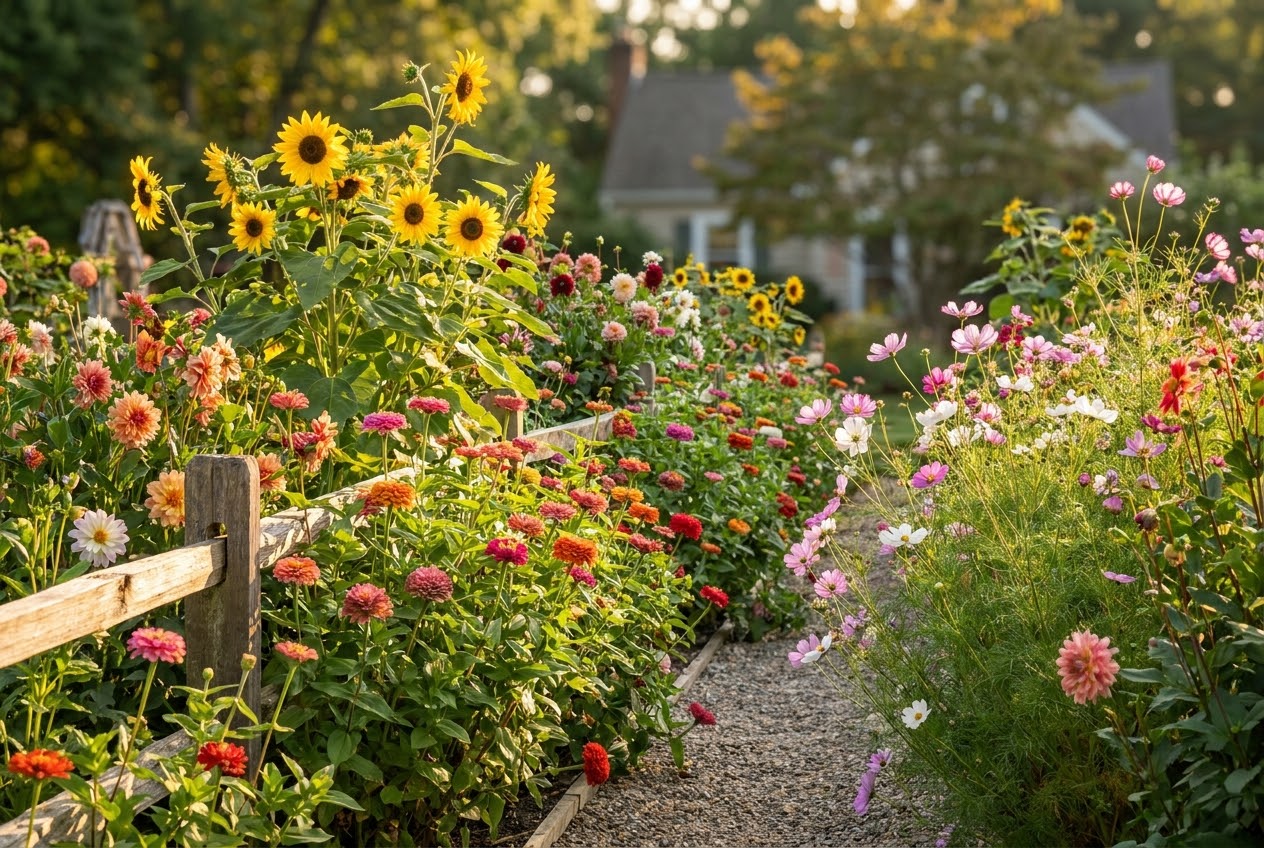
Annual flowers complete their entire life cycle in one season, and many of the best cut flowers fall into this category. They are fast-growing, prolific bloomers that reward you with armfuls of flowers from midsummer until frost. Zinnias are perhaps the single best annual for a cutting garden. They come in every color except blue, bloom continuously when you keep cutting them, last a week or more in a vase, and are incredibly easy to grow from seed. Cosmos are another top pick, with their airy, delicate blooms on tall stems that add movement and texture to any arrangement.
Sunflowers are a must for any cutting garden. Modern branching varieties produce dozens of stems per plant over the season rather than a single bloom. Varieties like ProCut Orange, Sunrich Lime, and Teddy Bear offer a range of colors and forms. Snapdragons provide vertical accent and come in warm and cool tones. Bachelor buttons, also called cornflowers, produce charming blue, pink, and white blooms that dry beautifully. Celosia adds unusual texture with its crested or plumed flower heads in fiery reds, oranges, and yellows. Sweet peas offer intensely fragrant blooms on long stems, though they prefer cool weather and fade in summer heat.
Perennials
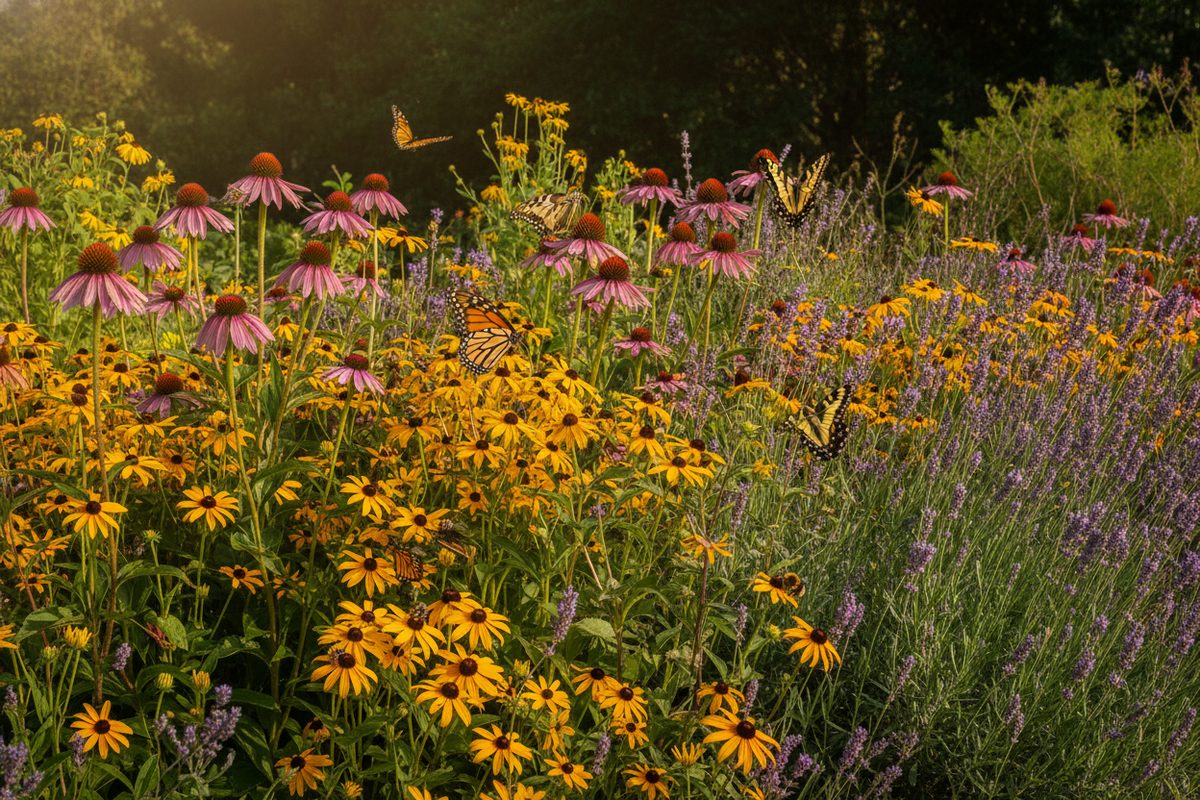
Perennial flowers return year after year, making them a valuable investment for any cutting garden. Coneflowers, also known as echinacea, produce sturdy stems with daisy-like blooms in purple, pink, white, and orange. They are drought-tolerant, attract pollinators, and last well in arrangements. Black-eyed Susans add cheerful golden color from midsummer to early fall. Dahlias are the crown jewels of the cutting garden, producing spectacular blooms in an astonishing range of colors, shapes, and sizes from dinner-plate giants to tiny pompons. They are tuberous perennials in warm climates but must be dug and stored in cold-winter regions.
Yarrow produces flat-topped clusters of tiny flowers in yellow, white, pink, and red that add a wildflower feel to arrangements and dry beautifully. Astilbe offers feathery, plume-like blooms in shades of pink, red, lavender, and white, ideal for adding softness and texture. Rudbeckia, or gloriosa daisies, bloom prolifically in golden yellow with dark centers. Peonies, though their bloom season is brief, produce some of the most magnificent and fragrant cut flowers in existence. Plant a few peony bushes and you will have armloads of blooms every spring for decades.
Foliage and Fillers
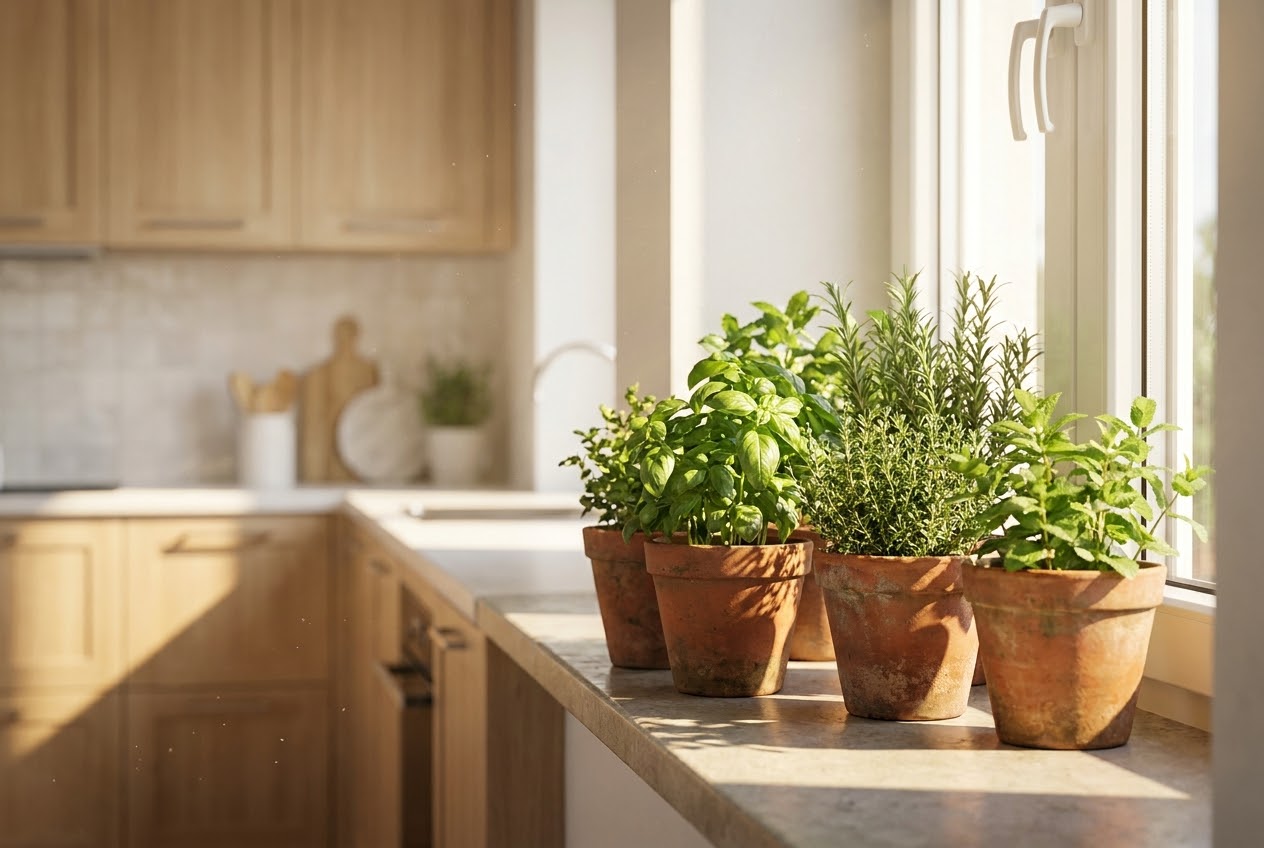
Every good arrangement needs greenery and filler, and your cutting garden should include plants that serve this purpose. Dusty miller provides silvery-gray foliage that complements any color palette. Lamb's ear offers soft, fuzzy silver-green leaves. Eucalyptus, if your climate supports it or you grow it in pots, provides elegant blue-green foliage with a wonderful scent. Herbs like basil, rosemary, and mint double as foliage for arrangements and as kitchen staples. Our guide on growing herbs indoors can help you keep a supply available year-round.
Top Cutting Flowers Comparison
Use this table to choose the best flowers for your cutting garden based on growing requirements and vase performance.
| Flower | Type | Stem Length | Vase Life | Direct Sow or Transplant |
|---|---|---|---|---|
| Zinnia | Annual | 18–36 in | 7–12 days | Direct sow after frost |
| Cosmos | Annual | 24–48 in | 5–7 days | Direct sow after frost |
| Sunflower (branching) | Annual | 24–72 in | 7–10 days | Direct sow after frost |
| Snapdragon | Annual | 24–36 in | 7–10 days | Transplant preferred |
| Dahlia | Tuberous perennial | 24–48 in | 5–7 days | Transplant tubers |
| Coneflower (Echinacea) | Perennial | 18–36 in | 7–10 days | Transplant or direct sow |
| Bachelor Button | Annual | 18–30 in | 5–8 days | Direct sow in fall or spring |
| Sweet Pea | Annual | 18–36 in | 4–7 days | Direct sow early spring |
| Celosia | Annual | 12–24 in | 7–14 days | Transplant or direct sow |
| Yarrow | Perennial | 24–36 in | 7–14 days (dries well) | Transplant preferred |
| Peony | Perennial | 18–30 in | 5–10 days | Transplant bare root or potted |
| Black-eyed Susan | Perennial | 24–36 in | 7–10 days | Transplant or direct sow |
Succession Planting for Continuous Blooms
Succession planting is the practice of planting the same flower at two- to three-week intervals so that you always have plants at different stages of growth and blooming. Instead of all your zinnias blooming at once and then fading, staggered plantings produce a continuous supply of fresh blooms over the entire growing season.
For annuals like zinnias, cosmos, and sunflowers, make a new planting every two to three weeks from your last frost date through midsummer. The later plantings will take over as the earlier ones begin to decline. This technique keeps your vases full from June through October. Bachelor buttons, larkspur, and sweet peas can be succession-planted in early spring for an extended cool-season harvest.
Another approach is to combine early, mid-season, and late-blooming varieties of the same flower. For dahlias, plant early-blooming varieties alongside mid-season and late types to extend the dahlia harvest from July through October. For sunflowers, mix early-maturing varieties that bloom in fifty-five days with later varieties that take eighty days. By overlapping bloom times, you fill the gaps that would otherwise leave your vases empty.
Support Structures
Many of the best cut flowers grow tall and need support to keep their stems straight and their blooms off the ground. Without support, stems bend and curve, which makes them unusable in arrangements. Tall flowers like dahlias, delphiniums, sunflowers, and snapdragons all benefit from some form of support.
The simplest support for a cutting garden is horizontal netting stretched over the rows. Plastic or jute grow netting with six-inch openings, suspended twelve to eighteen inches above the ground on stakes, allows plants to grow up through the holes and supports them as they reach full height. As the plants grow, add a second layer of netting at thirty-six inches. This method is fast, inexpensive, and works beautifully for rows of zinnias, cosmos, and other multi-stemmed annuals.
Individual stakes work well for dahlias and other large-flowered plants. Drive a sturdy wooden or metal stake next to each plant at planting time and tie the main stem to the stake with soft twine at twelve-inch intervals as it grows. Peony supports, circular metal rings on legs, are ideal for bushy perennials like peonies and rudbeckia that tend to flop open in the center. Whatever support method you choose, install it early, before the plants need it. Trying to corral a flopping plant after the fact is much harder and can damage stems and blooms.
Watering and Feeding
Cut flowers need consistent moisture to produce strong stems and large blooms. Most cut flower species require about one inch of water per week during the growing season, delivered in one or two deep soakings rather than daily light sprinkles. Deep watering encourages roots to grow down into the soil, creating more resilient plants that tolerate heat and drought better than shallow-rooted plants. Our detailed guide on watering your garden efficiently covers the best techniques for flower and vegetable gardens alike.
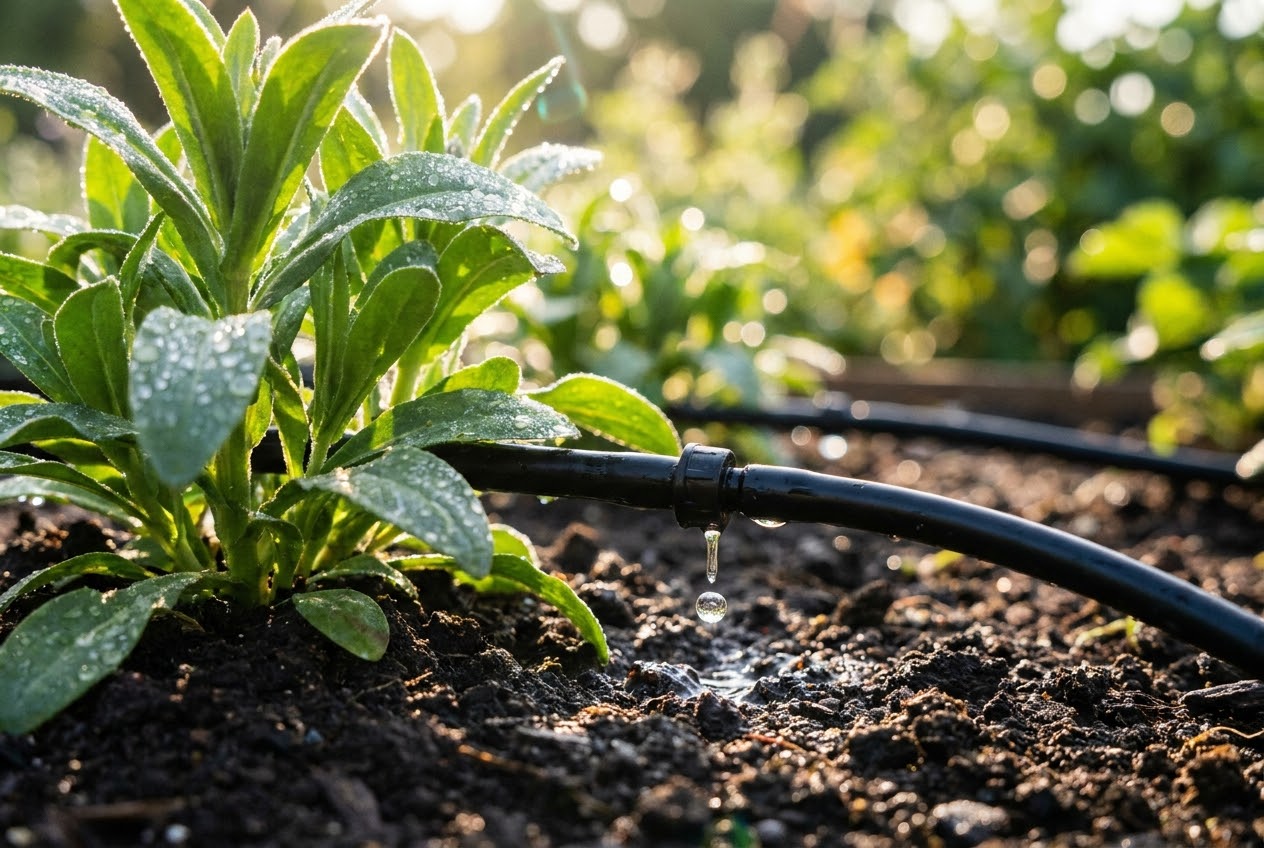
Drip irrigation or soaker hoses are ideal for a cutting garden. They deliver water directly to the root zone, keep foliage dry (which reduces disease), and can be set on a timer for consistency. If you water by hand, always water at the base of the plants in the morning so that any moisture on the foliage has time to dry before evening. Wet foliage overnight promotes fungal diseases like powdery mildew and botrytis.
Mulching around your flower rows with two to three inches of straw, shredded leaves, or wood chips conserves soil moisture, suppresses weeds, and moderates soil temperature. Mulch is one of the most effective tools in a cutting garden. It reduces your watering frequency, keeps weeds from competing with your flowers, and prevents soil from splashing onto lower leaves and blooms during rain or watering.
For feeding, most annual cut flowers benefit from a side-dressing of compost or a balanced organic fertilizer every four to six weeks during the growing season. Heavy feeders like dahlias and sunflowers appreciate more frequent feeding, especially once they begin blooming. Liquid fish emulsion or kelp applied as a foliar spray every two weeks provides a quick boost of micronutrients. For dahlias specifically, switch to a high-potassium fertilizer once buds form to encourage larger blooms and strong tuber development. Avoid over-fertilizing with nitrogen, which produces excessive leafy growth at the expense of flowers. Healthy soil built with compost provides a steady baseline of nutrients that synthetic fertilizers cannot match. Learn more about building great soil in our composting at home guide.
Harvesting Techniques
How and when you harvest directly affects the vase life of your flowers. Most cut flowers should be harvested early in the morning, when the stems are fully hydrated and the plant is cool. Avoid harvesting in the heat of the day, when plants are stressed and stems have less water content. If morning is not possible, late evening is the next best time.
For zinnias, cosmos, and other daisy-type flowers, harvest when the flower is fully open and the petals feel firm and papery, not soft. A simple test for zinnias: hold the stem about ten inches below the flower and shake gently. If the stem is stiff and stands straight, the flower is ready. If it flops over, wait a day or two. For dahlias, cut when the blooms are fully open and the back petals have just begun to unfurl. Dahlias do not continue to develop after cutting, unlike roses, so they must be fully mature.
Sunflowers should be harvested when the petals just begin to open, before the center disk is fully visible. Cut stems at a forty-five-degree angle with sharp, clean pruners or a harvesting knife. Immediately place the cut stems into a bucket of cool water. Never let cut stems sit in the sun or wind without water, even for a few minutes. The air that enters the stem can block water uptake and shorten vase life dramatically.
Regular harvesting is the most important habit in a cutting garden. The more you cut, the more your plants produce. When you cut a stem, the plant responds by sending up new growth and more flower buds. Plants that are left unharvested slow down production because their goal is seed production. Once a flower sets seed, the plant considers its job done. By continuously removing blooms before they set seed, you trick the plant into perpetual flowering. This is the secret of abundant cutting gardens: harvest aggressively and often.
Conditioning and Arranging
Conditioning is the process of preparing cut flowers for maximum vase life. It begins the moment you bring your harvest indoors. Strip all leaves that will be below the waterline in your vase. Submerged leaves rot, breed bacteria, and clog the stems, dramatically shortening the life of the arrangement. Re-cut each stem at a sharp angle under running water or in a bucket of water. Cutting underwater prevents air bubbles from entering the stem and blocking water uptake.
For flowers with milky sap, like poppies, dahlias, and euphorbia, sear the cut ends by dipping them in boiling water for ten seconds or holding them over a candle flame until the sap seals. This prevents the sap from coagulating at the cut end and blocking water flow. Woody-stemmed flowers like lilac, hydrangea, and dogwood benefit from splitting the bottom inch of the stem or crushing it with a hammer to increase water absorption.
Place conditioned flowers in cool water with floral preservative added and let them rest in a cool, dark spot for at least two hours, ideally overnight, before arranging. This step, called hardening off, allows the stems to fully hydrate and dramatically extends vase life. When arranging, use a clean vase, change the water every two days, and re-cut the stems slightly each time you change the water. Keep arrangements away from direct sunlight, heating vents, and fruit bowls. Ripening fruit produces ethylene gas that accelerates flower aging.
For those interested in creating beautiful arrangements year-round, you can also build a small greenhouse to start flowers earlier in the season or grow tender varieties like ranunculus and anemones that need frost protection.
Extending the Season
With a few strategies, you can harvest fresh flowers from your cutting garden from early spring through late fall, far beyond the typical summer bloom window.
Start with cool-season flowers that can be planted weeks before your last frost. Ranunculus, anemones, snapdragons, sweet peas, bachelor buttons, and larkspur all thrive in cool spring weather and produce blooms long before summer flowers begin. Plant their corms, tubers, or seeds in fall in mild climates or in very early spring in cold climates. These flowers often fade as summer heat arrives, but by then your summer plantings of zinnias, cosmos, and dahlias are coming into their own.
For fall interest, plant chrysanthemums, asters, ornamental grasses, and sedum. These late-season bloomers fill the gap between summer annuals and the first hard frost. Dahlias continue blooming until frost kills them, and their blooms are at their largest and most spectacular in the cooler temperatures of early fall. To extend the dahlia season even further, cover plants with frost cloth on nights when frost threatens, buying you an extra week or two of blooms.
Drying flowers extends your harvest into winter. Flowers that dry well include celosia, yarrow, statice, globe amaranth, strawflower, and baby's breath. Hang bundles of stems upside down in a warm, dry, dark place with good air circulation for two to three weeks. Dried arrangements add beauty to your home during the months when fresh flowers are unavailable. You can also press flowers in heavy books or with a flower press for use in crafts, cards, and framed art.
Frequently Asked Questions
How much space do I need for a cutting garden?
You can start a cutting garden in as little as a four-by-four-foot raised bed and still harvest enough flowers for a small vase each week during the growing season. A more productive cutting garden, large enough to fill several vases per week and include a variety of flower types, is around four feet wide and eight to twelve feet long. If you have the room, a dedicated area of one hundred to two hundred square feet gives you space for succession planting and a wide range of species. However, even a single row of zinnias along a sunny fence line can produce an impressive amount of cut flowers. Start small and expand as you learn which flowers you enjoy growing and arranging most.
Can I mix cutting flowers with vegetables?
Absolutely. Many gardeners interplant flowers among their vegetables, and a row of cut flowers works beautifully alongside tomatoes, peppers, and beans. Flowers like zinnias, cosmos, and marigolds attract pollinators and beneficial insects that help your vegetable plants produce better. Nasturtiums serve double duty as edible flowers and aphid traps, drawing pests away from your vegetables. The key is to plan the layout so that tall flowers do not shade shorter vegetable plants, and to harvest both flowers and vegetables regularly so neither competes with the other. Mixing flowers and vegetables also creates a more diverse, resilient garden ecosystem that is naturally more resistant to pests and diseases.
What flowers should I avoid in a cutting garden?
Avoid flowers that wilt quickly after cutting, have very short vase lives, or do not re-bloom after harvesting. Impatiens, petunias, and begonias, while beautiful in containers, do not make good cut flowers because their stems are too soft and they wilt rapidly out of soil. Daylilies produce gorgeous blooms, but each flower lasts only a single day once cut. Flowers that are highly fragrant in the garden, like some roses, may drop petals quickly indoors. Also avoid flowers with very thin, wiry stems that cannot support themselves in a vase without elaborate wiring. Focus your cutting garden on the proven performers listed in the table above, and you will have consistently beautiful, long-lasting arrangements.
How do I prevent pests from destroying my cutting garden?
A healthy, diverse cutting garden naturally resists many pest problems. Companion planting with herbs like basil and dill attracts beneficial insects that prey on aphids, mites, and caterpillars. Inspect plants regularly and hand-pick pests like Japanese beetles and caterpillars when you spot them. A strong spray of water from a hose knocks aphids off stems. For persistent problems, neem oil or insecticidal soap provides organic control without harming pollinators when applied in the evening after bees have returned to their hives. Healthy soil full of organic matter grows stronger plants that naturally resist pests and diseases better than stressed plants in depleted soil. For comprehensive organic pest strategies, read our guide on natural pest control methods for your garden.
When should I plant bulbs for spring cutting flowers?
Plant spring-blooming bulbs like tulips, daffodils, hyacinths, and ranunculus in the fall, six to eight weeks before your first expected hard frost. This gives the bulbs time to develop roots before the ground freezes. In most of the United States, this means planting in October or November. For the longest harvest, choose early, mid-season, and late-blooming varieties of tulips and daffodils so that you have flowers for six to eight weeks in spring rather than just two. Muscari, or grape hyacinth, is an early bloomer that naturalizes readily and adds charming blue accents to spring arrangements. Ranunculus and anemones, planted as corms in fall in mild climates or early spring in cold regions, produce exquisitely layered blooms in jewel tones that are prized for wedding and special occasion arrangements.