Introduction
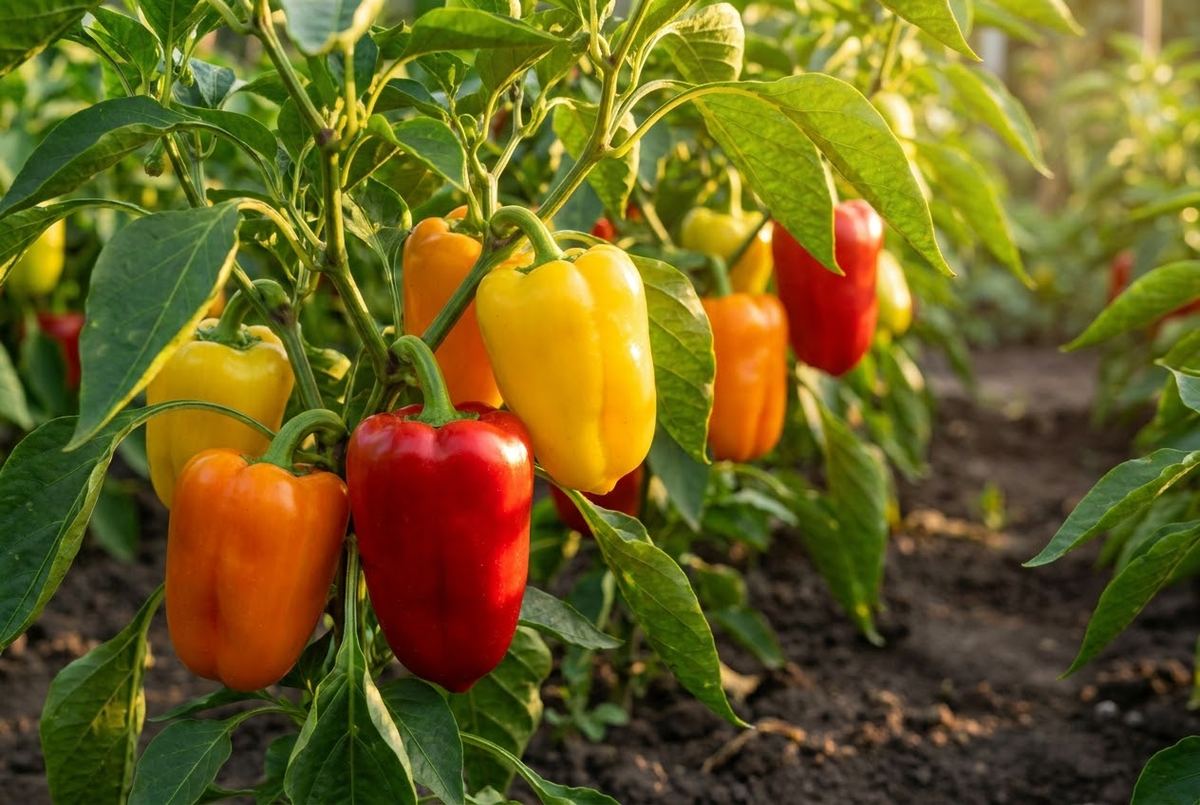
Bell peppers are a garden favorite for their sweet crunch and rainbow colors. They take a bit longer to mature than some summer crops, but the reward is worth the wait. With full sun, rich soil, and consistent care, you can harvest peppers from midsummer until frost.
Choosing Bell Pepper Varieties
Bell peppers come in many colors and sizes. Classic green peppers mature to red, yellow, or orange. Mini bell peppers are perfect for containers and snacks. Look for disease-resistant varieties adapted to your climate. Popular choices include California Wonder, King Arthur, and Lunchbox Orange.
Starting and Transplanting Peppers
Peppers need warm soil and warm nights, so start seeds indoors eight to ten weeks before your last frost date. Transplant seedlings after all danger of frost has passed and soil temperatures reach at least 60 degrees Fahrenheit. Harden off seedlings gradually before planting outdoors.
Sunlight, Soil, and Spacing
Peppers need at least six to eight hours of direct sunlight daily. Plant them in fertile, well-draining soil with a pH between 6.0 and 6.8. Space plants eighteen to twenty-four inches apart in rows two feet apart. In containers, use pots at least five gallons in size.
Watering and Feeding
Keep soil consistently moist but not soggy. Irregular watering causes blossom end rot and misshapen fruit. Feed with a balanced organic fertilizer at planting, then side-dress with compost or a low-nitrogen fertilizer when plants begin to flower and fruit.
Pests, Diseases, and Harvesting
Aphids, flea beetles, and spider mites are common pepper pests. Hand-pick or use insecticidal soap as needed. Harvest peppers when they reach full size and the desired color. Cutting rather than pulling prevents damage to the plant.
Emma Richardson
Emma Richardson is a passionate home gardener and sustainability advocate with over a decade of hands-in-the-soil experience. She writes practical guides to help people grow their own food and live more sustainably, no matter their experience level or available space.
View all articles →Related Articles