Introduction
Water is becoming one of the most precious resources on the planet. Across much of the United States and around the world, prolonged droughts, declining aquifers, and rising water costs are forcing homeowners to rethink how they maintain their landscapes. The traditional green lawn, once the hallmark of a well-kept home, is increasingly recognized as one of the most water-hungry features of any property. In many arid and semi-arid regions, a typical lawn can consume 40,000 to 80,000 gallons of water per year for every 1,000 square feet. That is a staggering amount of a dwindling resource poured onto grass that serves little ecological purpose.
Enter xeriscaping, a landscaping philosophy that dramatically reduces or eliminates the need for supplemental irrigation. Derived from the Greek word "xeros," meaning dry, xeriscaping does not mean creating a barren rock garden or giving up on beauty. Quite the opposite. A well-planned xeriscape is lush, colorful, and full of life. It simply uses plants and design strategies that work with your local climate rather than against it. The result is a landscape that looks stunning, supports pollinators and wildlife, requires far less maintenance than a conventional yard, and slashes your water bill.
This guide covers the fundamental xeriscaping basics you need to transform your yard into a water-wise paradise. Whether you live in the desert Southwest, the Mediterranean climate of California, the humid Southeast, or anywhere in between, the principles of xeriscaping can be adapted to your specific conditions. Let us dig in.
The 7 Principles of Xeriscaping
Xeriscaping is built on seven foundational principles developed by Denver Water in 1981. These principles provide a framework for creating landscapes that are both beautiful and water-efficient. Understanding each principle is the first step toward implementing xeriscaping basics in your own yard.
1. Planning and Design
Every successful xeriscape starts with a plan. Before purchasing a single plant, take time to assess your property. Map out sun and shade patterns throughout the day and across seasons. Note slopes, low spots where water collects, and areas that dry out quickly. Identify your soil type and existing drainage patterns. Consider how you use your outdoor space and which areas need to be functional versus decorative. A thoughtful design on paper prevents costly mistakes and ensures that each plant ends up where it will thrive with the least intervention.
2. Soil Improvement
Healthy soil is the foundation of any garden, and xeriscaping is no exception. Most drought-tolerant plants need well-draining soil that still retains enough moisture to sustain roots between waterings. Amending your soil with organic matter such as compost improves both sandy soils (by increasing water retention) and clay soils (by improving drainage and structure). A soil test tells you exactly what your soil needs before you begin planting.
3. Appropriate Plant Selection
Choosing the right plants is perhaps the most critical xeriscaping principle. Select species that are naturally adapted to your region's rainfall, temperature extremes, and soil conditions. Native plants are always the best starting point because they have evolved over millennia to thrive in your local environment with minimal care. Mediterranean herbs, succulents, and ornamental grasses are excellent additions that blend beauty with drought tolerance.
4. Practical Turf Areas
Xeriscaping does not require eliminating all lawn, but it does call for reducing turf to areas where it serves a functional purpose, like a children's play area or a backyard gathering space. For these zones, consider drought-tolerant grass varieties such as buffalo grass or Bermuda grass. Replace ornamental lawn areas with ground covers, gravel, mulch, or permeable pavers.
5. Efficient Irrigation
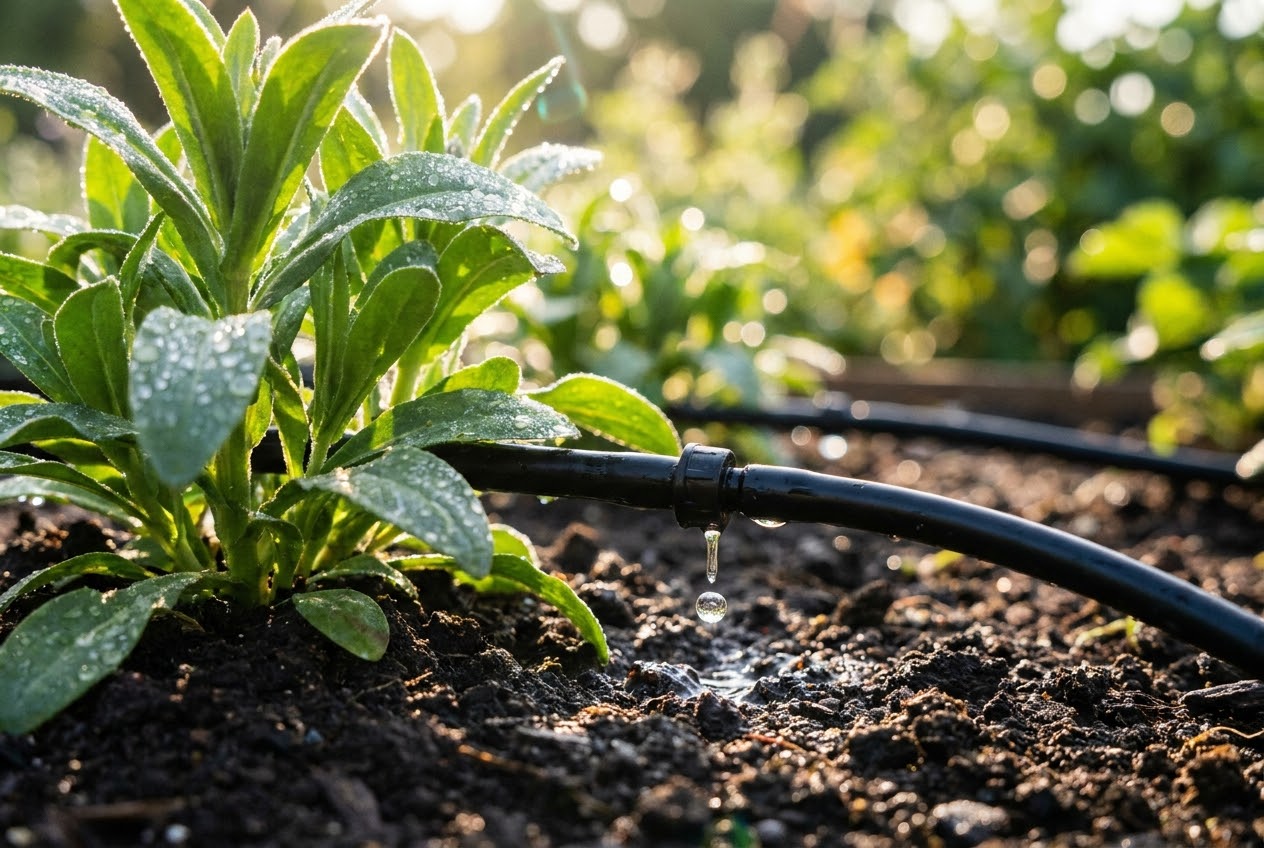
Even drought-tolerant plants need water during establishment and during the driest periods. The key is delivering water efficiently. Drip irrigation and soaker hoses deliver water directly to the root zone, minimizing evaporation and runoff. Grouping plants with similar water needs together, a strategy called hydrozoning, ensures that you are not overwatering drought-tolerant plants to satisfy thirstier ones nearby.
6. Mulching
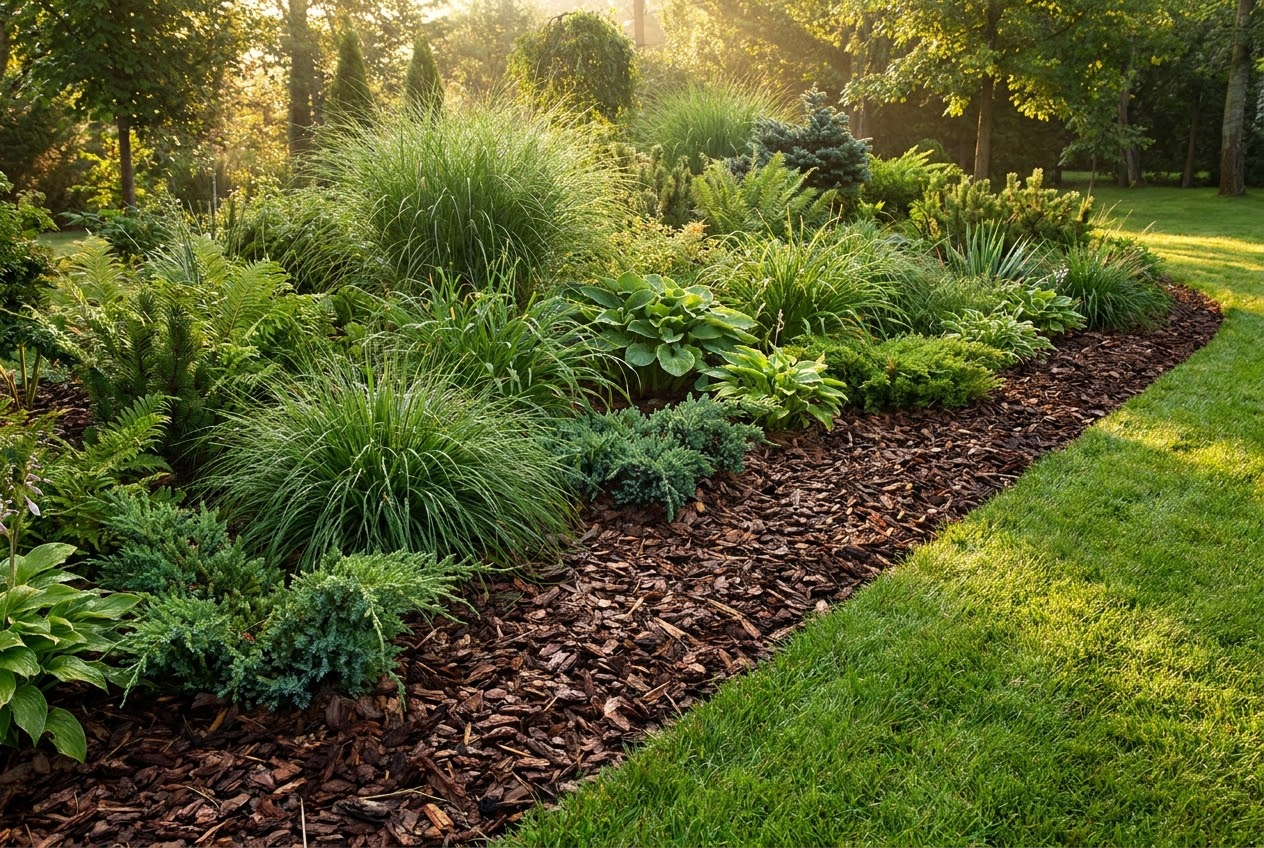
A thick layer of mulch over exposed soil is one of the simplest and most effective water-saving strategies. Mulch reduces evaporation by up to 70 percent, moderates soil temperature, suppresses weeds that compete for water, and slowly breaks down to improve soil structure. Organic mulches like wood chips, bark, and shredded leaves are excellent choices for planted areas, while gravel and river rock work well in pathways and around succulents.
7. Appropriate Maintenance
A xeriscape requires less maintenance than a conventional landscape, but it is not maintenance-free. Regular weeding, occasional pruning, seasonal mulch replenishment, and periodic irrigation system checks keep your water-wise garden looking its best. The good news is that most xeriscape maintenance tasks take a fraction of the time required for lawn care.
| Principle | Key Actions | Water Savings Impact |
|---|---|---|
| Planning & Design | Map sun/shade, assess soil, create zones | Prevents overplanting and waste |
| Soil Improvement | Add compost, test pH, improve drainage | Increases retention by 20-30% |
| Plant Selection | Choose native, drought-adapted species | Eliminates 50-75% of irrigation |
| Practical Turf | Reduce lawn area, use drought-tolerant grass | Saves 30,000+ gal/year per 1,000 sq ft |
| Efficient Irrigation | Drip systems, timers, hydrozoning | Uses 30-50% less water than sprinklers |
| Mulching | 3-4 inch layer of organic or rock mulch | Reduces evaporation up to 70% |
| Appropriate Maintenance | Weed, prune, check irrigation, refresh mulch | Prevents water waste from system failures |
Soil Improvement for Water Retention
Before you plant anything, invest time in improving your soil. The goal is to create a growing medium that absorbs water readily, holds enough moisture for plant roots, and drains well enough to prevent waterlogging. This balance is the secret to successful xeriscaping.
Start with a soil test. A basic test from your local cooperative extension office costs about $15 to $25 and tells you your soil's pH, organic matter content, and nutrient levels. Most drought-tolerant plants prefer a slightly acidic to neutral pH (6.0 to 7.0). If your soil is heavily alkaline, as is common in many western regions, adding sulfur or peat moss can help lower the pH.
For sandy soils that drain too quickly, incorporate two to three inches of compost into the top eight to twelve inches of soil. Compost acts like a sponge, dramatically increasing the soil's ability to hold moisture. For clay soils that drain poorly and compact easily, mix in compost along with coarse sand, perlite, or small gravel to improve structure and drainage. Raised beds filled with a custom soil mix are another excellent option for areas with extremely poor native soil.
Beyond compost, consider adding biochar to your soil amendment mix. Biochar is a form of charcoal produced by heating organic material in a low-oxygen environment. It improves water retention in sandy soils, enhances drainage in clay soils, and provides habitat for beneficial soil microorganisms. A single application of biochar can last for decades in the soil.
Plant Selection: Choosing Drought-Tolerant Species
The heart of any xeriscape is the plants. Selecting species that thrive with minimal supplemental watering is the most impactful decision you will make. The best xeriscape plants are those native to your region, but many drought-adapted plants from similar climates around the world also perform beautifully.
Native Plants
Native plants are the backbone of xeriscaping because they are perfectly adapted to your local rainfall, soil, and temperature patterns. They also provide critical habitat for native pollinators, birds, and beneficial insects. Contact your local native plant society or cooperative extension office for a list of recommended native species for your area. Examples include black-eyed Susan, purple coneflower, California poppy, and desert marigold depending on your region.
Mediterranean Herbs and Shrubs
Plants from Mediterranean climates (southern Europe, parts of Australia, South Africa, and Chile) are naturally drought-tolerant and bring wonderful fragrance and texture to the garden. Lavender, rosemary, sage, thyme, and oregano thrive in dry, sunny conditions and produce flowers that attract bees and butterflies. Larger Mediterranean shrinks like rockrose, santolina, and Texas sage add structure and year-round interest.
Succulents and Cacti
No xeriscape discussion is complete without succulents. These water-storing plants come in an astonishing range of shapes, sizes, and colors, from the tiny rosettes of hens-and-chicks to the dramatic architectural forms of agave and yucca. Sedums make excellent ground covers, while prickly pear cactus adds bold texture and produces edible fruit. In colder climates, many succulents can be grown as annuals or brought indoors for winter.
Ornamental Grasses
Drought-tolerant ornamental grasses add movement, texture, and year-round beauty to the xeriscape. Blue fescue, feather reed grass, switchgrass, and muhly grass are all excellent choices that require little water once established. Their deep root systems also help improve soil structure and prevent erosion.
| Plant | Water Needs | Sun Exposure | Height | Bloom |
|---|---|---|---|---|
| Lavender | Low | Full sun | 1-3 ft | Summer, purple |
| Black-Eyed Susan | Low to moderate | Full sun | 2-3 ft | Summer, yellow |
| Agave | Very low | Full sun | 2-6 ft | Once, then dies |
| Russian Sage | Low | Full sun | 3-5 ft | Late summer, lavender |
| Blue Fescue | Low | Full to part sun | 1 ft | Summer, subtle |
| Yucca | Very low | Full sun | 3-8 ft | Summer, white |
| California Poppy | Low | Full sun | 1-2 ft | Spring, orange |
| Sedum (Stonecrop) | Very low | Full to part sun | 6 in-2 ft | Summer-fall, pink/red |
| Texas Sage | Very low | Full sun | 5-8 ft | After rain, purple |
| Desert Marigold | Very low | Full sun | 1-2 ft | Spring-fall, yellow |
| Muhly Grass | Low | Full sun | 3-4 ft | Fall, pink plumes |
| Prickly Pear Cactus | Very low | Full sun | 3-6 ft | Spring, yellow/orange |
Design Strategies for a Water-Wise Yard
Good xeriscape design goes beyond plant selection. How you arrange your landscape, manage water flow, and incorporate non-plant elements makes a significant difference in water efficiency and visual appeal.
Hydrozoning
Hydrozoning is the practice of grouping plants with similar water needs together in the same irrigation zone. This is one of the most important xeriscaping basics because it prevents the common mistake of overwatering drought-tolerant plants to keep nearby thirsty plants alive. Divide your yard into three zones: an oasis zone near the house where you may have container plants or a small lawn that gets regular water, a transitional zone with moderate-water plants that receive occasional irrigation, and a low-water zone at the perimeter filled with the most drought-tolerant species that survive on rainfall alone once established.
Terracing and Slope Management
If your property has slopes, water runs off before it can soak in, wasting a precious resource and potentially causing erosion. Terracing, building level planting areas held in place by retaining walls, slows water flow and gives it time to percolate into the soil. Even gentle slopes benefit from contour swales, shallow depressions that catch and hold rainwater. Plant these areas with deep-rooted native grasses and wildflowers that stabilize the soil.
Creating Focal Points
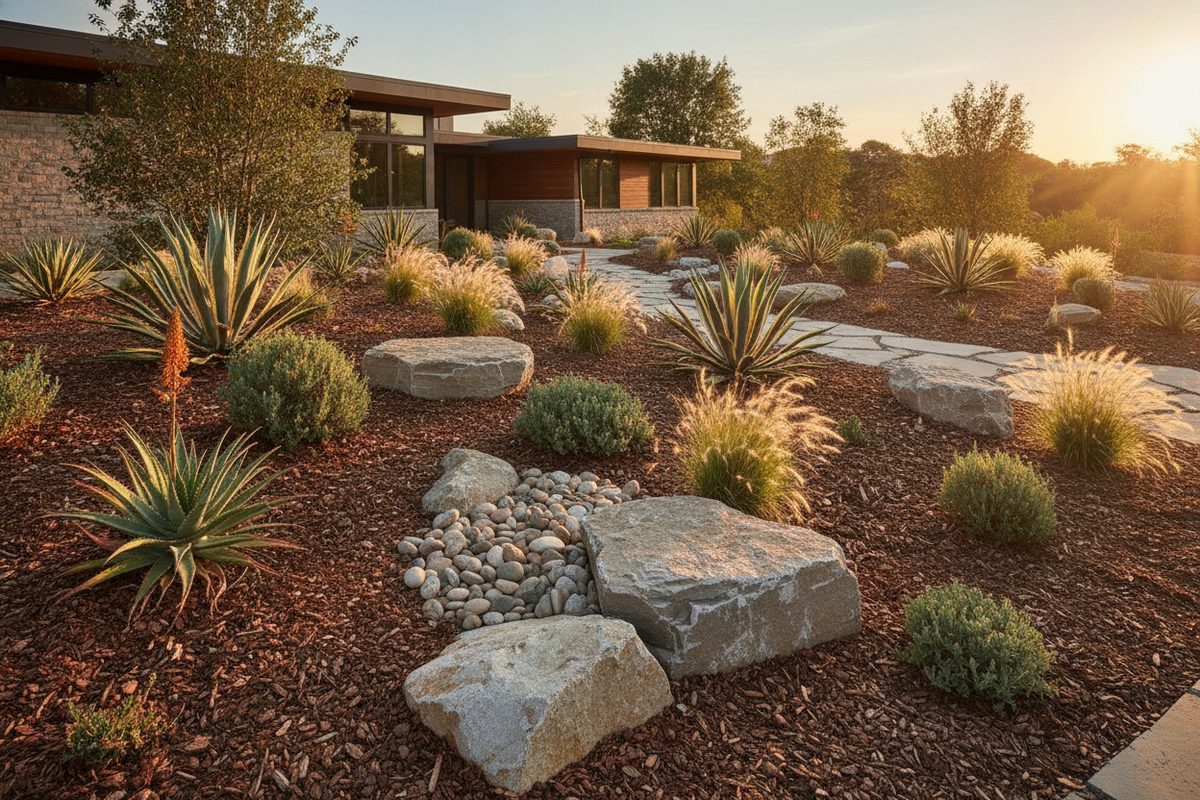
A xeriscape should have visual anchors that draw the eye and create structure. A specimen agave, a decorative boulder, a dry creek bed of river rock, or a sculptural piece of driftwood can serve as a focal point around which planting areas are organized. Water features, while seeming contradictory in a water-wise garden, can be designed as recirculating systems that use minimal water while providing the soothing sound and visual interest of moving water.
Pathways and Hardscaping
Replace water-hungry lawn areas with permeable pathways made of flagstone, decomposed granite, or gravel set between stepping stones. These materials allow rainwater to infiltrate the soil rather than running off. Hardscape surfaces also reduce the total planted area, which reduces water demand. Use permeable pavers for patios and driveways to maximize water infiltration. For more ideas on sustainable hardscaping materials, check our guide on raised bed gardening, which discusses material selection for outdoor projects.
Mulching for Drought Protection
Mulch is a xeriscaper's best friend. A three- to four-inch layer of organic mulch over planted beds dramatically reduces water loss from soil evaporation, which is one of the biggest sources of water waste in any garden. During hot summer months, bare soil can lose up to two gallons of water per square foot per week to evaporation alone. Mulch cuts that loss by 50 to 70 percent.
Organic mulches such as wood chips, bark nuggets, shredded hardwood, and pine straw are ideal for most xeriscape beds. As they break down, they add organic matter to the soil, improving its structure and water-holding capacity. Replenish organic mulch annually as it decomposes. Keep mulch a few inches away from plant stems and trunks to prevent moisture-related rot.
In areas around succulents, cacti, and other plants that prefer drier conditions, use inorganic mulch like gravel, decomposed granite, or river rock. These materials reflect heat, which helps keep the root zone cool, and they never need replacing. They also provide an attractive contrast to the soft textures of foliage plants. For a deeper look at mulching strategies, see our guide to mulching benefits.
Hardscaping Your Xeriscape
Hardscaping, the non-plant elements of your landscape, plays a crucial role in xeriscape design. Patios, walkways, retaining walls, and decorative rock features reduce the total area that needs watering while adding structure and functionality to your outdoor space.
Choose materials that complement the natural environment. Flagstone, slate, and sandstone blend beautifully with drought-tolerant plantings. Decomposed granite is an affordable, permeable option for pathways and seating areas. Boulder groupings create natural-looking focal points and provide shelter for lizards and other small wildlife.
Dry creek beds are both functional and beautiful. Dig a shallow, meandering channel and fill it with river rocks of varying sizes. During rain events, these channels direct water where it is needed, preventing erosion and allowing water to soak into planted areas. Between storms, they add visual interest and a sense of natural movement to the landscape.
Irrigation Systems for Xeriscapes
Even the most drought-tolerant landscape needs some supplemental water, especially during the establishment period (the first one to two years after planting) and during extreme heat or prolonged dry spells. The key is to irrigate as efficiently as possible.
Drip Irrigation
Drip irrigation is the gold standard for xeriscaping. It delivers water slowly and directly to the root zone of each plant through a network of tubes and emitters. Because water goes exactly where it is needed, drip systems use 30 to 50 percent less water than conventional sprinklers and virtually eliminate evaporation loss and runoff. Modern drip systems can be connected to smart timers that adjust watering schedules based on weather conditions and soil moisture levels. Our drip irrigation guide has detailed installation instructions.
Soaker Hoses
Soaker hoses are porous hoses that seep water along their entire length. They are simpler and less expensive than drip systems and work well for linear plantings like hedgerows or border gardens. Lay them in serpentine patterns through garden beds and cover with mulch to reduce evaporation.
Rainwater Harvesting
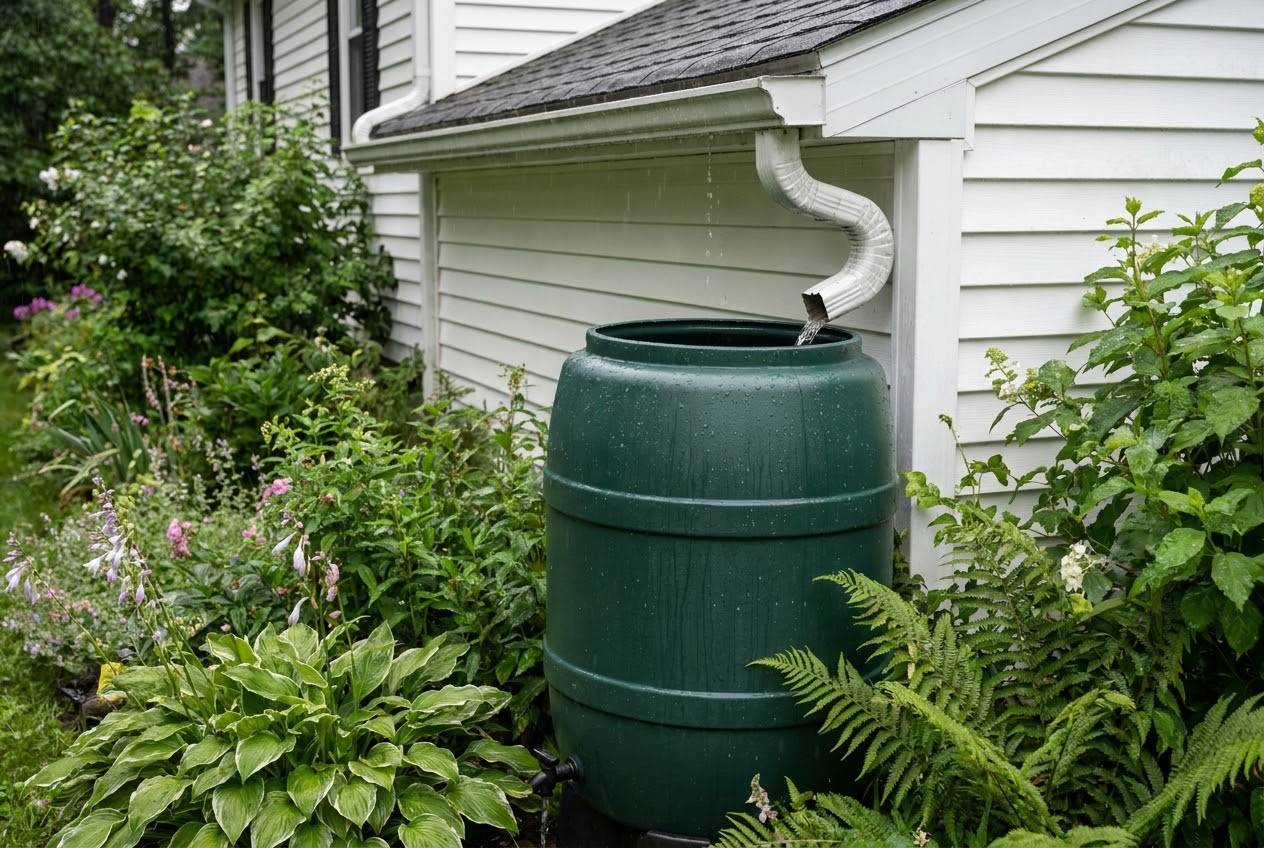
Capturing rainwater from your roof in barrels or cisterns provides free, chemical-free water for your xeriscape. A single rain barrel connected to a downspout can collect hundreds of gallons during a moderate rainstorm. Combine rainwater harvesting with drip irrigation for the ultimate water-wise system. Learn more in our rainwater harvesting guide.
Smart Controllers
Smart irrigation controllers use weather data, soil moisture sensors, and evapotranspiration rates to determine exactly when and how much to water. They automatically skip watering cycles when it rains and reduce frequency during cool, cloudy periods. Studies show that smart controllers reduce outdoor water use by 20 to 40 percent compared to traditional timer-based systems.
Maintaining Your Xeriscape
One of the greatest advantages of xeriscaping is the reduced maintenance compared to conventional landscaping. However, low maintenance does not mean no maintenance. Here is what to keep in mind throughout the year.
Spring
Refresh mulch to the recommended three- to four-inch depth. Check drip irrigation lines for clogs or damage from winter freeze. Prune dead growth from ornamental grasses and perennials. Divide overcrowded plants and add new plantings while spring rains help them establish. This is also a good time to top-dress beds with a thin layer of compost.
Summer
Monitor irrigation systems to ensure proper operation. Deep water established plants during extended dry spells rather than frequent shallow watering. Pull weeds before they set seed. Deadhead spent flowers to encourage continued blooming. Add a layer of gravel mulch to areas where organic mulch has thinned.
Fall
Reduce irrigation frequency as temperatures cool and rainfall increases. Plant new trees, shrubs, and perennials, as fall planting gives roots time to establish before summer heat. Collect fallen leaves for compost or use them as mulch. Cut back perennials that have finished their seasonal display, or leave seed heads for birds.
Winter
In cold climates, protect marginally hardy plants with a thick mulch blanket over the root zone. Disconnect and drain drip irrigation systems to prevent freeze damage. Use the slower pace to plan next year's xeriscape improvements and order seeds or plants from nurseries that specialize in drought-tolerant species.
Cost Savings and Environmental Benefits
The financial case for xeriscaping is compelling. Homeowners who convert conventional landscapes to xeriscapes typically reduce outdoor water use by 50 to 75 percent. In areas with tiered water pricing, where the cost per gallon increases as usage rises, the savings are even more dramatic. A typical xeriscape conversion pays for itself within two to three years through reduced water bills alone.
Beyond water savings, xeriscaping reduces costs in other ways. Less lawn means lower fuel and maintenance costs for mowers and trimmers. Drought-tolerant plants generally require fewer fertilizer and pesticide applications. The reduced need for professional lawn care services can save hundreds of dollars annually.
The environmental benefits are equally significant. Xeriscaping reduces demand on stressed municipal water supplies, decreases stormwater runoff and the pollution it carries, supports native pollinators and wildlife, and reduces the carbon emissions associated with lawn maintenance equipment. A xeriscape is not just a pretty yard. It is a small but meaningful contribution to a more sustainable future. If you are interested in other ways to reduce your environmental impact, explore our sustainable living guide.
Getting Started: Your Xeriscape Action Plan
Converting your entire yard at once can be overwhelming and expensive. A phased approach works best for most homeowners. Start by identifying the area of your lawn that uses the most water and serves the least functional purpose, often the front yard strip between the sidewalk and the street. Replace that area first with drought-tolerant plantings and mulch. This single change can save thousands of gallons per year and gives you a chance to experiment with xeriscape techniques on a manageable scale.
Next, tackle one section at a time. Convert a side yard to a gravel pathway with container plantings. Replace a border of annual flowers with perennial native wildflowers. Shrink the backyard lawn by expanding planted beds along the fence line. Each step reduces your water footprint and builds your confidence with xeriscape methods.
Remember that xeriscaping is a journey, not a destination. Your landscape will evolve as plants grow, your tastes change, and you learn more about what thrives in your specific conditions. Start with the xeriscaping basics covered in this guide, and you will be well on your way to a yard that is beautiful, sustainable, and kind to your wallet.
Frequently Asked Questions
Does xeriscaping mean I have to get rid of my entire lawn?
Not at all. Xeriscaping is about being intentional with water use, not eliminating all greenery. You can keep a small, functional lawn area for children or pets and plant it with a drought-tolerant grass variety like buffalo grass or Bermuda grass. The key is reducing turf to areas where it truly serves a purpose and replacing ornamental lawn with more water-efficient alternatives.
How much does it cost to xeriscape a yard?
Costs vary widely depending on yard size, plant choices, and whether you do the work yourself or hire a professional. A DIY xeriscape conversion typically costs $2 to $5 per square foot, while professional installation ranges from $5 to $15 per square foot. However, many homeowners recoup these costs within two to three years through reduced water bills. Some municipalities also offer rebates for lawn conversion, which can offset initial expenses significantly.
Can xeriscaping work in humid climates?
Yes. While xeriscaping originated in arid regions, the principles apply everywhere. In humid climates, the focus shifts to reducing supplemental irrigation during dry spells, improving drainage in heavy soils, and choosing plants that tolerate both wet and dry periods. Native plants from your region are the best choices regardless of climate. The design principles of hydrozoning, mulching, and efficient irrigation are universally beneficial.
Will a xeriscape attract mosquitoes?
A properly designed xeriscape actually reduces mosquito habitat. By eliminating standing water, improving drainage, and reducing overwatering, you remove the conditions mosquitoes need to breed. If you include a water feature, ensure it has a pump that keeps water circulating, as mosquitoes lay eggs in still water. Avoid saucers under outdoor pots that collect water, and empty any decorative containers after rain.
How long does it take for a xeriscape to look established?
Most xeriscapes look well-established within two to three growing seasons. During the first year, plants are focused on root development and may look sparse. By the second year, growth accelerates noticeably, and by the third year, most drought-tolerant perennials and shrubs have filled in their allotted space. Using a mix of fast-growing annual wildflowers alongside slower-establishing perennials ensures your xeriscape looks full from the first season while the permanent plants develop.