Introduction
Every gardener dreams of a productive plot where vegetables thrive with little fuss. One of the oldest and most effective ways to achieve this is companion planting, the practice of positioning plants so they help one another grow. Instead of treating the garden as a collection of isolated crops, companion planting sees it as a community where scent, shade, root chemistry, and flower timing all play a role.
When done well, companion planting can reduce pest pressure, improve pollination, boost yields, and even enhance flavor. It is not magic, but it is a powerful tool grounded in observation and supported by modern research. This guide explains how companion planting works, which combinations are most reliable, and how to design a garden that uses plant partnerships to its advantage.
What Is Companion Planting?
Companion planting is the intentional placement of different plant species near one another for mutual benefit. The idea has been practiced for thousands of years across many cultures. The most famous example is the Three Sisters method developed by Indigenous peoples of North America, where corn, beans, and squash grow together in a supportive trio.
Plants can help neighbors in several ways. Strong scents from herbs may mask the smell of vegetables and confuse pests searching for a host. Tall plants provide shade or support for climbing companions. Deep-rooted crops bring nutrients up from lower soil layers, while shallow-rooted crops use the surface. Flowering companions attract pollinators and predatory insects that keep pest populations in check.
Top Companion Planting Combinations
Some plant pairings have earned their reputation through generations of gardening success. Here are the most dependable combinations to try.
Tomatoes and Basil
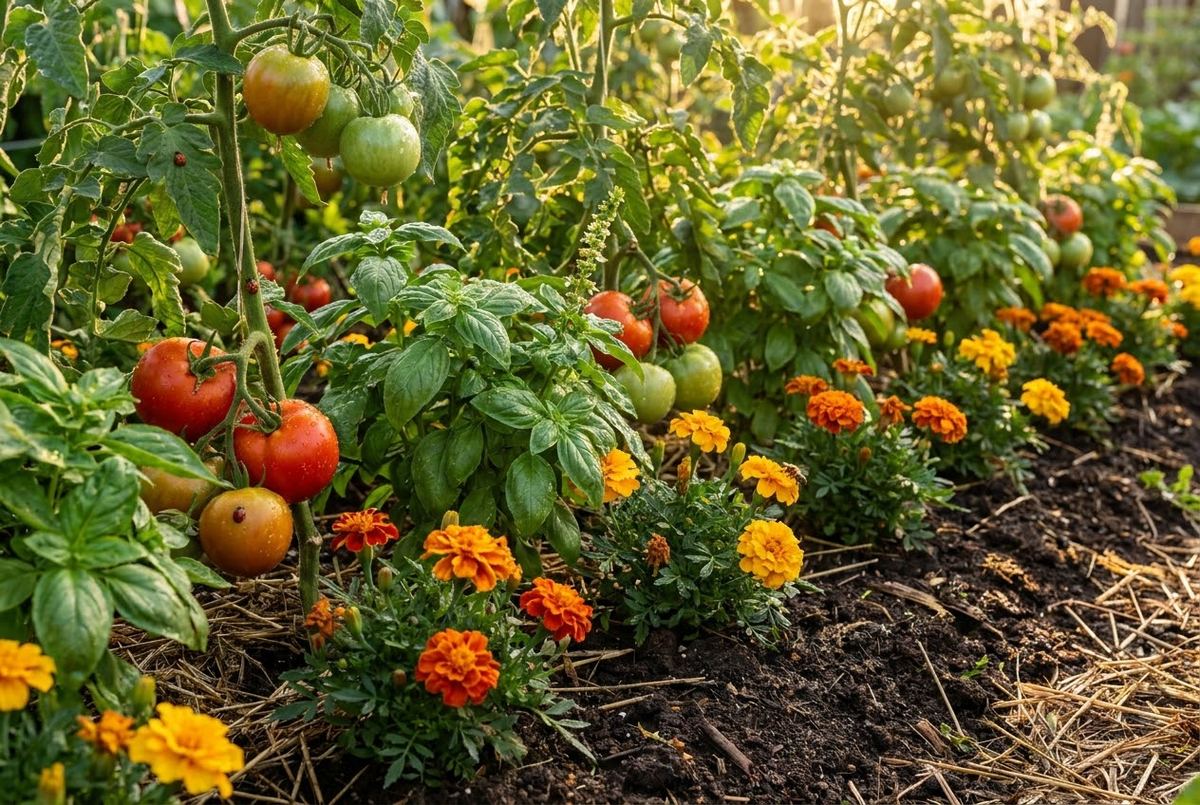
Basil is often called the perfect tomato companion. Gardeners report improved tomato flavor when basil grows nearby, and basil's strong aroma may help repel flies and mosquitoes. Keep basil twelve to eighteen inches from tomato stems so both have room and airflow.
Carrots and Onions
Carrots and onions make excellent neighbors. Onion smell can confuse carrot rust flies, while carrots do not compete strongly with onion roots. Sow a row of onions between carrot rows for natural protection.
Cabbage and Nasturtiums
Nasturtiums act as a trap crop for aphids and cabbage white butterflies, drawing pests away from brassicas. Their bright flowers also attract pollinators. Plant them at the edge of cabbage beds.
Corn, Beans, and Squash
The classic Three Sisters combination works because each plant fills a different niche. Corn provides a trellis for beans, beans fix nitrogen in the soil, and squash leaves shade the ground to suppress weeds and retain moisture.
| Vegetable | Good Companions | Benefits |
|---|---|---|
| Tomatoes | Basil, marigold, parsley | Pest deterrence, flavor |
| Carrots | Onions, leeks, rosemary | Repels carrot fly |
| Cabbage | Nasturtiums, dill, mint | Trap crop, beneficial insects |
| Lettuce | Radishes, carrots, chives | Shade, pest confusion |
| Beans | Corn, squash, marigold | Nitrogen, support, shade |
Plants to Keep Apart
Just as some plants help each other, others compete or share diseases. Keep these pairings separated in your garden plan.
Tomatoes and potatoes are both susceptible to blight, so planting them together increases disease risk. Fennel secretes compounds that inhibit growth in many vegetables, including beans and tomatoes. Onions and garlic can stunt the growth of peas and beans. Sunflowers may release substances that suppress nearby bean growth.
How to Plan a Companion Garden
Start by listing the crops you want to grow. Group them by family and growth habit. Place tall crops where they will not shade shorter sun-lovers. Position strongly scented herbs and flowers among vulnerable vegetables. Include a few pollinator-attracting blooms such as calendula, borage, or zinnia throughout the garden.
Draw a simple map before planting. Rotate plant families each season to prevent soil-borne diseases. Remember that companion planting works best as part of a diverse garden rather than a single magic pairing. The more varied your planting, the more resilient your garden becomes.
Common Mistakes to Avoid
Beginners sometimes expect companion planting to eliminate all pest problems overnight. It reduces pressure but rarely solves it alone. Combine it with healthy soil, proper spacing, and good sanitation.
Another mistake is overcrowding. Companions still need adequate light, water, and root space. Follow spacing recommendations for each crop. Also, avoid planting invasive companions like mint directly in beds where they can overtake vegetables.
Emma Richardson
Emma Richardson is a passionate home gardener and sustainability advocate with over a decade of hands-in-the-soil experience. She writes practical guides to help people grow their own food and live more sustainably, no matter their experience level or available space.
View all articles →Related Articles